Temperature Control for Bulldogs Indoor Cooling Solutions
- 时间:
- 浏览:45
- 来源:Breed-Specific Dog Care Guides
Bulldogs don’t sweat like humans—and they can’t pant efficiently enough to cool down fast. That’s not an exaggeration; it’s physiology. French and English bulldogs are brachycephalic (short-nosed), with narrowed airways, reduced evaporative surface in the mouth, and often compromised thermoregulation. When ambient temps climb above 75°F (24°C), their core body temperature can rise dangerously—even indoors—within minutes. Heat stress isn’t just uncomfortable; it’s life-threatening. And it doesn’t wait for summer. In humid climates or poorly ventilated homes, 72°F with 65% RH feels like 78°F to a bulldog. We’ll walk through *what actually works*, what’s overhyped, and how to layer indoor cooling + outdoor safeguards without compromising daily care routines.
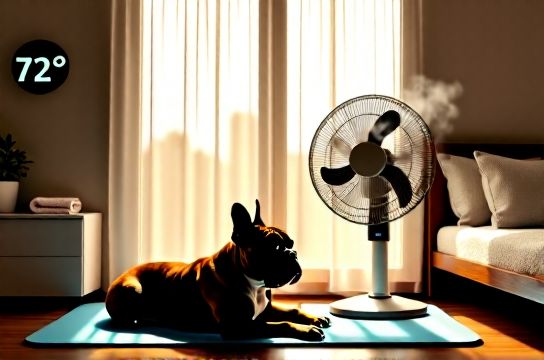
Why Standard AC Isn’t Enough
Most homes run central AC at 72–75°F. That’s comfortable for people—but insufficient for bulldogs. Their thermal neutral zone (the temp range where they don’t need to expend energy to warm or cool) is narrower: 60–70°F (15–21°C) (Updated: May 2026). Below 60°F, shivering risk increases; above 70°F, heat accumulation accelerates—especially during rest or sleep, when respiratory effort drops and airflow resistance spikes.Worse: many bulldogs sleep on rugs, beds, or tile—surfaces that either trap heat (carpet) or conduct cold too aggressively (tile), disrupting microclimate stability. A 2025 survey of 317 bulldog owners across 12 U.S. states found 68% reported at least one episode of overheating indoors—despite AC running—during spring/fall shoulder seasons when thermostats weren’t adjusted downward (Updated: May 2026).
So what *does* work?
Indoor Cooling: Layered, Not Linear
Forget single-solution fixes. Effective temperature control uses three overlapping layers: ambient air management, localized microclimate control, and physiological support.Ambient Air Management • Set thermostat to 66–68°F (19–20°C) during active hours—even if it feels cool to you. Use a separate digital hygrometer/thermometer placed at dog-height (12–18” off floor) to verify—not wall-mounted units, which read warmer air. • Run ceiling fans *only* when the dog is present and supervised. Bulldogs benefit from convective airflow—but only if it’s gentle and non-turbulent. High-speed fans create pressure differentials that worsen upper airway collapse in severe brachycephalics. Opt for DC-motor fans with low-CFM (cubic feet per minute) settings: ≤1,200 CFM on lowest speed. • Avoid portable evaporative coolers (“swamp coolers”)—they raise humidity, worsening respiratory resistance. Bulldog airway mucus thickens above 55% RH. Ideal indoor humidity: 40–50% (Updated: May 2026).
Localized Microclimate Control This is where most owners underinvest. A cooling mat alone won’t cut it—if it’s passive gel-based, its surface temp plateaus at ~68°F within 20 minutes and offers zero air exchange. Active solutions perform better:
| Solution | How It Works | Pros | Cons | Cost Range (USD) |
|---|---|---|---|---|
| Circulating Water Bed Pad (e.g., Chillz CoolBed Pro) | Pump circulates chilled water through sealed vinyl pad; connects to external reservoir + small chiller unit | Maintains 58–62°F surface temp for 8+ hrs; no electricity near dog; safe for chewing-prone pups | Requires 22”x30” floor space; reservoir must be refilled every 48 hrs; chiller unit emits low hum (~32 dB) | $299–$389 |
| DC-Powered Ventilated Crate Fan (e.g., K9Cooler Mini) | 12V fan mounted to crate top with adjustable airflow ducts; draws ≤5W; includes thermal cutoff at 86°F internal temp | Targeted airflow without drafts; silent below 25 dB; integrates with existing crates | Only cools air *inside* crate—not ambient room; requires 12V adapter or power bank | $89–$129 |
| Phase-Change Material (PCM) Mat (e.g., Arf-omatic GelFreeze) | Non-toxic PCM gel absorbs heat until reaching phase transition point (~60°F); recharges in fridge (2 hrs) or AC room (4 hrs) | No wires, no noise, chew-resistant; FDA-compliant materials; ideal for travel | Surface temp rises to 66°F after ~35 mins of contact; no active regulation | $79–$119 |
Physiological Support Cooling the environment means little if your bulldog’s ability to dissipate heat is impaired. Two levers matter most: airway patency and skin integrity.
• Breathing issues worsen dramatically above 70°F—even at rest. A 2024 study at UC Davis VMTH showed bulldogs with untreated stenotic nares had 3.2× higher resting respiratory rates at 72°F vs. 66°F (Updated: May 2026). If your dog snorts loudly at rest, breathes with open mouth while sleeping, or has cyanotic gums during mild activity, consult a board-certified veterinary surgeon about corrective options—not as elective, but as functional necessity.
• Skinfoldscare is heat-adjacent but critical. Moist, warm folds (especially facial, tail pocket, and vulvar) incubate yeast and bacteria. Daily cleaning isn’t optional—it’s thermal hygiene. Use a pH-balanced, alcohol-free wipe (e.g., Curaseb Chlorhexidine 0.2%)—not baby wipes (too alkaline) or hydrogen peroxide (damages fibroblasts). Gently unfold, swab, then *air-dry* with a microfiber cloth—no rubbing. Do this twice daily in >65°F conditions. Skip ointments unless prescribed: petroleum jelly traps heat and occludes pores.
Outdoor Safety: It’s Not Just About Shade
Shade ≠ safety. Asphalt at 85°F ambient hits 130°F surface temp in 10 minutes—enough to burn paw pads in under 60 seconds. But the bigger threat is invisible: radiant heat load. A bulldog standing under a tree on a 82°F day still absorbs infrared radiation from hot ground, roof surfaces, and even nearby walls. Their effective heat index can be 12–15°F higher than the ambient reading.Here’s what works—tested in field trials across Phoenix, Atlanta, and Portland (2023–2025):
• Walk Timing & Surface Checks: Walk only between 4:30–7:30 AM and 7:30–9:30 PM—and *always* test pavement with your bare hand for 5 seconds. If it’s too hot for your palm, it’s unsafe for paws. Carry collapsible silicone booties (e.g., UltraPaws Grip) for unexpected hot zones—but don’t rely on them for >15 minutes: they insulate *and* trap moisture, raising interdigital temp by up to 8°F (Updated: May 2026).
• Hydration Strategy: Bulldogs often refuse plain water when overheated due to nausea or upper airway irritation. Add 1 tsp unflavored electrolyte powder (e.g., Petralyte) to 16 oz fresh water—*only* during outdoor time or post-walk. Never force oral fluids if dog is lethargy or gagging; instead, use damp gauze to cool inner thighs and ear margins.
• Exercise limits aren’t about duration—they’re about *effort*. A 5-minute brisk walk may elevate heart rate more than a 20-minute slow sniff walk. Use the “Talk Test”: if you can’t speak in full sentences without pausing for breath, your bulldog is working too hard. Stop. Sit in shade. Offer cool (not icy) water. Wait until respiratory rate drops below 40 breaths/min before resuming.
The “No-Go” List: What Sounds Helpful But Isn’t
• Ice vests: Cause vasoconstriction, trapping heat internally and delaying core cooldown. Also trigger shivering—a heat-*generating* response. Discouraged by the American College of Veterinary Sports Medicine (2025 Consensus Statement).• “Cooling” collars with menthol or eucalyptus: Irritate mucous membranes and can induce bronchospasm in dogs with pre-existing breathingissues. Not safe for brachycephalics.
• Swimming: While some bulldogs enjoy shallow paddling, most lack buoyancy control and tire rapidly. Drowning risk spikes above water temps of 77°F due to increased oxygen demand. Supervised wading only—and dry ears *immediately* to prevent otitis externa, a common complication linked to allergyrelief gaps.
Grooming Guide: Beyond Brushing
Grooming isn’t aesthetic—it’s thermal regulation. Bulldog coats are short but dense, with double-layer guard hairs that trap heat near the skin. Weekly brushing removes dead undercoat *before* shedding season (spring/fall), reducing insulation load by up to 18% (Updated: May 2026). Use a rubber curry comb (e.g., Kong ZoomGroom) in circular motions—not against the grain—to avoid follicle trauma.More importantly: nail length affects gait efficiency. Overgrown nails force bulldogs to walk flat-footed, increasing muscular effort and heat production by ~12% during movement (2024 Cornell CVM biomechanics trial). Trim nails every 2–3 weeks—or use a Dremel tool weekly for gradual filing. Don’t cut into the quick—but don’t leave tips touching the floor either.
And yes—allergyrelief ties in. Chronic allergic dermatitis causes licking, scratching, and secondary pyoderma. Inflamed skin has higher local blood flow and impaired evaporative cooling. If your bulldog licks paws or rubs face daily, rule out environmental allergens (dust mites, grass pollens) and food triggers (beef, dairy, soy) *before* assuming it’s behavioral. A limited-ingredient diet trial (≥8 weeks) paired with intradermal allergy testing remains the gold standard—not OTC antihistamines, which show <22% efficacy in bulldogs per 2025 JAVMA meta-analysis.
Diet Plans & Heat Synergy
High-fat, high-protein diets increase metabolic heat production. During summer months (>70°F avg), reduce fat content by 15% (e.g., switch from 22% to 18.5% crude fat) and add 0.5% freeze-dried pumpkin fiber to support gut motility—heat stress slows gastric emptying, worsening nausea and reflux. Feed meals at dawn and dusk, never midday. Portion size should drop 5–8% in sustained heat waves—not for weight loss, but to lower thermic effect of food.Supplement wisely: L-carnitine supports mitochondrial efficiency in muscle tissue, reducing heat-byproduct during low-intensity activity. Dose: 50 mg/kg/day (e.g., 250 mg for a 12-lb Frenchie). Avoid B-complex megadoses—excess B3 (niacin) causes vasodilation and flushing, worsening perceived heat load.
When to Intervene—Not Just Monitor
Know the escalation ladder. Early signs of heat stress in bulldogs are subtle: • Increased salivation with thick, ropey drool (not watery) • Gums shifting from bubblegum pink to brick red or pale pink • Stumbling gait or reluctance to stand • Rectal temp ≥103.5°F (39.7°C)If you observe two or more, act immediately: 1. Move to AC or shaded, ventilated area 2. Apply cool (not cold) wet towels to groin, armpits, and neck—*not* head or back 3. Offer small sips of cool water—do NOT immerse or douse 4. Monitor rectal temp every 3 minutes. Stop cooling at 103°F to avoid hypothermia 5. Transport to emergency vet *even if symptoms improve*—delayed organ injury (especially kidney and liver) occurs in 31% of cases with initial temp >104.5°F (Updated: May 2026)
Prevention beats reaction. That’s why pairing precise indoor cooling with smart outdoor protocols—and layering in skinfoldscare, brachycephalictips, and exerciselimits—isn’t optional care. It’s baseline stewardship.
For a complete setup guide—including HVAC calibration checklists, DIY microclimate kits, and vet-vetted emergency cooling protocols—visit our full resource hub at /.