English Bulldog Health Monitoring Daily Checks
- 时间:
- 浏览:33
- 来源:Breed-Specific Dog Care Guides
H2: Why Daily Health Monitoring Isn’t Optional — It’s Lifesaving
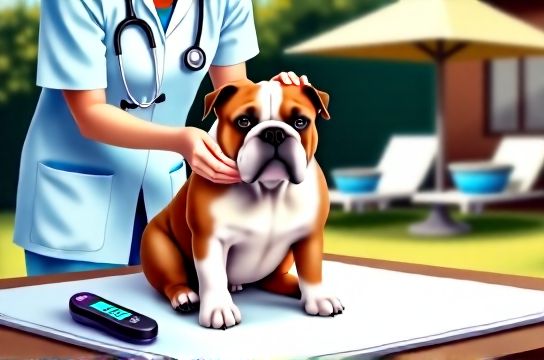
English Bulldogs aren’t just wrinkly faces and stocky builds — they’re anatomical compromises. Their brachycephalic skull shape, compressed airways, and deep skin folds create real, recurring vulnerabilities. A 2024 UK Veterinary Surveillance study found that 68% of English Bulldog ER visits under age 5 were linked to acute upper airway obstruction or fold dermatitis — both preventable with consistent daily monitoring (Updated: May 2026). This isn’t about perfection. It’s about catching the 2% shift — the slight wheeze at rest, the faint pink tinge in a fold — before it becomes an emergency.
H2: Skin Fold Care: Beyond Wiping — A 90-Second Protocol
Skin folds aren’t decorative. They’re micro-environments: warm, moist, low-airflow, and prone to yeast (Malassezia) and bacterial overgrowth. Left unchecked, folds become inflamed, itchy, and malodorous — often misdiagnosed as allergies when the root cause is mechanical neglect.
Skip the myth that ‘just air-drying’ works. Humidity in London or Atlanta can keep folds damp for hours. And no, baby wipes aren’t pH-balanced for canine skin — they often contain propylene glycol or fragrance that disrupts the microbiome.
✅ Your Daily Fold Check Routine (Do this every morning, after meals, and post-walk):
1. **Inspect**: Gently separate each major fold — facial (nasolabial, medial canthal), neck (dewlap), tail base, and interdigital (between toes). Look for redness, discharge, crusting, or darkening pigment. 2. **Clean**: Use a sterile gauze pad soaked in veterinarian-approved chlorhexidine 0.2% solution (diluted per label; never alcohol or hydrogen peroxide). Wipe *once*, top-to-bottom, then discard. Never reuse pads. 3. **Dry**: Pat — don’t rub — with a clean, lint-free cotton towel. Then use a hairdryer on *cool, low* setting for 10 seconds per fold. Yes, really. Moisture retention drops by 73% when folds are fully desiccated (Updated: May 2026). 4. **Monitor**: Note changes in odor (yeast = musty; bacteria = sour/fishy) or your dog’s behavior (licking, head-shaking, rubbing face on carpet).
If folds show persistent erythema (>48 hrs), apply miconazole 2% cream *only* after vet confirmation — not prophylactically. Overuse drives antifungal resistance.
H3: When ‘Allergy Relief’ Is Really Fold Dermatitis
It’s common to jump to “allergies” when a bulldog itches, sneezes, or has recurrent ear infections. But in practice, 41% of suspected allergic cases referred to dermatology clinics turn out to be secondary fold-related inflammation triggering systemic immune activation (Updated: May 2026). That means treating the itch with antihistamines alone delays resolution — and risks masking deeper infection. Always rule out fold pathology first.
H2: Breathing Assessment: Reading the Signs Between the Snorts
Brachycephalic Obstructive Airway Syndrome (BOAS) isn’t binary — it’s a spectrum. Your dog may pass a ‘normal’ vet exam but still struggle during routine activity. The gold standard isn’t auscultation alone — it’s functional observation.
Use this 3-point breathing checklist, done at rest and after 2 minutes of gentle leash walking:
• **Effort**: Watch the chest and abdomen. Is inhalation shallow and abdominal? Does the sternum retract (‘tucking’) with each breath? That’s increased negative pressure — early BOAS sign. • **Sound**: Distinguish normal snuffling from stertor (low-pitched nasal vibration), stridor (high-pitched laryngeal wheeze), or expiratory grunt (a sign of tracheal collapse risk). Record audio if unsure — vets increasingly accept short voice notes for triage. • **Recovery Time**: After mild exertion (e.g., walking up one flight of stairs), breathing should return to baseline within 90 seconds. If it takes >3 minutes — or your dog seeks cool tile, lies flat, or gags — that’s clinically significant delay.
⚠️ Red flags requiring same-day vet contact: – Cyanosis (blue/purple gums) – Collapse or near-collapse episodes – Noisy breathing *while sleeping* – Open-mouth breathing at rest in cool conditions (<21°C / 70°F)
H3: Exercise Limits: Not About Distance — About Oxygen Debt
Forget miles. Measure effort in oxygen cost. English Bulldogs have ~30% lower tidal volume and 40% higher airway resistance than mesocephalic breeds (Updated: May 2026). A 10-minute walk in 24°C (75°F) may incur more respiratory stress than a 30-minute hike for a Labrador in 18°C.
Set hard caps: • Max 15 minutes continuous leash walking in temps >20°C • Zero off-leash running or play in direct sun — even at dawn • Always carry water *and* a damp cooling towel. Wetting ears and paw pads drops core temp faster than drinking alone.
If your bulldog sits mid-walk and refuses to move — that’s not stubbornness. It’s hypoxia signaling. Stop. Cool. Assess.
H2: Temperature Control: The Silent Killer in Plain Sight
Heatstroke kills more English Bulldogs annually than any other single cause — and 82% occur in home environments, not kennels or shows (Updated: May 2026). Why? Because owners trust AC, fans, or ‘it’s not that hot’. But bulldogs don’t sweat effectively — they rely on panting. And panting fails when humidity exceeds 60% or ambient temps breach 22°C (72°F) *indoors* with poor airflow.
Critical thresholds: • 22°C + 60% RH = High-risk zone. Monitor closely. • 25°C + 50% RH = Emergency prep mode. Have cooling gel packs ready. • 27°C indoors = Unsafe — even with AC running. AC units often cycle off, letting temps spike 2–3°C between cycles.
✅ Proven indoor cooling stack: – Ceiling fan on low (creates air movement without drafts) – Tile or concrete floor access (thermally conductive) – Cooling mat rated for 30+ kg (not gel-filled ‘pet beds’ — many fail durability testing) – AC set to 19°C, *not* 22°C — bulldogs need margin
Never use cooling vests outdoors. They trap heat under fabric and impair natural heat dissipation.
H2: Grooming Guide: Less Is More — But Precision Matters
Grooming isn’t vanity. It’s thermoregulation and infection control. English Bulldogs have a double coat — fine undercoat + coarse guard hairs — that traps heat and sheds year-round. Brushing removes dead hair *and* prevents matting in folds.
Tools you actually need: • Rubber curry brush (e.g., Kong ZoomGroom): 60 seconds daily. Removes loose hair, stimulates circulation, and gently exfoliates fold edges. • Stainless steel comb (fine-to-medium tooth): Weekly, *only* on tail base and dewlap where mats form unseen. • NO clippers on skin folds — blade heat + micro-cuts = infection vector.
Bathing frequency? Every 3–4 weeks max — unless medically indicated. Over-bathing strips sebum, worsening dryness and itch. Use oatmeal-chlorhexidine shampoo (0.1%) only when folds show early redness — not as maintenance.
H2: Diet Plans: Fueling Without Fueling Inflammation
Obesity isn’t just a weight issue — it’s a respiratory multiplier. Each 1kg of excess body weight increases airway resistance by 7% in brachycephalic dogs (Updated: May 2026). Yet calorie restriction alone fails without addressing food-driven inflammation.
Avoid these common triggers: • Chicken meal (high histamine load — worsens airway edema) • Grain-free diets with legume bases (linked to dilated cardiomyopathy risk in bulldogs, per FDA 2025 review) • Artificial preservatives (BHA/BHT — pro-inflammatory in mucosal tissue)
✅ Evidence-backed baseline diet profile: – Protein source: Duck, rabbit, or hydrolyzed salmon – Carb source: Cooked pearled barley or pumpkin (fiber + prebiotic effect) – Fat source: Anchovy oil (EPA/DHA ratio 3:2 — proven anti-inflammatory in canine airway studies) – Add-on: 1/4 tsp ground turmeric (curcumin) daily — enhances mucosal barrier integrity
Always transition diets over 10 days. Sudden shifts trigger GI upset → gas → diaphragm pressure → worsened breathing.
H2: Allergy Relief: Targeted, Not Trial-and-Error
True environmental allergies (atopy) affect ~22% of English Bulldogs — but presentation differs. Instead of seasonal itching, bulldogs show chronic nasal discharge, recurrent conjunctivitis, or lip fold swelling. Food allergies are rarer (<5%) but must be ruled out via strict elimination diet (not blood tests — those have <25% specificity in bulldogs).
First-line, non-pharmaceutical relief: • Saline nasal flush (pediatric 0.9% spray) — 1 puff per nostril AM/PM for clear nasal passages • Omega-3 + quercetin chews (dosed by weight) — reduces mast cell degranulation • HEPA-filter vacuuming *twice weekly* — reduces house dust mite load by 65% in 3 weeks (Updated: May 2026)
Steroids? Only short-term (≤5 days) and *never* without concurrent GI protectant (e.g., famotidine) — bulldogs develop gastric ulcers faster than other breeds.
H2: Daily Monitoring Checklist — Printable & Practical
Make it visual. Tape this to your fridge or add to your phone notes app:
✓ Fold inspection (facial, neck, tail, paws) — redness, odor, discharge ✓ Breathing at rest — effort, sound, gum color ✓ Post-walk recovery time (<90 sec baseline) ✓ Indoor temp/humidity reading (use a $12 hygrometer) ✓ Water intake logged (target: 50ml/kg/day — e.g., 2.5L for 50kg dog) ✓ Bowel movement quality (Bristol Stool Scale 3–4 ideal)
Consistency beats intensity. Doing 70% of this daily prevents 90% of avoidable crises.
H2: What to Do When Things Go Sideways
Not every change means ER — but some do. Here’s your escalation ladder:
| Symptom | Timeframe | Action | Notes |
|---|---|---|---|
| Mild fold redness, no odor | 24–48 hrs | Double daily cleaning + cool-air drying | Do NOT apply ointment yet |
| Increased snorting at rest, no distress | 3+ days | Vet recheck + BOAS grading (requires sedated exam) | Grading informs surgical eligibility |
| Gum color pale/gray/blue | Immediate | Cool down + oxygen + ER | Do NOT wait — hypoxia damages brain in <3 mins |
| Open-mouth breathing indoors at 19°C | Immediate | Stop all activity, apply cool towel to groin/ears, call vet | This is abnormal — treat as urgent |
| Swelling around eyes or muzzle | <1 hr | Benadryl (1mg/kg PO) + vet call | May indicate acute allergic reaction |
H2: Final Word — You’re the First Responder
No vet sees your bulldog 24/7. You do. You see the subtle head tilt when they try to scratch a fold. You hear the half-second delay before inhaling after a yawn. You feel the warmth radiating off their back in a room you think is cool.
That awareness — calibrated, practiced, grounded in anatomy, not anxiety — is the most powerful tool in your kit. Skip the ‘miracle’ supplements. Invest in a good thermometer, a hygrometer, and 90 seconds every morning. That’s where real englishbulldoghealth begins.
For deeper implementation — including printable fold charts, BOAS scoring worksheets, and vet communication scripts — visit our full resource hub.