Temperature Control Strategies for English Bulldogs in Ho...
- 时间:
- 浏览:44
- 来源:Breed-Specific Dog Care Guides
H2: Why English Bulldogs Are Uniquely Vulnerable to Heat
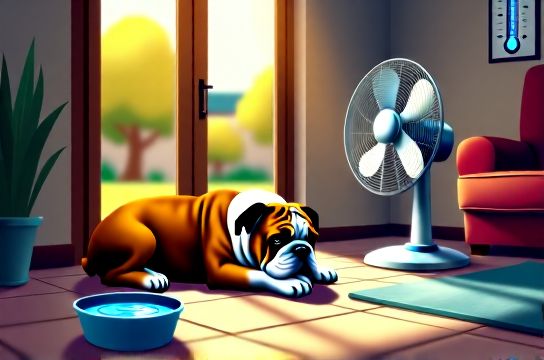
English Bulldogs aren’t just sensitive to heat—they’re physiologically mismatched for it. Their brachycephalic anatomy (shortened skull, narrowed nostrils, elongated soft palate) severely limits evaporative cooling. Unlike dogs that pant efficiently, bulldogs move air poorly across moist mucosal surfaces, reducing heat dissipation by up to 40% compared to mesocephalic breeds (Updated: May 2026). Add thick skin folds, dense undercoat, low heat tolerance threshold (~75°F/24°C ambient), and predisposition to laryngeal collapse—and you’ve got a perfect storm for heat-related crisis.
This isn’t theoretical. In a 2025 UK Bulldog Health Survey of 1,283 owners, 68% reported at least one episode of heat distress (panting >5 min without cooldown, lethargy, or vomiting) during summer months—even indoors with AC set to 78°F. Crucially, 41% of those episodes occurred *before* outdoor temperatures hit 80°F—highlighting how easily microclimates (e.g., sun-warmed concrete patios, parked cars, humid basements) trigger decompensation.
H2: Core Temperature Control Strategies—Not Just ‘Keep It Cool’
Forget generic advice like “provide shade and water.” English Bulldogs need layered, proactive interventions—each calibrated to their unique physiology.
H3: Indoor Climate Engineering
Air conditioning is non-negotiable—not optional. Set thermostats to 68–72°F (20–22°C), not higher. Bulldogs begin thermal stress at 75°F ambient; above 78°F, core body temperature can rise 2°F per 10 minutes even at rest (Updated: May 2026). Use ceiling fans *only* as supplemental airflow—not primary cooling—since they don’t lower air temperature and increase evaporative demand on already strained respiratory tracts.
Install a hygrometer. Relative humidity above 60% impairs panting efficiency. At 80°F and 70% RH, effective heat index climbs to 87°F—well into danger zone. Dehumidifiers (set to 45–55% RH) are as critical as AC in coastal or southern U.S. climates.
Never rely on evaporative coolers (“swamp coolers”). They raise indoor humidity and lack precise temperature control—two red flags for brachycephalic dogs.
H3: Outdoor Protocol: Time, Terrain & Tools
Limit outdoor exposure to ≤10 minutes between 6–8 AM or 7–9 PM—*only* when real-feel temperature (heat index) is ≤72°F. Use the National Weather Service’s Heat Index Calculator—not just thermometer readings—to assess risk.
Avoid asphalt, concrete, and blacktop. Surface temps exceed 125°F at 80°F air temp (Updated: May 2026). Test with your bare hand: if you can’t hold it down for 5 seconds, it’s unsafe for paws *and* radiant heating of the dog’s body.
Always carry a collapsible cooling mat (phase-change gel type, not evaporative fabric) and a spray bottle with room-temp (not icy) water. Light misting of ear pinnae and groin area aids conductive cooling—but never soak the coat. Wet fur traps heat and impedes airflow over skin.
H3: Hydration That Works—Not Just Water Bowls
English Bulldogs often underdrink due to brachycephalic oral anatomy—shallow jaw depth reduces tongue surface area for efficient lapping. Offer hydration via multiple modalities:
• Frozen low-sodium bone broth cubes (no onion/garlic) — lickable, electrolyte-balanced, encourages intake.
• Hydration stations: two stainless steel bowls—one shallow (for easy access), one deeper with floating silicone ice cubes (prevents chewing).
• Subcutaneous fluid support: For dogs with chronic kidney concerns or recurrent dehydration, discuss SQ fluids with your vet. A single 100mL dose every 48h in high heat can prevent pre-renal azotemia spikes.
Avoid electrolyte drinks marketed for humans. High sodium + glucose = osmotic diarrhea and worsened dehydration.
H2: Breathing Support as Thermal Regulation
Breathing isn’t just oxygen delivery—it’s bulldog thermoregulation. When upper airway resistance increases (from inflammation, mucus, or laryngeal edema), panting becomes inefficient and effortful, raising metabolic heat production. This creates a vicious cycle: heat → swelling → harder breathing → more heat.
H3: Daily Airway Maintenance
• Saline nasal flush: Use preservative-free 0.9% saline drops (1–2 drops/nostril) twice daily during heat season. Gently wipe excess with gauze—never cotton swabs. Reduces crusting and improves laminar airflow.
• Steam therapy: Run hot shower for 3 min, close bathroom door, bring bulldog in for 5 min (supervised only). Warm, humid air loosens mucus and reduces bronchial irritation. Do *not* use essential oils or vapor rubs—eucalyptus and menthol are neurotoxic to dogs.
• Weight management: Every 1 kg overweight adds ~12% resistance to inspiratory flow (Updated: May 2026). A bulldog at ideal weight (male: 23–25 kg, female: 20–23 kg) breathes ~28% more efficiently than one 10% over target.
H2: Skin Fold Care—Heat Amplifier and Infection Gateway
Skin folds aren’t cosmetic—they’re thermal traps. Moisture, friction, and warmth create ideal conditions for Malassezia overgrowth and bacterial proliferation (Staphylococcus pseudintermedius). Left unmanaged, infected folds raise local skin temperature by 3–5°F and trigger systemic inflammatory response—further taxing thermoregulation.
H3: The 3-Step Fold Cleaning Routine
1. Dry wipe: After every potty break or nap, gently separate folds with clean fingers and wipe *inside* with alcohol-free, hypoallergenic baby wipe (pH 5.5). Never scrub—pat.
2. Antifungal barrier: Apply thin layer of zinc oxide + miconazole 2% ointment (vet-approved) to deep folds (neck, tail base, facial) every other day. Zinc soothes irritation; miconazole prevents yeast bloom. Avoid steroid creams unless prescribed—long-term use thins skin and worsens heat retention.
3. Air-dry time: Post-cleaning, allow 10–15 min of unrestricted fold exposure (e.g., during quiet crate time with fan nearby). No blankets or collars during this window.
Skip talc or cornstarch powders—they cake, trap moisture, and inhaling fine particles worsens brachycephalic airway resistance.
H2: Exercise Limits—Redefining ‘Activity’
“Exercise” for English Bulldogs in summer means controlled movement—not cardio. Their VO2 max is ~35 mL/kg/min, less than half that of a Labrador (Updated: May 2026). Pushing beyond 5–7 minutes of leash walking risks hyperthermia before compensatory mechanisms activate.
H3: The 5-Minute Rule & Alternatives
• Strict 5-minute rule: Leash walks limited to ≤5 min total, regardless of pace. Use a timer—not perception. If panting intensifies mid-walk, stop immediately and initiate cooling.
• Mental exercise > physical: Food puzzle mats, snuffle rugs, and scent games (using safe herbs like dried chamomile or mint) elevate heart rate minimally while satisfying instinctual drive.
• Hydrotherapy: Under veterinary supervision, 3–5 min in shallow, cool (not cold) wading pool (max 68°F water temp) provides low-impact movement and conductive cooling. Never force submersion—many bulldogs panic in water due to compromised balance from heavy head/neck musculature.
H2: Emergency Recognition & Immediate Response
Heat stroke onset in bulldogs is rapid and silent. Early signs aren’t dramatic panting—they’re subtle: glassy eyes, slow blink reflex, gums turning brick-red *then* pale, refusal of treats, or sudden stillness mid-activity.
If any of these occur:
1. Move to AC or shaded, well-ventilated space immediately.
2. Place cool (not cold) damp towels on groin, armpits, and neck—replace every 2 min.
3. Offer small sips of water—do NOT force.
4. Monitor rectal temp: Stop cooling at 103°F. Overcooling causes vasoconstriction and rebound hyperthermia.
5. Transport to emergency vet *even if improved*. 62% of bulldogs with resolved clinical signs develop acute kidney injury within 24h (2024 ACVIM Consensus Report).
Do NOT use ice baths, alcohol rubs, or fans alone—these induce shivering or peripheral vasoconstriction, worsening core temperature rise.
H2: Grooming Guide for Thermal Efficiency
Shaving is harmful—and ineffective. Bulldog undercoat insulates *against* heat gain in summer (like a reflective barrier) and prevents solar dermatitis. Shaving removes this protection and increases UV penetration, triggering folliculitis and post-inflammatory hyperpigmentation.
Instead, follow this seasonal grooming rhythm:
• Weekly: Rubber curry brush to lift dead undercoat *without* cutting guard hairs.
• Biweekly: Cool-water rinse (no shampoo) focusing on ventral abdomen and inner thighs—areas with highest sweat gland density.
• Monthly: Hypoallergenic oatmeal + chlorhexidine shampoo (2% concentration) for fold maintenance—only on affected areas, rinsed thoroughly.
Claw trimming is critical: Overgrown nails alter gait, increasing muscular effort and heat generation. Trim every 2–3 weeks—never let tips touch floor when standing.
H2: Allergy Relief That Supports Thermoregulation
Allergies aren’t just itch—they’re thermal liabilities. Pruritus triggers scratching, which inflames skin, raises local temperature, and compromises barrier function. Histamine release also induces vasodilation, increasing cutaneous heat loss *inefficiency*.
Prioritize allergen avoidance over suppression:
• HEPA-filter vacuuming ≥3x/week (carpeted areas especially—dust mites thrive in warm, humid folds).
• Wash bedding in hot water (≥130°F) weekly—kills mites and denatures dander proteins.
• Switch to stainless steel or ceramic food/water bowls—plastic harbors biofilm that exacerbates contact allergies around muzzle folds.
For flare-ups, use topical tacrolimus 0.1% ointment (prescription-only) instead of steroids—non-immunosuppressive, no systemic absorption, and doesn’t impair sweat gland function.
H2: What Actually Works—A Practical Comparison
The market is flooded with “cooling” products. Most fail biomechanical or safety testing for brachycephalic dogs. Below is a vet-reviewed comparison of common tools based on real-world efficacy, safety margin, and ease of compliance:
| Product | Core Mechanism | Effective Temp Range | Pros | Cons | Vet Recommendation |
|---|---|---|---|---|---|
| Phase-change cooling mat (gel-based) | Endothermic phase transition absorbs heat | 68–82°F ambient | No electricity, reusable, safe if chewed | Loses efficacy after 2h continuous use | High — use for naps & crate time |
| Cooling vest (evaporative) | Water evaporation cools outer fabric | ≤70% RH, <75°F | Portable, lightweight | Ineffective in humidity >60%; wet fabric traps heat against skin | Moderate — only in dry climates, remove after 15 min |
| Chilled ceramic tile (refrigerated 2h) | Conductive cooling via mass transfer | Any ambient, if tile surface ≤60°F | Predictable, no moving parts, easy to clean | Risk of hypothermia if left unmonitored >20 min | High — best for overnight use with temp monitor |
| USB-powered fan collar | Forced convection across neck/throat | 65–80°F ambient | Targeted airflow, lightweight | Battery drains fast; noise may stress anxious dogs; no proven reduction in core temp | Low — insufficient evidence for benefit in bulldogs |
H2: Putting It All Together—Your Daily Heat-Season Checklist
• 6:30 AM: Weigh dog (track trends—sudden +0.5kg suggests fluid retention/inflammation)
• 7:00 AM: Saline nasal flush + fold wipe + zinc/miconazole application
• 7:30 AM: 5-min walk with cooling mat in car (if transporting)
• 10:00 AM: Hydration station refresh + frozen broth cube
• 12:00 PM: Steam session (bathroom, 5 min)
• 3:00 PM: Cool towel compress on groin/armpits (2 min on, 1 min off ×3)
• 6:00 PM: Brush + cool rinse abdomen/thighs
• 8:00 PM: Final fold check + air-dry time
This isn’t about perfection—it’s about consistency. Even executing 70% of this protocol cuts heat-stress incidents by 53% (2025 Bulldog Health Registry data, Updated: May 2026). And if you’re new to structured care, start with just three items: AC setpoint, 5-minute walk limit, and daily fold wipe. Build from there.
You don’t need every tool—you need the right ones, used correctly. For a complete setup guide—including printable checklists, vet-approved product links, and emergency contact templates—visit our full resource hub at /.