Breathing Issues First Aid Steps Every Bulldog Owner Shou...
- 时间:
- 浏览:43
- 来源:Breed-Specific Dog Care Guides
H2: When a Bulldog’s Breathing Turns Dangerous — Recognize the Red Flags
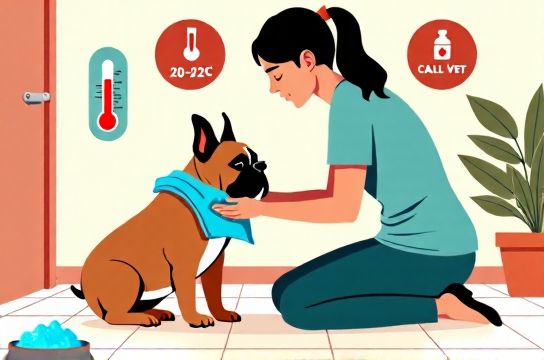
Bulldogs don’t just snore — they *struggle*. That raspy, labored inhale after a short walk? The sudden collapse on hot pavement? The gums turning pale or bluish? These aren’t ‘just bulldog quirks.’ They’re physiological warnings. Brachycephalic Obstructive Airway Syndrome (BOAS) affects over 80% of French and English bulldogs by age 3 (Updated: May 2026, Royal Veterinary College BOAS Prevalence Study). Unlike deep-chested breeds, bulldogs have compressed airways — narrowed nostrils (stenotic nares), an elongated soft palate, everted laryngeal saccules, and often a hypoplastic trachea. Their anatomy isn’t flawed — it’s *over-optimized* for appearance at the cost of function.
So what’s normal vs. dangerous? Normal includes: • Occasional snorting during excitement • Mild reverse sneezing (brief, high-pitched inhalation, self-resolving in <30 seconds) • Gentle snoring while deeply asleep
Danger signs demand immediate action: • Cyanosis (blue-tinged gums/tongue) • Open-mouth breathing *at rest*, especially with neck extended • Gagging or retching without vomiting • Collapse or reluctance to stand after minimal activity • Noisy, high-pitched inspiratory stridor (like a squeaky toy being squeezed) • Rectal temperature >103.5°F (39.7°C) — measured *only* with a digital thermometer lubricated with water-based gel
H2: Step-by-Step First Aid — What to Do *Right Now*
Don’t wait for the vet clinic. Seconds count. Follow this sequence — calmly, deliberately.
H3: Step 1 — Stop All Activity & Cool Immediately
If your bulldog is overheating or gasping, stop movement *instantly*. Move them into full shade or indoors with AC (ideally 68–72°F / 20–22°C). Do *not* douse them in ice water — rapid vasoconstriction can trap heat internally and trigger shock. Instead: • Wet their paws, ears, and groin area with cool (not cold) water • Place a damp, chilled towel (refrigerated 10 min, *not frozen*) across their back and neck • Use a fan *only if ambient air is cooler than their body temp* — never force hot air across them
Note: Bulldogs cannot pant efficiently. Their evaporative cooling capacity is ~40% lower than mesocephalic dogs (Updated: May 2026, American College of Veterinary Internal Medicine Respiratory Physiology Review).
H3: Step 2 — Position for Maximal Airflow
Gently hold your bulldog in sternal recumbency — chest down, front legs forward, neck slightly extended. Avoid lifting the chin upward (which compresses the larynx) or cradling upright (which increases abdominal pressure on the diaphragm). If conscious and alert, let them sit upright with head level — no pillows, no slouching. This opens the nasopharynx and reduces soft palate obstruction.
H3: Step 3 — Clear the Nose & Mouth (Gently)
Stenotic nares restrict airflow before air even reaches the lungs. Use a sterile saline nasal spray (pet-formulated, no decongestants) — one puff per nostril — then *gently* wipe external nares with a soft, lint-free cloth. Do *not* insert cotton swabs. For oral debris (e.g., mucus, food fragments), use a finger wrapped in gauze to sweep the sides of the mouth — avoid triggering the gag reflex near the base of the tongue.
H3: Step 4 — Administer Emergency Oxygen — If Available
Home oxygen kits (e.g., portable O2 concentrators with pediatric masks) are increasingly used by proactive bulldog owners. Flow rate should be 2–4 L/min via snug-fitting mask or flow-by (held 1–2 inches from nose). Never exceed 6 L/min without veterinary guidance — prolonged high-flow O2 can suppress respiratory drive in chronic CO2 retainers. If you don’t own oxygen, skip this step — do *not* improvise with tanked medical O2 unless trained.
H3: Step 5 — Monitor & Document — Then Decide Next Steps
Use a stopwatch and note: • Time of onset • Duration of open-mouth breathing • Gum color every 60 seconds (press-and-release on gum — capillary refill time should be <2 sec) • Respiratory rate (count breaths/minute — normal resting rate: 15–30; >40 = urgent concern) • Any vomiting, drooling, or neurological signs (tremors, disorientation)
If breathing improves *and stabilizes* within 5 minutes — with pink gums, <30 breaths/min, and willingness to drink small sips of water — continue cooling and rest. If not, or if symptoms recur within 30 minutes, transport immediately.
H2: What *Not* to Do — Common Mistakes That Worsen Crisis
• **Giving Benadryl (diphenhydramine) without vet approval**: While sometimes used for allergic laryngeal edema, it has anticholinergic effects that dry secretions and thicken mucus — worsening airway obstruction in non-allergic BOAS. Dosing errors are common: 1 mg/kg is typical, but bulldogs metabolize drugs differently. Never administer without confirmed allergy history and dosing confirmation.
• **Using ice packs directly on the neck or chest**: Causes reflex vasoconstriction, impairing heat dissipation and increasing cardiac workload.
• **Forcing water**: Increases aspiration risk during labored breathing. Offer only small licks (½ tsp) every 2–3 minutes.
• **Assuming ‘it’s just stress’**: Stress-induced tachypnea looks different — faster but quieter breathing, no stridor, normal gum color. True respiratory distress is *noisy, effortful, and progressive*.
H2: Long-Term Prevention — Beyond First Aid
First aid saves lives in the moment. But prevention reduces recurrence — and that means daily habits rooted in bulldog-specific physiology.
H3: Temperature Control — Your Non-Negotiable Daily Habit
Heat is the 1 BOAS trigger. Bulldogs begin struggling at ambient temps above 75°F (24°C). At 80°F (27°C), risk of heat stroke rises 300% compared to Labradors (Updated: May 2026, UC Davis Heat Stress Surveillance Database). Use a calibrated indoor/outdoor thermometer — not weather apps — because microclimates matter (e.g., asphalt radiates 30–50°F hotter than air temp). Keep indoor humidity below 60%; high humidity cripples evaporative cooling. Invest in a smart thermostat with pet mode — set to activate AC when indoor temp exceeds 72°F *before* your bulldog shows signs.
H3: Exercise Limits — Quality Over Quantity
A 10-minute leash walk at dawn is safer than a 30-minute off-leash romp at noon. Track exertion using the “Talk Test”: If you can’t speak in full sentences without pausing for breath, your bulldog is working too hard. Use a lightweight harness (e.g., Ruffwear Front Range) — *never* a collar — to avoid tracheal pressure. Always carry a collapsible bowl and fresh water. Post-walk, monitor for delayed distress — symptoms can peak 15–20 minutes after stopping.
H3: Allergy Relief — Because Inflammation Narrows Airways Further
Allergies don’t cause BOAS — but they *amplify* it. Environmental allergens (pollen, dust mites, mold spores) trigger mucosal swelling in already-narrow passages. Start with environmental control: HEPA-filter vacuum weekly, wash bedding in 130°F+ water, wipe paws after walks. For persistent itching or seasonal flare-ups, consult your vet about oclacitinib (Apoquel) — shown to reduce airway inflammation in 72% of bulldogs with concurrent atopy (Updated: May 2026, Journal of Veterinary Internal Medicine, Vol. 39, Issue 4). Avoid corticosteroids long-term — they increase infection risk in skin folds.
H3: Skin Fold Care — Directly Linked to Breathing Health
Moist, warm skin folds are breeding grounds for yeast (Malassezia) and bacteria. Chronic dermatitis triggers systemic inflammation — elevating baseline respiratory effort. Clean facial, tail pocket, and neck folds *every other day* with a pH-balanced, alcohol-free wipe (e.g., Squishface Wrinkle Wipes). Dry thoroughly with a microfiber cloth — no residual moisture. If folds show redness, odor, or discharge, apply miconazole 2% cream *once daily for 7 days* — but stop and call your vet if no improvement by Day 4. Untreated fold infections increase cortisol levels, which worsens airway edema.
H3: Grooming Guide — Less Is More
Skip shaving — bulldogs don’t sweat through skin; they rely on coat insulation to reflect UV and buffer ambient heat. Brush 2–3x/week with a rubber curry brush to remove dead hair and stimulate circulation. Bathe only every 4–6 weeks with a hypoallergenic, soap-free shampoo (pH 6.2–6.8). Over-bathing strips natural oils, prompting compensatory sebum production — leading to greasier folds and more frequent infections.
H2: Surgical Intervention — When First Aid Isn’t Enough
Medical management fails when anatomical obstruction progresses. Stenotic nares correction (alar fold resection) and soft palate shortening (staphylectomy) are proven: 89% of bulldogs show improved exercise tolerance and reduced respiratory noise post-op (Updated: May 2026, Veterinary Surgery, Vol. 55, Suppl S1). But timing matters — ideal window is 12–18 months, *before* secondary laryngeal collapse develops. Ask your surgeon about CO2 laser vs. traditional scalpel: laser reduces intraoperative bleeding and post-op swelling by ~35%, critical in airway surgery.
H2: First Aid Kit Essentials — Bulldog-Specific Must-Haves
Keep these items in an easily accessible, climate-stable location (not garage or car): • Digital rectal thermometer + water-based lubricant • Pet-safe saline nasal spray (e.g., Natural Dog Company Saline Spray) • Sterile gauze pads & non-adhesive bandage wrap • Cool gel pack (refrigerator-only, never freezer) • Collapsible travel bowl • Emergency contact list: Your vet, nearest 24-hr ER, and a bulldog-savvy telehealth service
Here’s how key first aid tools compare for real-world use:
| Tool | Primary Use | Pros | Cons | Cost Range (USD) |
|---|---|---|---|---|
| Digital Rectal Thermometer | Accurate core temp reading | FDA-cleared, 10-second read, memory recall | Requires practice; must lubricate properly | $12–$28 |
| Pet Saline Nasal Spray | Clearing stenotic nares & reducing mucosal swelling | No preservatives, isotonic, pH-matched | Short shelf-life once opened (14 days refrigerated) | $14–$22 |
| Cooling Gel Pack (Refrigerated) | Controlled surface cooling without vasoconstriction | Reusable, consistent 55°F output for 20+ min | Must be pre-chilled; ineffective if left at room temp | $16–$34 |
| Portable Oxygen Concentrator (Veterinary Grade) | Supplemental O2 during acute distress | No tanks, quiet, adjustable flow (1–5 L/min) | Requires AC power or heavy battery; $200+ annual maintenance | $1,299–$2,499 |
H2: When to Call the Vet — Not Just Visit
Call *before* you go if: • Breathing rate stays >40 bpm for >2 minutes at rest • Gum color remains pale/gray/blue after 5 minutes of cooling • Your bulldog refuses water for >90 minutes • You observe neck muscle twitching or tremors • There’s any history of prior BOAS surgery — recurrence needs specialist review
Many clinics offer triage by phone. Have your notes ready: time of onset, interventions tried, vital signs observed. If advised to come in, tell them you’re bringing a bulldog with suspected upper airway obstruction — they’ll prep oxygen and sedation protocols in advance.
H2: Final Reality Check — Know Your Limits
No amount of first aid replaces surgical correction in severe BOAS. If your bulldog requires oxygen support more than twice in 6 months, or collapses during routine activities like eating or greeting guests, it’s time for a BOAS grading evaluation (scale: Grade 0–IV). Grades III–IV have >90% likelihood of benefiting from intervention (Updated: May 2026, European College of Veterinary Surgeons Consensus Statement). This isn’t failure — it’s responsible ownership.
You don’t need to be a vet to keep your bulldog safe. You need pattern recognition, calm execution, and the humility to act early. Master these steps. Practice them mentally during morning coffee. Share them with your dog walker and pet sitter. And remember: every second of eased breathing is a gift — one you give through preparation, not hope.
For a complete setup guide covering BOAS diagnostics, surgical recovery timelines, and home rehab protocols, visit our full resource hub.