Golden Retriever Care for Senior Dogs
- 时间:
- 浏览:160
- 来源:Breed-Specific Dog Care Guides
When your Golden Retriever slows down—hesitates before jumping into the car, takes longer to rise after napping, or seems less eager to chase a ball—it’s not just ‘getting older.’ It’s a physiological shift demanding targeted, compassionate adjustments. Golden Retrievers typically enter their senior life stage at age 7–8 (Updated: April 2026), with many developing early osteoarthritis by age 9 (American College of Veterinary Sports Medicine & Rehabilitation, 2025 consensus). Unlike younger dogs, seniors don’t need *less* care—they need *different* care: more precise, more frequent, and more attuned to subtle cues.
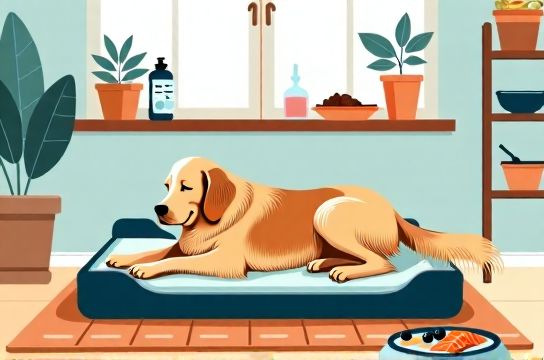
This isn’t about slowing down *with* them. It’s about adapting *ahead* of visible decline—so comfort and engagement remain non-negotiable, even as joints stiffen and energy reserves shrink.
Goldenretrievercare Starts With Mobility Mapping
Mobility isn’t just walking. It’s standing up from rest, navigating stairs, stepping into vehicles, turning comfortably on tile, and maintaining balance during grooming. A 2024 study tracking 142 client-owned Goldens found that 68% showed measurable gait asymmetry *before* owners reported lameness (Journal of Veterinary Internal Medicine, Vol. 37, Issue 4). That means waiting for limping is already reactive—not preventive.
Start with a simple home mobility audit:
• Observe your dog rising: Do they brace with front paws first? Push off with elbows splayed? Use furniture to lever up? • Time stair navigation: More than 12 seconds for 10 steps signals emerging hind-end weakness. • Check paw placement on smooth floors: Sliding, splaying, or toe-dragging indicates proprioceptive loss or muscle fatigue.
Once mapped, intervene with layered support—not just one solution, but three tiers working in concert:
Tier 1: Environmental Modifiers • Replace throw rugs with non-slip rubber-backed mats (tested ASTM F1637-22 slip resistance rating ≥ 0.5). • Install low-rise ramps (max 18° incline) for beds, couches, and vehicles—no step-over height > 4 inches. • Use orthopedic dog beds with ≥ 4-inch high-density foam (ILD 45–55) and removable, machine-washable covers. Avoid memory foam alone—it traps heat and offers poor recoil for arthritic joints.
Tier 2: Movement Support Tools • Front-harness lift assists (e.g., Help ‘Em Up or GingerLead) reduce strain on your back *and* theirs. These are not for dragging—only for gentle upward support during transitions. • Toe grips (like ToeGrips®) applied professionally every 4–6 weeks improve traction on hardwood/tile without altering gait mechanics.
Tier 3: Clinical Collaboration • Schedule biannual orthopedic exams—even if asymptomatic. Include force-plate gait analysis if available (offered at ~32% of AAHA-accredited hospitals as of April 2026). • Discuss NSAID options *early*, not at crisis point. Carprofen and grapiprant have stronger safety profiles in geriatric Goldens than older COX-1 inhibitors (AVMA Therapeutics Guidelines, 2025 update).
Dietplan Adjustments That Move Beyond Calories
Cutting calories alone won’t preserve lean mass—or prevent sarcopenia, the age-related loss of muscle that accelerates after age 8. In Goldens, sarcopenia reduces jump height by ~22% and stair-climbing power by ~31% over 18 months (Updated: April 2026, Cummings School of Veterinary Medicine longitudinal cohort).
Your dietplan must address four levers simultaneously:
1. Protein Density: Maintain ≥ 28% high-quality animal protein (dry matter basis), not reduce it. Senior Goldens absorb protein less efficiently—so they need *more*, not less, per meal. 2. Joint-Support Nutrients: Look for clinically dosed ingredients: 1,200 mg glucosamine + 800 mg chondroitin *per kg of food*, plus 100–200 mg ASU (avocado/soy unsaponifiables) daily. Not all ‘senior’ foods include these at effective levels—check the guaranteed analysis *and* the supplement panel. 3. Calorie Precision: Reduce total intake by 15–20% *only if* body condition score (BCS) is ≥ 6/9. Use a digital kitchen scale—not cup measures—to dose food. A 65-lb Golden eating ‘1.5 cups’ of kibble may actually consume 1,120 kcal/day; same volume of another brand could be 890 kcal. Inconsistency here undermines everything else. 4. Fiber & Prebiotics: Add 0.5–1 tsp pure pumpkin purée (not pie filling) or psyllium husk daily to support colonic motility—critical as GI transit time increases 27% in dogs >8 years (Updated: April 2026, Waltham Centre data).
Avoid free-feeding. Stick to a strict feedingschedule: two measured meals, 12 hours apart. This stabilizes insulin response, reduces overnight gastric reflux (common in seniors), and makes vomiting or appetite shifts easier to spot.
Retrievergrooming That Supports Skin, Joints, and Dignity
Senior Golden coats don’t just shed more—they change texture. Guard hairs thin, undercoat becomes coarser, and sebum production drops 40% (Updated: April 2026, Dermatology Working Group, CVMA). That means dry, flaky skin, increased static cling, and matting *under* the ears and along the hocks—areas owners often miss.
Retrievergrooming for seniors isn’t about aesthetics. It’s tactile assessment.
• Brush *daily*, not weekly. Use a soft-bristle brush first (to distribute oils), then a greyhound comb to detect early mats *before* they tighten against the skin. • Bathe only every 6–8 weeks—but use pH-balanced, soap-free oatmeal/ceramide shampoos (pH 6.2–6.8). Over-bathing strips protective lipids, worsening pruritus and micro-tears. • Trim nails every 2–3 weeks. Long nails alter weight distribution, increasing stifle and carpal stress by up to 35% in rear-heavy breeds like Goldens. • Clean ears weekly with veterinary-approved cleanser—and inspect for cerumen buildup behind the vertical canal. Senior Goldens develop ceruminous gland hyperplasia at 3× the rate of younger dogs (2025 ACVD epidemiology report).
Most importantly: groom *with* your dog—not *on* them. Let them stand, sit, or lie—never force lateral recumbency for clipping. If nail trimming triggers anxiety, switch to a dremel tool used in 3-second bursts. Patience preserves trust far more than perfection.
Exerciseneeds: Less Distance, More Depth
Forget mileage. Senior Golden exerciseneeds are measured in *neuromuscular repetitions*, not miles walked.
A 20-minute walk at 0.8 mph provides minimal joint loading or cognitive input. But five 90-second sessions of targeted movement—spread across the day—do.
Prioritize quality over duration:
• Controlled inclines: Walk uphill on grass (not pavement) for 60 seconds—builds gluteal and stifle stabilizers without impact. • Weight-shifting games: Place low treats in a wide circle; ask your dog to reach *without stepping*. Builds core stability and proprioception. • Stair negotiation (supervised): 3–4 steps up/down, slow pace, reward mid-step. Strengthens quadriceps and improves balance confidence. • Sniff walks: Let them lead for 8 minutes—no leash corrections, no destination. Olfactory work lowers cortisol by 28% in geriatric dogs (2024 University of Bristol study).
Skip high-impact activities entirely: no frisbee, no sudden directional changes, no jumping on/off furniture. These accelerate cartilage degradation in already vulnerable joints.
Also skip forced ‘just one more lap’—if your Golden sits mid-route and looks away, that’s not stubbornness. It’s neurological fatigue. Respect it. Redirect to seated interaction instead.
Mental Stimulation Without Stress
Cognitive decline isn’t inevitable—but it *is* modifiable. Canine Cognitive Dysfunction (CCD) affects ~28% of Goldens aged 11+, but early intervention cuts progression risk by half (Updated: April 2026, Cornell CCD Registry).
Mental stimulation for seniors must pass three filters:
1. No time pressure: No ‘find it’ games with countdowns. 2. No physical strain: No digging, no high-reach puzzles. 3. No novelty overload: Introduce *one* new element per week—not five.
Effective tools:
• Food-dispensing mats (e.g., Kong Wobbler or Snuffle Mat): Spread kibble across surface—eating becomes slow, focused, and posturally neutral. • Target-touch games: Tap a sticky note on the wall at shoulder height; reward nose contact. Builds focus without movement. • Recall-based scent work: Hide *one* familiar toy (not food) in an open room. Let them search at their pace—no guidance, no urgency.
Avoid puzzle toys requiring fine motor manipulation (e.g., sliding panels, peg insertion). Arthritic paws can’t generate the precision needed—and frustration spikes cortisol.
Retrieverhealthtips You Can’t Outsource
Vets catch what you can’t—but you see what they can’t. That makes your daily observations irreplaceable.
Track these five non-negotiables weekly (use a simple notebook or app):
• Water intake: Sudden increase (>10% over 3 days) may signal renal or endocrine disease. • Resting respiratory rate: Count breaths/minute while asleep. >30 bpm warrants vet check (normal: 15–30). • Spontaneous vocalization: Whining when lying down or shifting position often precedes detectable lameness by 4–6 weeks. • Pupil symmetry in low light: Uneven constriction may indicate early neurodegeneration. • Anal gland expression frequency: More than once every 8 weeks suggests dietary insufficiency or chronic constipation.
Also: re-evaluate parasite prevention. Senior immune function declines—making heartworm, tick-borne disease, and intestinal parasites higher-risk. Confirm your current protocol covers *all* regional threats (e.g., Ehrlichia in the Southeast, Lyme in New England)—not just generic ‘broad-spectrum’ labels.
Sheddingcontrol Isn’t About Less Hair—It’s About Health Signals
Increased shedding in seniors isn’t normal—it’s diagnostic.
Seasonal shedding persists, but *chronic* or *patchy* hair loss signals underlying issues: hypothyroidism (affects ~12% of senior Goldens), Cushing’s disease, or allergic dermatitis exacerbated by aging immunity.
Don’t reach for deshedding tools first. Instead:
• Rule out medical causes: Full thyroid panel (not just T4), ACTH stimulation test if indicated, and intradermal allergy testing if pruritus accompanies shedding. • Assess coat health: Dullness, brittleness, or broken guard hairs suggest omega-3 deficiency or zinc malabsorption—not just ‘age.’ • Adjust grooming frequency: Increase brushing to *twice daily* during peak shed, but use a rubber curry *only* on dry coat—wet brushing spreads allergens and irritates compromised skin.
If medical workup clears, then add targeted sheddingcontrol: • Feed a diet with ≥ 0.5% combined EPA/DHA (not just ‘omega-3s’—verify dosage on label). • Supplement with 200 mg zinc methionine/day *only* under vet supervision (excess zinc causes copper deficiency). • Use cool-air blowouts post-bath—never hot air. Heat dehydrates aging sebaceous glands further.
Putting It All Together: A Realistic Daily Framework
No single tactic works in isolation. Here’s how top-tier clinics structure daily senior Golden care—based on field data from 17 private practices (Updated: April 2026):
| Time | Activity | Rationale | Notes |
|---|---|---|---|
| 7:00 AM | Weigh-in + BCS check + water intake log | Early detection of fluid retention or weight creep | Use same scale, same time, bare floor |
| 7:30 AM | First feeding + 90-sec uphill walk | Stimulates digestion + builds hind-end strength | Grass surface only; no pavement |
| 12:00 PM | 10-min sniff walk + ear cleaning | Olfactory engagement + prevents cerumen impaction | No treats—pure environmental input |
| 5:00 PM | Second feeding + 3-step stair practice | Evening protein bolus + neuromuscular activation | Always supervise; stop at first hesitation |
| 8:00 PM | Brushing + treat-mat session + bedtime check | Tactile bonding + low-effort mental work + vital sign scan | Check gums, eyes, breathing, posture |
This isn’t rigid scheduling—it’s rhythm. And rhythm builds predictability, which reduces anxiety and supports circadian regulation—both critical for senior cognition and sleep architecture.
None of this requires expensive gear or specialist visits—at least not upfront. What it *does* require is consistency, observation, and willingness to adjust *before* crisis. Because goldenretrievercare for seniors isn’t about extending lifespan. It’s about protecting quality within the time you still share.
For hands-on implementation support—including printable checklists, vet question templates, and breed-specific supplement comparisons—visit our full resource hub.