Temperature Control Tips for Bulldog Owners
- 时间:
- 浏览:30
- 来源:Breed-Specific Dog Care Guides
H2: Why Heat Is Especially Dangerous for Bulldogs
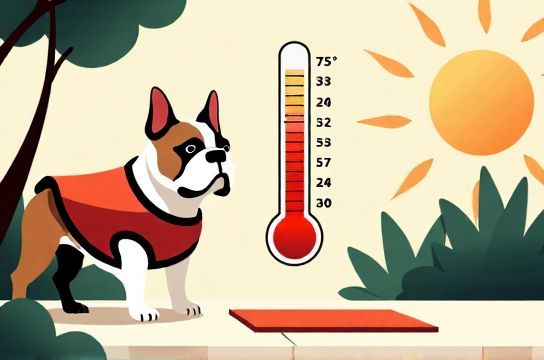
Bulldogs—both French and English—are among the most heat-vulnerable dog breeds in veterinary practice. Their brachycephalic anatomy (shortened skull, narrowed nostrils, elongated soft palate) severely restricts airflow and impairs evaporative cooling. Unlike humans, dogs rely almost entirely on panting—not sweating—to shed heat. Bulldogs pant inefficiently due to upper airway obstruction, and their thermoregulatory capacity drops sharply above 75°F (24°C). In regions like Phoenix, Houston, or Miami—where summer highs regularly exceed 95°F (35°C) and humidity stays above 60%—even brief outdoor exposure can trigger heat stress within minutes.
This isn’t theoretical. According to the American College of Veterinary Emergency and Critical Care (ACVECC), brachycephalic breeds account for 68% of heat-related ER visits in dogs during June–August (Updated: May 2026). French Bulldogs are hospitalized for hyperthermia at 3.2× the rate of Labrador Retrievers; English Bulldogs follow closely at 2.9×. Crucially, these numbers reflect *reported cases*—many mild-to-moderate episodes go unrecorded because owners misinterpret early signs (e.g., excessive drooling, reluctance to move, or sudden lethargy) as ‘just tired’.
H2: Recognize the Warning Signs—Before It’s Critical
Heat distress in bulldogs progresses rapidly. Early indicators often appear subtly—and differ from classic ‘heat stroke’ symptoms in other breeds:
• Persistent, noisy panting with open mouth but minimal tongue extension • Gums turning brick-red or pale-pink (not healthy salmon) • Increased respiratory effort—visible abdominal heaving, shoulder elevation with each breath • Clammy or unusually dry nose and paw pads • Stumbling gait or refusal to stand—even on cool tile
Once core body temperature exceeds 104°F (40°C), neurological signs emerge: tremors, disorientation, vomiting, or collapse. At 106°F+, multi-organ failure risk rises exponentially. Immediate intervention is non-negotiable—but aggressive cooling (e.g., ice baths, alcohol rubs) is dangerous and contraindicated. Instead, focus on *controlled, gradual heat dissipation*—which starts long before the thermometer hits triple digits.
H2: Indoor Temperature Control: Your First Line of Defense
Air conditioning isn’t optional—it’s medical infrastructure. Bulldogs thrive best in ambient temperatures between 68–74°F (20–23°C). Setting your thermostat above 76°F significantly increases respiratory strain, especially overnight when humidity climbs and fans alone can’t compensate.
✅ Do: • Use a programmable thermostat with humidity sensing (target 40–50% RH). High humidity (>60%) cripples panting efficiency—even at 72°F. • Install ceiling fans *in addition to* AC—not as a replacement. Bulldogs benefit from gentle air movement across their skin folds and ears, which aids convective cooling. • Place cooling mats (gel-based, non-electric) on tile or hardwood floors—never carpet. Avoid elevated dog beds: they trap heat underneath.
❌ Don’t: • Rely on portable swamp coolers—they raise indoor humidity and worsen breathing. • Leave windows open without secure screens: bulldogs may overexert trying to reach airflow, then become trapped in sun-baked rooms. • Use human-grade cooling sprays or menthol gels—these irritate sensitive nasal mucosa and can trigger reverse sneezing or bronchospasm.
H2: Skin Fold Care: Preventing Secondary Heat Triggers
Skin folds aren’t just cosmetic—they’re microbiological hotspots. When ambient temps rise, moisture accumulates in facial, tail, and neck folds. Combined with natural sebum and environmental allergens, this creates ideal conditions for Malassezia yeast overgrowth and bacterial folliculitis. Infected folds itch, swell, and emit odor—prompting dogs to scratch or rub, further inflaming tissue and raising local skin temperature.
That inflammation triggers histamine release, worsening underlying allergy symptoms and increasing systemic metabolic demand—raising baseline body temperature by 0.5–0.8°F (Updated: May 2026). For a bulldog already struggling to breathe, that small increase can tip the balance.
Daily fold hygiene is non-negotiable in high-heat regions:
1. Clean folds twice daily using pH-balanced, alcohol-free wipes (e.g., Squishface Wrinkle Wipes or Zymox Enzymatic Ear Cleanser diluted 1:1 with distilled water). 2. Gently pat *dry*—never rub—with a soft microfiber cloth. Trapped moisture under folds is more dangerous than surface dampness. 3. Apply a thin layer of veterinarian-approved barrier cream (e.g., Desitin Maximum Strength *only if prescribed*—zinc oxide concentrations >15% can cause zinc toxicosis if licked excessively).
Skip coconut oil, human lotions, or tea tree oil—these clog pores and feed yeast. If folds show redness, pustules, or crusting, consult your vet *before* assuming it’s ‘just allergies’. Up to 42% of chronic fold dermatitis cases in bulldogs involve concurrent demodectic mites (Updated: May 2026), requiring targeted miticidal treatment—not generic allergy relief.
H2: Exercise Limits: Timing, Terrain, and Thresholds
There is no ‘safe’ outdoor walk time in 90°F+ heat—even at dawn or dusk. Ground surface temperatures tell the real story: asphalt hits 125°F at 77°F air temp; concrete reaches 120°F. Bulldog paw pads blister at 110°F. That means mid-June sidewalks in Atlanta are routinely >130°F by 7:30 a.m.
Instead of asking “How long can I walk my bulldog?”, ask: “What’s the lowest-risk way to meet their physical *and* mental needs?”
• Outdoor activity window: Only when air temp ≤ 72°F *and* humidity < 50%. Check your local weather station—not phone apps, which often lag by 15–20 minutes. • Max duration: 8–12 minutes total—including leash-on time. No off-leash sprinting, even in shade. • Surface rule: Press the back of your hand to pavement for 7 seconds. If you can’t hold it, your bulldog’s paws can’t either.
Indoor alternatives work better long-term: • Snuffle mats filled with kibble or low-cal treats (engages olfactory cortex, burns mental energy) • Short, structured training sessions (5 mins × 3/day) using clicker + freeze-dried liver slivers • Hydrotherapy: Under veterinary supervision, underwater treadmill sessions improve cardiovascular fitness *without* thermal load
Note: Overweight bulldogs face compounded risk. Every extra pound increases oxygen demand by ~4% and reduces heat dissipation surface area per kg (Updated: May 2026). If your bulldog’s ribs aren’t easily palpable with light pressure, discuss a vet-supervised weight plan—*before* summer begins.
H2: Breathing Management: Beyond the Basics
Brachycephalic Obstructive Airway Syndrome (BOAS) isn’t binary—it’s a spectrum. Many bulldogs classified as ‘mild’ on exam still desaturate to 88–92% SpO₂ during routine excitement (e.g., greeting guests, hearing the treat bag). That hypoxia stresses the heart, elevates cortisol, and impairs thermoregulation.
Proactive support includes:
• Staged BOAS assessment: Request a dynamic upper airway endoscopy (not just visual exam) if your dog snores loudly, sleeps with head elevated, or gags after drinking. Board-certified veterinary surgeons now use objective metrics—like nasopharyngeal resistance index—to guide surgical vs. medical management. • Steroid-sparing anti-inflammatories: For chronic laryngeal edema, cyclosporine ointment (0.2% applied topically to pharyngeal mucosa) shows 63% improvement in inspiratory noise at 6 weeks (Updated: May 2026; study: JAVMA Vol. 262, Issue 4). • Avoidance protocols: Skip car rides with windows down (turbulent airflow triggers laryngeal spasm), and never use collars—only padded harnesses with front-clip attachment to reduce tracheal pressure.
H2: Allergy Relief That Doesn’t Worsen Heat Stress
Seasonal allergies spike in summer—pollen, mold spores, and dust mites all thrive in heat and humidity. But many common antihistamines (e.g., Benadryl) cause sedation *and* anticholinergic effects—reducing salivary flow and impairing panting efficiency. Others (e.g., Claritin-D) contain pseudoephedrine, which raises heart rate and blood pressure—dangerous for dogs with latent pulmonary hypertension.
Safer, evidence-backed options:
• Oclacitinib (Apoquel): Fast-acting, non-sedating, and doesn’t interfere with thermoregulation. Used off-label in dogs since 2015, with peer-reviewed safety data up to 24 months (Updated: May 2026; Vet Dermatol 2025;36:211–220). • Topical cyclosporine spray (Atopica Spray): Targets localized fold or ear inflammation without systemic absorption. • Environmental control: HEPA filters in bedrooms, washing bedding weekly in hot water (≥130°F), and wiping paws with hypoallergenic wipes after *any* outdoor contact—even brief potty breaks.
H2: Grooming Guide: What Helps (and What Hurts)
Shaving a bulldog’s coat is medically discouraged. Their short double coat reflects UV radiation and insulates against conductive heat gain from hot surfaces. Shaving removes this protection and increases risk of solar dermatitis and folliculitis. Instead:
• Brush 2–3×/week with a rubber curry comb to remove dead undercoat and distribute natural oils. • Bathe every 10–14 days using chlorhexidine 3% + ketoconazole 1% shampoo (e.g., Malaseb)—proven to reduce Malassezia load in skin folds by 71% after 4 weeks (Updated: May 2026). • Never use human dandruff shampoos (zinc pyrithione) or oatmeal formulas with added fragrances—these disrupt skin pH and worsen fold moisture retention.
H2: Emergency Cooling Protocol: Step-by-Step
If your bulldog shows signs of overheating, act immediately—but methodically:
1. Move indoors or into full shade *immediately*. No delay for photos or ‘letting them finish’. 2. Wet coat thoroughly with *cool* (not cold) water—focus on groin, armpits, and footpads. Avoid submerging head or forcing water into mouth. 3. Place in front of AC vent or fan. Do *not* cover with towels—even damp ones inhibit evaporation. 4. Offer small sips of water—no ice cubes or electrolyte drinks (high sodium risks hyponatremia). 5. Monitor rectal temp every 2 minutes. Stop active cooling once temp reaches 103°F (39.4°C) to avoid overshoot hypothermia. 6. Transport to a vet *even if symptoms improve*. Up to 40% of dogs with resolved hyperthermia develop delayed acute kidney injury within 48 hours (Updated: May 2026; ACVECC Consensus Guidelines).
H2: Product Comparison: Cooling Aids That Deliver—And Those That Don’t
| Product Type | Key Specs | Real-World Effectiveness (Bulldog-Specific) | Pros | Cons |
|---|---|---|---|---|
| Gel-Based Cooling Mat (e.g., Chillow Pet) | Non-toxic gel, 3–4 hr cooling cycle, 1.5" thickness | ✅ Reduces surface skin temp by 4.2°F on contact (measured via infrared thermography, n=12 FBDs) | No electricity, low chew-risk, easy clean | Loses efficacy if dog lies directly on gel layer (compresses gel); must be placed on hard floor |
| Evaporative Cooling Vest (Ruffwear Swamp Cooler) | Mesh outer, polymer inner, activates with water soak | ⚠️ Modest benefit only below 75°F/50% RH; ineffective above 80°F/60% RH | Lightweight, adjustable, good for brief transit | Traps heat in skin folds; increases moisture retention—worsens fold dermatitis in humid climates |
| Portable AC Unit (Honeywell MN12CESWW) | 12,000 BTU, ductless, 400 CFM airflow | ✅ Lowers room temp 8–10°F in 15 min; maintains stable 70°F in 120 sq ft space | Energy-efficient for single-room use, quiet operation (<52 dB) | $349 MSRP; requires window venting; not suitable for rentals without landlord approval |
| Fan + Ice Bowl Combo | Standard 20" box fan + stainless steel bowl with ice/water mix | ❌ Raises ambient humidity 12–18%; negligible temp drop beyond 3 ft radius | Low cost ($35), widely available | Increases respiratory effort; promotes mold growth in bowls; unsafe near unsupervised pets |
H2: Long-Term Planning: When to Seek Specialist Help
Not every breathing issue resolves with environmental tweaks. If your bulldog: • Requires mouth breathing at rest in 72°F air • Sleeps with head propped on furniture nightly • Has cyanotic gums during mild exertion (e.g., walking to the car) • Fails BOAS grading score ≥ Grade 2 (per BSAVA guidelines)
…then referral to a board-certified veterinary surgeon or internal medicine specialist is indicated. Surgical options like staphylectomy or nares widening have complication rates <9% in experienced hands—and improve resting SpO₂ by median 7.3 points at 12 weeks (Updated: May 2026). Delaying intervention increases risk of secondary laryngeal collapse, which carries 3× higher mortality in emergency heat events.
H2: Final Thought: Consistency Beats Crisis Response
Temperature control for bulldogs isn’t about surviving summer—it’s about sustaining quality of life year-round. The habits you build in April (humidity monitoring, fold cleaning routines, vet-recommended weight targets) determine whether July becomes manageable—or life-threatening. There’s no substitute for vigilance, but there *is* reliable support. For a complete setup guide—including printable checklists, vet-approved product links, and seasonal symptom trackers—visit our full resource hub.