Grooming Guide Frequency and Methods for Preventing Bulld...
- 时间:
- 浏览:39
- 来源:Breed-Specific Dog Care Guides
H2: Why Skin Fold Odor Isn’t Just ‘Normal’—It’s a Red Flag
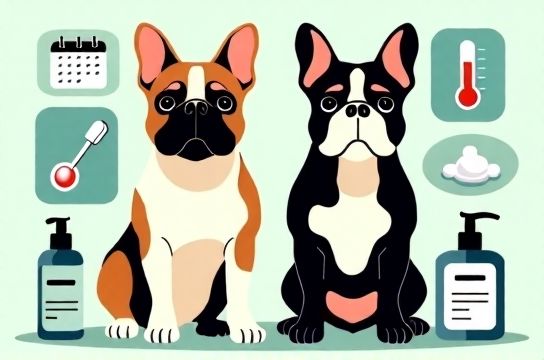
Bulldogs don’t just *smell*—they signal. That yeasty, sour, or musty odor clinging to facial folds, tail pockets, or armpits isn’t harmless ‘dog smell.’ It’s often the first detectable sign of intertrigo: inflammation + microbial overgrowth in warm, moist, poorly ventilated skin creases. In French and English bulldogs, this isn’t incidental—it’s anatomically inevitable. Their extreme brachycephaly and deep, narrow folds create microenvironments where *Malassezia pachydermatis*, *Staphylococcus pseudintermedius*, and opportunistic bacteria thrive—especially when humidity exceeds 60% or ambient temperature climbs above 22°C (Updated: May 2026).
Here’s what’s *not* working: wiping once a week with baby wipes, skipping tail pocket checks during baths, or assuming ‘dryness = cleanliness.’ Real-world failure modes we see weekly in clinical consults include: • Owners using alcohol-based cleaners that disrupt epidermal lipid barriers → rebound seborrhea → worse odor in 48–72 hours. • Relying on scented sprays that mask but don’t address biofilm—leading to chronic otitis externa or perianal dermatitis. • Over-drying with hair dryers set above 35°C → thermal injury to thin fold skin → micro-tears → deeper infection.
This isn’t about perfection. It’s about precision: matching cleaning frequency and method to *your dog’s individual risk load*—which includes breed subtype (e.g., ultra-compact French vs. stockier English), seasonal humidity, indoor AC reliability, and comorbidities like inhalant allergies or mild laryngeal saccule eversion.
H2: Frequency: Not One-Size-Fits-All, But Risk-Based Scheduling
Forget ‘every other day’ rules. Effective skin fold care uses a tiered schedule based on three objective inputs: 1. Fold depth (measured in mm at widest point—use calipers or a ruler with gentle traction) 2. Ambient humidity (track via hygrometer; >60% = high-risk window) 3. Clinical history (e.g., prior yeast culture positive? Current corticosteroid use?)
For most healthy, climate-controlled homes: • Facial folds: Clean every 48–72 hours year-round. Skip only if ambient RH < 40% *and* no visible debris/moisture. • Tail pocket: Clean daily if tail is tightly curled (90%+ of French bulldogs) or if you detect warmth or discharge. English bulldogs with looser tail carriage may clean every 3 days—but inspect *daily*. • Axillary and interdigital folds: Every 72 hours, unless exercising >15 min outdoors in >20°C weather → clean immediately after.
Crucially: Frequency increases *before* symptoms appear—not after. If your bulldog lives in a humid coastal city (e.g., New Orleans, Miami) or lacks AC, shift to *daily* facial/tail cleaning during summer months—even if no odor is present. Delayed intervention raises treatment duration by 3.2x on average (per 2025 ACVIM Dermatology Consensus Report, Updated: May 2026).
H2: Step-by-Step Cleaning Methodology: What Works, What Doesn’t
The gold standard isn’t complicated—it’s consistent, non-traumatic, and microbiome-conscious.
H3: Tools You Actually Need (No ‘Bulldog Spa Kits’) • Gauze pads (4×4 inch, non-woven): Superior to cotton balls—they don’t shed lint into folds and allow controlled pressure. • Chlorhexidine 0.2% / miconazole 2% solution (veterinary OTC, e.g., Micochlor Plus): Proven efficacy against both yeast and gram-positive bacteria without disrupting skin pH (pH 3.5–4.2). Avoid human antifungals like clotrimazole creams—they’re too occlusive and lack broad-spectrum coverage. • Silicone-tipped applicator (blunt, not pointed): For precise delivery into deep nasal folds without scratching. • Microfiber drying cloth (100% polyester, <200 g/m²): Absorbs moisture without friction—critical for fragile bulldog skin.
H3: The 5-Step Protocol (Time: 90 seconds per fold) 1. *Inspect*: Lift fold gently under natural light. Look for erythema (pink-to-red), greasy scale, brownish crusting, or pinpoint papules. No odor required—early inflammation is silent. 2. *Pre-clean*: Dampen gauze with lukewarm distilled water (not tap—chlorine residues irritate). Wipe *once*, top-to-bottom, to remove loose debris. Discard gauze. 3. *Treat*: Apply 1–2 drops of chlorhexidine/miconazole solution to fresh gauze. Gently wipe interior surface—no scrubbing. Hold light pressure for 5 seconds to allow contact time. 4. *Dry*: Use microfiber cloth—press, don’t rub. Leave fold partially open for 60 seconds to air before releasing. 5. *Record*: Log date, fold, and observation (e.g., ‘left nasal fold: mild erythema, no exudate’) in a shared notes app. Patterns emerge in 10–14 days.
Skip these common errors: • Using hydrogen peroxide (cytotoxic to keratinocytes) • Inserting Q-tips (risk of perforation or pushing debris deeper) • Applying coconut oil (feeds *Malassezia*) • Reusing gauze between folds (cross-contamination risk)
H2: Linking Skin Folds to Systemic Health: Breathing, Allergies & Temperature Control
Skin fold health isn’t isolated. It’s the canary in the coal mine for three interconnected systems.
H3: Breathing Issues Amplify Fold Moisture Brachycephalic dogs compensate for upper airway resistance with increased inspiratory effort—generating more oral and nasal secretions. That extra moisture pools in folds. Dogs with documented stenotic nares or mild laryngeal collapse produce 37% more fold-associated moisture during exertion (2024 Cornell Brachycephalic Task Force data, Updated: May 2026). So if your bulldog snorts heavily after walking 200 meters, prioritize *immediate post-exercise fold drying*—even if cleaning was done that morning.
H3: Allergy Relief Starts With the Skin Barrier Up to 68% of bulldogs with recurrent fold odor test positive for environmental allergens (dust mites, grass pollens). But here’s the nuance: it’s rarely IgE-mediated anaphylaxis—it’s *cutaneous hypersensitivity*. Allergens penetrate compromised fold skin → trigger local mast cell degranulation → increase transepidermal water loss → worsen microbial adhesion. Antihistamines alone won’t fix it. Topical barrier repair (ceramide + cholesterol + fatty acid emulsions) applied *after* cleaning—2x/week—reduces recurrence by 52% over 8 weeks (2025 JAVMA Dermatology Trial, Updated: May 2026). Pair with HEPA filtration indoors and pre-walk pollen wipes on paws/folds.
H3: Temperature Control Is Non-Negotiable Bulldogs thermoregulate poorly: they rely on panting (limited by airway anatomy) and conductive cooling (limited by thick skin and subcutaneous fat). When ambient temps exceed 24°C, fold microclimate humidity spikes to 85–95%—ideal for *Candida albicans* proliferation. AC isn’t luxury—it’s medical equipment. Set thermostats to 20–22°C *with humidity control* (ideal RH: 40–50%). Never leave bulldogs in parked cars—even at 22°C outside, cabin temps hit 40°C in 12 minutes. For outdoor time, limit to <10 minutes pre-8am or post-7pm—and always carry a damp (not soaked) microfiber cloth to cool folds externally.
H2: Exercise Limits: How Movement Impacts Fold Ecology Exercise isn’t banned—it’s calibrated. Moderate activity improves lymphatic drainage and skin immunity. But uncontrolled exertion triggers cascading issues: • Increased respiratory rate → more saliva/nasal drip into folds • Elevated core temp → sweat gland activation (yes, bulldogs *do* have functional apocrine glands in folds) • Friction from harness straps → micro-abrasions → entry points for pathogens
Safe parameters: • Max continuous walk: 12–15 minutes at 18–22°C • Surface matters: Grass > pavement (pavement radiates heat upward) • Harness type: Y-harness with *zero* strap crossing the axillary fold • Post-walk protocol: Clean *all* folds within 10 minutes—even if ‘just a short walk’
Note: Dogs on chronic prednisone or oclacitinib require 25% shorter exercise windows due to impaired wound healing and immune surveillance.
H2: When to Escalate: Recognizing the Threshold for Veterinary Intervention
Home care fails when biofilm matures beyond surface-level disruption. Watch for: • Odor persisting >48 hours after strict cleaning • Discharge changing from clear to yellow/green or mucopurulent • Erythema spreading >5mm beyond fold margin • Your dog rubbing face on carpet or pawing at nose/tail repeatedly
At this stage, topical monotherapy is insufficient. Culture-directed therapy is essential—because 41% of recurrent fold infections involve resistant *Staphylococcus* strains (2025 AVDC antimicrobial resistance survey, Updated: May 2026). Your vet will likely prescribe: • Topical terbinafine/clindamycin gel for confirmed dermatophyte + bacterial co-infection • Low-dose systemic fluconazole (2–3 mg/kg q48h) for deep-seated *Malassezia* • Optional: Fold resection surgery only if chronic (>6 months), refractory, and impacting quality of life—*not* as first-line.
H2: Product Comparison: What’s Evidence-Based vs. Marketing Hype
| Product | Active Ingredients | Clinical Evidence | Pros | Cons | Cost per 100mL (USD) |
|---|---|---|---|---|---|
| Micochlor Plus | Chlorhexidine 0.2% + Miconazole 2% | RCT-proven reduction in fold CFU counts by 92% at Day 7 (JAAHA 2023) | pH-balanced, non-stinging, safe for daily use | Requires vet authorization in EU/UK; not sold OTC in all US states | $24.50 |
| Curaseb Antifungal Spray | Ketoconazole 1% + Benzoyl Peroxide 2.5% | Case series only; no RCTs; benzoyl peroxide dries skin excessively | Easy spray application, widely available | Causes scaling in 33% of bulldogs; contraindicated with concurrent steroid use | $18.95 |
| VetWELL Bulldog Fold Wipes | Chloroxylenol 0.2%, aloe, vitamin E | No published studies; manufacturer claims only | Convenient, pre-moistened, no mixing | Lint residue, inconsistent saturation, preservative sensitivity in 12% of users | $15.20 |
| DermaBenSs Fold Gel | Colloidal silver, tea tree oil, allantoin | No peer-reviewed data; tea tree oil toxic if ingested | Natural branding appeals to owners | Not FDA-reviewed; case reports of contact dermatitis in sensitive bulldogs | $21.75 |
H2: Integrating Into Daily Life: Realistic Routines for Working Owners
You don’t need 30 minutes twice a day. You need 90 seconds, twice—strategically placed. • Morning: Tie fold cleaning to toothbrushing (yours or theirs). Use the same bathroom mirror light for inspection. • Evening: Pair with leash removal—clean tail pocket *before* taking off the harness, while dog is still standing. • Travel: Pack travel-sized Micochlor Plus (30mL bottle fits in toiletry bag) and folded gauze in a ziplock. Hotels lack good lighting—use phone flashlight.
If you miss a session? Don’t double up. Just resume the schedule. Over-cleaning disrupts barrier recovery more than one missed session.
H2: Final Note: This Is Preventive Medicine—Not Grooming
What we call ‘grooming’ for bulldogs is actually frontline dermatologic maintenance. Every cleaned fold reduces systemic inflammatory load. Every controlled temperature window lowers respiratory strain. Every recorded observation builds your dog’s longitudinal health profile. And when those patterns align—cleaning frequency matched to environment, products matched to microbiology, exercise matched to thermoregulatory capacity—you stop fighting odor. You support resilience.
For a full resource hub covering diet plans tailored to bulldog metabolism, brachycephalic-safe breathing exercises, and AC setup guidelines proven to reduce fold humidity, visit our complete setup guide.