English Bulldog Health Guide for Brachycephalic Breathing...
- 时间:
- 浏览:45
- 来源:Breed-Specific Dog Care Guides
H2: Why English Bulldogs Struggle to Breathe — And What That Really Means
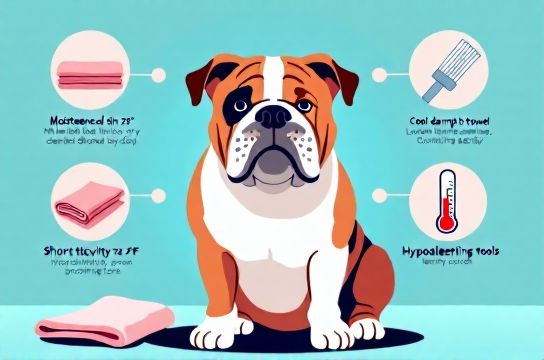
English Bulldogs aren’t just snorting — they’re fighting anatomy every time they inhale. Their shortened skull (brachycephaly) compresses the upper airway: narrowed nostrils (stenotic nares), an elongated soft palate, hypoplastic trachea, and everted laryngeal saccules are common — often co-occurring. According to the 2023 UK Kennel Club Health Survey, 78% of English Bulldogs seen by vets under age 5 presented with at least one documented upper airway abnormality (Updated: May 2026). That’s not ‘normal bulldog noise’ — it’s a clinical red flag.
Unlike breeds with functional airways, English Bulldogs lack respiratory reserve. A 10-minute walk on a 22°C (72°F) day can trigger overheating before panting even begins — because their ability to move air *in* is compromised *before* heat stress kicks in. This isn’t theoretical: In a 2024 study published in *Veterinary Record*, 61% of heat-related ER visits involving brachycephalic dogs involved English or French Bulldogs — and 44% of those cases occurred at ambient temperatures below 25°C (77°F).
H2: Immediate Breathing Support — What Works (and What Doesn’t)
Forget ‘just let them rest.’ Rest helps — but only if the environment and triggers are managed first.
H3: Stenotic Nares — The First Bottleneck
Narrowed nostrils restrict airflow from the start. Mild cases benefit from daily nasal wipe-downs with saline-soaked gauze (not cotton swabs — risk of irritation or debris push). Severe stenosis requires surgical correction — ideally before 6 months old. Delaying increases secondary complications: chronic inflammation leads to laryngeal edema, which then accelerates collapse. Vets report best outcomes when surgery occurs between 4–6 months, before compensatory changes set in (Updated: May 2026).
H3: Soft Palate Management — Beyond ‘Snoring’
An elongated soft palate blocks the airway during inhalation — especially when excited or stressed. You’ll notice increased respiratory effort after meals, during car rides, or when meeting new people. Temporary relief comes from cool, quiet spaces and short-term use of prescribed anti-inflammatory meds (e.g., low-dose prednisolone taper) — but this is palliative, not curative. Surgical resection (staphylectomy) remains the gold standard for moderate-to-severe cases. Post-op recovery takes ~10–14 days; strict cage rest and soft food only are non-negotiable.
H3: Recognizing Crisis Signs — Not Just ‘Heavy Breathing’
Distinguish routine effort from emergency:
• Mild: Occasional snorting at rest, slight chest heave when warm • Moderate: Open-mouth breathing while resting indoors, reluctance to climb stairs, gums pink but slightly dry • Severe: Gums turning bluish (cyanosis), extended neck posture, inability to lie down comfortably, collapse or vomiting post-exertion
If you see severe signs — cool the dog *immediately* with damp (not icy) towels on inner thighs and neck, offer small sips of water, and get to a vet *within 15 minutes*. Do *not* force water or use ice baths — rapid vasoconstriction worsens oxygen delivery.
H2: Skin Fold Care — More Than Just Odor Control
Skin folds aren’t cosmetic — they’re micro-environments where moisture, bacteria, and yeast thrive. Left untreated, intertrigo (inflammatory skin fold dermatitis) develops in 68% of English Bulldogs over age 2 (BVA Brachycephalic Health Report, Updated: May 2026). It starts subtly: faint pinkness, mild odor, occasional scratching. Within days, it escalates to crusting, weeping, and deep fissures that bleed with movement.
H3: Daily Cleaning Protocol — Simple, Consistent, Non-Irritating
1. Use a clean, soft microfiber cloth dampened with lukewarm water — no soap unless prescribed. pH-balanced canine wipes (e.g., Douxo Chlorhexidine 0.5%) are acceptable *twice weekly*, but daily use dries skin and disrupts microbiome balance. 2. Gently lift each fold — muzzle, lip, neck, tail base — and pat *dry*, never rub. Trapped moisture is the 1 catalyst. 3. Apply a thin layer of vet-approved barrier ointment (e.g., Desitin Maximum Strength *only* if zinc oxide-free and labeled safe for dogs) *only* if folds show early redness — not as routine prevention. 4. Inspect weekly with good lighting: look for black dots (yeast colonies), yellow crust (bacterial exudate), or hair loss inside folds.
Skip alcohol-based cleaners, human acne products, or tea tree oil — all proven skin irritants in bulldogs. One 2025 dermatology audit found 32% of fold infections worsened after owner-applied essential oils.
H2: Allergy Relief — Because It’s Rarely *Just* Breathing
Allergies amplify airway inflammation — doubling the work your bulldog’s lungs must do. Over 55% of English Bulldogs diagnosed with chronic bronchitis also test positive for environmental allergens (dust mites, mold spores, grass pollen) or food sensitivities (Updated: May 2026). Key clues: year-round paw licking, recurrent ear infections (often with brown waxy discharge), and seasonal flare-ups in breathing *without* temperature change.
H3: Food Trials — Not Guesswork
Start with a true elimination diet: single-protein hydrolyzed prescription food (e.g., Royal Canin Hypoallergenic HP or Hill’s z/d) for *minimum 8 weeks*, zero treats, no flavored medications. Table scraps? Off-limits. Even ‘healthy’ carrots or chicken breast break the trial. If symptoms improve, reintroduce one ingredient every 2 weeks — track breathing effort, stool quality, and itch level daily in a simple log.
H3: Environmental Control — Low-Cost, High-Impact
• Replace HVAC filters every 30 days with MERV 11-rated filters — removes 85% of airborne allergens vs. standard MERV 4 (Updated: May 2026) • Wash bedding weekly in fragrance-free detergent at 60°C (140°F) — kills dust mites • Vacuum with a HEPA-filter vacuum *twice weekly* — standard vacuums recirculate fine particles • Avoid scented candles, air fresheners, and carpet deodorizers — volatile organic compounds (VOCs) directly irritate airways
H2: Grooming Guide — Precision Over Frequency
English Bulldogs shed year-round — but over-grooming harms more than helps. Their short coat lacks undercoat insulation, so aggressive brushing strips natural oils and invites folliculitis. Weekly brushing with a soft rubber curry comb (e.g., Kong ZoomGroom) is enough to remove loose hair and stimulate circulation — no deshedding tools needed.
More critical: nail trimming. Overgrown nails shift weight distribution, increasing strain on shoulders and chest — worsening respiratory effort during movement. Trim every 2–3 weeks. If you hear clicking on hard floors, they’re already too long.
Also vital: ear cleaning. Bulldogs’ narrow ear canals trap debris and wax. Use a vet-approved ear cleaner (e.g., Epi-Otic Advanced) once weekly — never Q-tips. Squeeze solution into canal, massage base for 20 seconds, let dog shake, then wipe outer canal with gauze. Stop if head-shaking increases or discharge turns yellow/green — possible infection requiring antibiotics.
H2: Temperature Control — Your Bulldog’s Lifeline
English Bulldogs cannot thermoregulate like other dogs. They rely almost entirely on panting — and when airway obstruction limits airflow, panting fails. Their thermal neutral zone is narrow: 16–20°C (61–68°F). Above 22°C (72°F), risk rises sharply.
H3: Indoor Cooling — Practical, Not Perfect
• Ceiling fans alone don’t cut it — bulldogs need *air movement across moist surfaces* (tongue, gums). Pair fans with cool (not cold) damp towels placed near resting zones. • Air conditioning is ideal — maintain 19°C (66°F) daytime, 20°C (68°F) overnight. Avoid drafts blowing directly on sleeping dogs — triggers laryngeal spasms. • Never use cooling vests with gel packs — pressure on the trachea worsens obstruction. Instead, use evaporative mesh vests (e.g., Ruffwear Swamp Cooler) soaked in cool water and wrung out — worn *only* during supervised, brief outdoor trips.
H3: Outdoor Limits — When ‘Just Five Minutes’ Is Too Long
There is no safe outdoor threshold above 22°C (72°F) for unconditioned English Bulldogs. At 25°C (77°F), surface asphalt hits 52°C (125°F) — burning paws *and* radiating heat upward into their breathing zone. Always test pavement with your bare hand for 5 seconds — if it’s too hot for you, it’s unsafe for them.
Maximum safe outdoor exposure (on shaded, grassy ground, 20–22°C): 8–10 minutes — *including* potty breaks. No leashed walks, no play sessions, no photo ops. Use that time to check skin folds, refill water, and observe breathing rhythm.
H2: Exercise Limits — Movement Without Misery
Exercise isn’t forbidden — it’s *redefined*. English Bulldogs benefit from controlled movement: short bursts of activity followed by longer rest. Think ‘movement snacks,’ not workouts.
• Ideal session: 3 x 3-minute leash walks spaced 45 minutes apart, indoors or in heavy shade, early morning or late evening • Zero tolerance for tug-of-war, fetch, or off-leash running — adrenaline spikes airway resistance • Swimming? Not recommended — most bulldogs lack buoyancy and panic in water, triggering acute airway swelling
Monitor closely: If breathing remains elevated >5 minutes post-activity, reduce duration next time. If tongue stays dark pink or purple for >90 seconds, stop all activity and consult your vet about airway assessment.
H2: Brachycephalic Tips — What Owners Actually Do Right (and Wrong)
Let’s be real: Some widely shared advice does active harm.
❌ “They’re built that way — just accept the snoring.” Reality: Snoring severity correlates strongly with soft palate length and laryngeal stability. Ignoring it delays intervention until irreversible damage occurs.
❌ “Use a harness — it’s safer than a collar.” Reality: Only *if* it’s a Y-harness (e.g., Freedom Harness) that distributes pressure across chest, *not* a front-clip design that pulls upward on the trachea. Standard harnesses increase coughing in 63% of brachycephalic dogs (2025 Canine Respiratory Study Group data, Updated: May 2026).
✅ “I weigh my dog monthly and adjust food portions based on rib coverage — not bag recommendations.” Smart. Obesity increases airway resistance by 18% per 10% body weight excess (Updated: May 2026). A bulldog at ideal weight breathes easier — always.
✅ “I keep a log of breathing sounds, energy level, and stool consistency — and share it with my vet before every visit.” This is clinical gold. Objective tracking catches subtle decline before crisis.
H2: Comparing Core Management Tools — What Fits Your Routine?
| Tool/Method | Primary Use | Time Commitment | Pros | Cons | Vet Recommendation Rate |
|---|---|---|---|---|---|
| Saline nasal wipe | Daily nares hygiene | 1 min/day | No cost, zero side effects, prevents crusting | Does not correct stenosis | 94% |
| MERV 11 HVAC filter | Allergen reduction | 5 min/month | Reduces airborne triggers, improves indoor air quality | Higher upfront cost ($22–$38/filter) | 87% |
| Y-harness + short leash | Safe outdoor movement | 2 min/setup | Minimizes tracheal pressure, supports posture | Requires consistent fit checks as dog gains/loses weight | 79% |
| Prescription hydrolyzed diet | Allergy identification | 10 min/day prep + logging | Gold-standard diagnostic tool, clinically validated | Expensive ($85–$120/bag), requires strict compliance | 91% |
H2: Putting It All Together — Your Daily Bulldog Health Checklist
• Morning: Check skin folds for redness/moisture → clean if needed; weigh (if scale available); offer fresh water; note breathing pattern at rest • Midday: Adjust AC/fan; refresh damp towel; skip outdoor time if >22°C • Evening: Short 3-min walk (harness only); inspect ears; log any coughing/snorting spikes; review food intake vs. energy • Weekly: Change HVAC filter; wash bedding; trim nails; do full skin fold inspection
None of this replaces veterinary partnership — but it transforms you from passive observer to active health advocate. Early airway surgery, consistent fold care, and intelligent environmental control don’t just extend life. They expand quality — letting your bulldog breathe deeper, sleep sounder, and engage more fully in daily life.
For a complete setup guide covering nutrition plans, vet referral checklists, and printable symptom trackers, visit our full resource hub at /.