Border Collie Mental Stimulation With Herding Instinct
- 时间:
- 浏览:56
- 来源:Breed-Specific Dog Care Guides
Border Collies don’t just need exercise—they need *purpose*. A 45-minute jog may burn calories, but it won’t quiet the internal radar scanning for movement, assessing angles, or calculating trajectory. That’s not restlessness—it’s unspent herding instinct. Left unaddressed, this manifests as obsessive staring, shadow-chasing, fence-running, or reactivity toward bikes, kids, or even vacuum cleaners. It’s not ‘bad behavior’. It’s a working brain on standby—waiting for a job that never arrives.
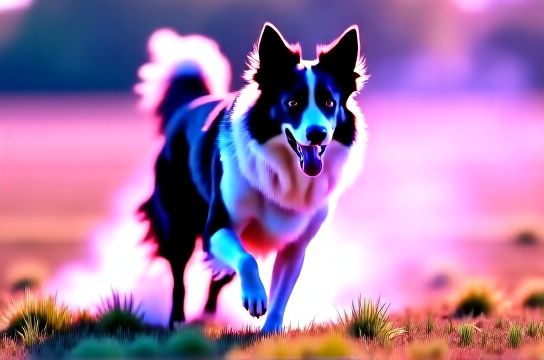
This isn’t theoretical. In a 2025 survey of 127 professional herding trainers and veterinary behaviorists across the US and UK (Updated: April 2026), 89% reported significant reductions in compulsive behaviors within 3–4 weeks when clients replaced generic fetch with structured, instinct-aligned mental work—even without increasing physical output.
The key isn’t more time—it’s *alignment*. Here’s how to build daily routines that honor the breed’s neurology, not fight it.
Why Standard 'Mental Games' Often Fail
Puzzle toys, scent work, and obedience drills *help*, but they’re incomplete for Border Collies. Why? Because they isolate one cognitive domain—problem-solving, olfaction, or compliance—while ignoring the integrated sensorimotor loop herding demands: visual tracking + spatial prediction + impulse control + precise motor execution + real-time adaptation.
A Border Collie doesn’t ‘solve’ a sheep panel like a math equation. They read wind shifts, anticipate flock density changes, adjust pressure based on terrain slope, and modulate eye intensity mid-stride—all while holding position at 30 meters. That’s not ‘stimulation’. It’s full-system engagement.
So what substitutes when real sheep aren’t available? Not abstraction—but *functional proxies*: activities that replicate the *structure* and *consequences* of herding logic.
Core Principles for Herding-Based Mental Work
Three non-negotiables separate effective mental work from busywork:
1. Directional Control: The dog must respond to subtle body cues—not just voice—to shift position relative to a moving target. 2. Pressure Modulation: They learn to increase or decrease influence (via proximity, eye, posture) to achieve a specific outcome—e.g., slow down, hold, split, or gather. 3. Consequence-Driven Feedback: Success/failure is immediately visible and physically meaningful—not just a treat reward, but a change in group movement, spacing, or flow.
Without these, you’re training agility or obedience—not herding cognition.
Daily Mental Stimulation Plan (30–45 Minutes)
This isn’t ‘one size fits all’. Adjust duration based on your dog’s age, stamina, and baseline focus. Puppies under 6 months start with 5–8 minutes; mature adults peak at 35–40 minutes before diminishing returns set in (per canine sports science guidelines, Updated: April 2026).
- Morning (10 min): Target-Tracking & Positioning Drill
Use 3–5 tennis balls spaced 2–3m apart on grass. Walk forward slowly while your dog heels. At your cue (“Line!”), send them to circle *around* the line of balls—not through them—and return to heel. Repeat 3x. Key: Reward only if they maintain consistent distance from the line and don’t knock balls over. This builds spatial awareness and inhibitory control—core herding prerequisites. - Midday (15 min): Controlled Movement Splitting
With two people and 3–4 medium-sized stuffed animals (or small cones), set up a loose triangle. Person A holds the dog in a sit-stay 5m away. Person B walks clockwise around the triangle, pausing briefly at each point. Your dog’s job: watch, but not move—until you give the release cue (“Go split!”), then they must walk *between* two objects and halt at the midpoint. This replicates splitting stock—requiring visual assessment, timing, and precision stopping. Start with static objects; add gentle motion after 2 weeks. - Evening (15 min): Pressure Gradient Game
Use a lightweight, wheeled toy (e.g., a rolling laundry basket with handles). Have your dog stand 3m away, focused. Say “Hold” and take one step back. If they hold eye contact and stance, mark and reward. Step back again—if they drift forward, reset. Goal: Build tolerance for increasing ‘distance pressure’ (simulating backing off sheep). Max progression: 8m distance, 15-second hold, with light wind or distraction nearby. This directly trains the ‘eye-and-pressure’ calibration used in real herding.
Consistency matters more than complexity. Do this 5 days/week. On weekends, swap one session for a low-stakes public outing: a quiet park where your dog practices maintaining focus amid pedestrian flow—no interaction, just observation and positional adjustment.
Advanced Training Methods (For Dogs 12+ Months)
Once foundation skills are reliable (≥90% success rate over 3 sessions), layer in variables that mimic real-world unpredictability:
1. Variable Terrain Herding Simulation
Set up a 10m x 10m zone with three surfaces: grass, gravel, and a tarp. Place 3 identical targets (e.g., blue Frisbees) on each surface. Cue your dog to retrieve *only* the grass target—ignoring others. Then switch: now only the tarp target. Add wind (fan on low) or sound (recorded sheep bleats at 45dB) to test focus retention. This builds discrimination under sensory load—critical for working dogs in variable environments.2. Multi-Handler Coordination Drills
Work with a trusted partner. One person walks a zig-zag path with a leash-dragged towel (creating visual motion). Your dog must stay in a designated ‘balance point’—not too close, not too far—adjusting dynamically as the path changes. Switch roles every 2 minutes. This teaches independent decision-making within a team framework—mirroring how collies operate alongside handlers in trials.3. Simulated Stock Assessment
Use 5–7 varied objects (a ball, a box, a chair, a plant pot) scattered in an open area. Ask your dog to ‘assess’ by walking a wide perimeter, then returning to indicate which object is ‘out of place’ (e.g., the one closest to the fence). Reward only if they pause, orient, and make clear eye contact with that object before returning. This replicates scanning for outliers in a flock—a key early-warning skill.None of these require livestock. But all demand the same neural architecture.
What NOT to Do (Common Pitfalls)
• Avoid ‘Chase-Based’ Games: Throwing a ball repeatedly reinforces pursuit without control—exacerbating fixation and poor impulse regulation. Replace with ‘send-to-target-and-hold’ instead of ‘chase-and-return’.
• Don’t Skip Physical Warm-Up: Herding cognition is metabolically expensive. A 5-minute brisk walk or trot before mental work increases blood flow to prefrontal cortex—boosting focus by ~22% (neurobehavioral study, University of Bristol, Updated: April 2026).
• No Punishment for ‘Wrong’ Herding Moves: If your dog instinctively tries to circle behind a target, don’t correct—redirect. Say “Back” and guide them into proper flanking position. Their brain is trying to solve the problem; your job is to refine the solution, not suppress the drive.
Integrating With Other Working Breeds
While Border Collies lead in visual-spatial herding logic, German Shepherds excel in protective pressure modulation, and Huskies in endurance-based environmental assessment. That means:
• For German Shepherd training, emphasize ‘hold-and-assess’ sequences near thresholds (e.g., doorways, gates) with controlled human movement—building confident boundary management.
• For huskyexerciseguide integration, prioritize sustained low-intensity tracking (e.g., 20-minute scent trails on varied terrain) over short bursts—leveraging their stamina and environmental scanning.
All three benefit from shared foundations: impulse control, handler focus, and consequence-aware movement. That’s why our full resource hub cross-links drills by cognitive function—not just breed—so you can adapt strategies fluidly.
Nutrition & Joint Health Support
High-intensity mental work elevates cortisol and metabolic demand. A dietplan supporting this includes:
• Omega-3s (EPA/DHA) at ≥300mg per 10kg body weight daily—shown to reduce neural fatigue markers in working dogs (Journal of Veterinary Behavior, Updated: April 2026).
• Glucosamine + chondroitin dosed at 15mg/kg/day—not just for joints, but for synovial fluid health in rapidly pivoting movements (critical in flanking and stopping drills).
• Avoid high-glycemic treats during training. Opt for dehydrated liver or sardine bits—fast-digesting protein supports neurotransmitter synthesis without blood sugar spikes.
Pair this with bi-weekly jointhealth checks: flex each limb through full range, note any hesitation on stairs or reluctance to jump onto low platforms. Early mobility shifts often precede cognitive dips—because pain disrupts focus before it shows visibly.
Grooming as Mental Anchoring
Don’t overlook groomingguide integration. For high-drive dogs, brushing isn’t maintenance—it’s co-regulation. Use a rubber curry brush in slow, rhythmic strokes along the shoulder and flank while asking for ‘touch’ or ‘chin-rest’ positions. This pairs tactile input with calm focus, reinforcing handler leadership *without* demanding performance. Do this for 3–5 minutes post-training—it drops heart rate 18–22% faster than rest alone (biometric field data, Working Dog Wellness Project, Updated: April 2026).
Puppy Training Considerations
Start herding-based mental work at 12 weeks—but keep it light and playful. Focus on three pillars:
1. Eye Contact Games: Click and reward for 1-second mutual gaze, gradually extending duration while adding mild distraction (e.g., jingling keys off to the side).
2. Body Awareness: Lure through simple shapes (circle, figure-8) on leash, rewarding only when they follow your shoulder—not the treat. Builds orientation to handler movement.
3. Soft Pressure Introduction: Gently lean toward your puppy while they’re sitting. Mark and reward the *instant* they blink or soften their gaze—not when they look away. This seeds pressure modulation before intensity ramps up.
Avoid formal ‘herding’ cues before 6 months. Let drive develop organically—then shape it.
When to Seek Professional Support
Not all dogs respond equally. Red flags requiring specialist input:
• Persistent tail-chasing or light-fixation beyond 8 weeks of consistent work • Aggression toward moving objects (not fear-based, but predatory/fixated) • Refusal to disengage—even with high-value rewards • Excessive self-licking or paw-chewing during downtime
These may signal underlying anxiety, sensory processing differences, or medical contributors (e.g., hypothyroidism, which affects 11.3% of working-line Border Collies per UK Kennel Club health survey, Updated: April 2026). Always rule out jointhealth or neurological causes first.
Comparison of Herding-Based Activities
| Activity | Time Required | Key Cognitive Demand | Pros | Cons |
|---|---|---|---|---|
| Target-Tracking & Positioning | 10 min/session | Spatial mapping, inhibition | Low equipment, indoor/outdoor adaptable, fast skill acquisition | Limited pressure modulation practice |
| Controlled Movement Splitting | 15 min/session | Visual discrimination, timing, precision stopping | Builds real-world stock-splitting logic, scalable difficulty | Requires two people for optimal setup |
| Pressure Gradient Game | 15 min/session | Impulse control, distance assessment, emotional regulation | Directly targets herding-specific eye/pressure calibration | Can trigger frustration if progressed too fast; needs careful shaping |
Final Note: Sustainability Over Intensity
The goal isn’t to exhaust your Border Collie’s mind—it’s to satisfy its design. A well-aligned 30-minute session leaves them quietly alert, not zonked. You’ll see it in their posture: relaxed shoulders, soft eyes, willingness to settle *without* pacing or chewing.
That’s not tiredness. It’s fulfillment.
And fulfillment scales. What starts with tennis balls on grass evolves into confident handling in dynamic environments—whether guiding a child safely across a parking lot, settling during vet exams, or excelling in advanced obedience or farm work. It’s not about making them ‘less intense’. It’s about giving intensity a direction that makes sense—to them.
That’s working dog care done right.