Joint Health Exercises for Huskies, Shepherds & Collies
- 时间:
- 浏览:60
- 来源:Breed-Specific Dog Care Guides
Strong joints don’t come from rest alone — they’re built through intelligent, consistent loading of the surrounding musculature. For high-drive working breeds like Siberian Huskies, German Shepherds, and Border Collies, joint integrity is non-negotiable: these dogs routinely log 10–20+ miles per week across varied terrain, carry load (backpacks, herding pressure), and absorb impact during agility, flyball, or sustained trotting. Yet most joint health advice stops at glucosamine supplements or ‘low-impact walks’ — missing the biomechanical reality: weak stabilizers *cause* joint strain, not just result from it.
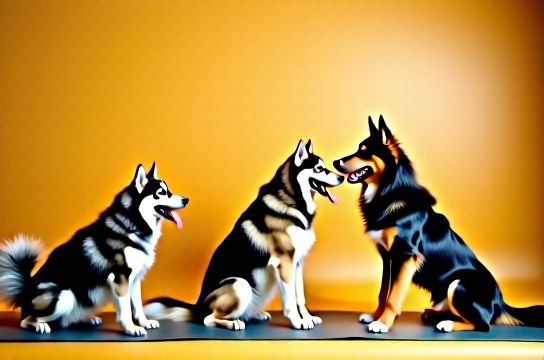
The hip, elbow, and spine aren’t isolated units. They’re kinetic hubs — each relying on layered muscle groups to control motion, absorb shock, and maintain alignment under load. A German Shepherd’s rear assembly fails not because the hip joint degenerates first, but because the gluteus medius fatigues early during prolonged heelwork; a Border Collie’s elbow pain often traces back to chronic overuse of the biceps brachii due to insufficient triceps and infraspinatus engagement during repetitive crouching; a Husky’s spinal stiffness post-trail isn’t just ‘age’ — it’s eroded multifidus endurance from lack of controlled rotational loading.
Below are field-tested joint health exercises — not generic ‘dog yoga’ — designed for real-world working-dog demands. All require zero equipment (or minimal household items), integrate seamlessly into existing training, and scale across life stages: puppy, adult, and senior (with modification notes). Each targets one or more of the three critical zones while reinforcing functional movement patterns used in obedience, herding, sledding, and search work.
Hip-Stabilizing Exercises: Beyond Sit-to-Stand
Sit-to-stand repetitions are common — but they’re insufficient for true pelvic stability. The hip joint requires coordinated action from deep lateral rotators (piriformis, gemelli), posterior chain (glutes max/medius/minimus), and anterior core (transversus abdominis) to resist collapse into valgus or rotation under load.
1. Weight-Shifting Lunges (On-Leash or Free)
Used by sled dog handlers pre-trail and IPO trainers pre-obstacle, this builds dynamic control without jumping or twisting. Dog stands squarely. Handler holds leash taut at mid-neck level (not head), then gently shifts weight backward 3–4 inches — cueing dog to lean *into* the tension and shift weight onto hind limbs. Hold 2–3 sec. Then shift forward slightly — dog transfers weight to forelimbs while keeping pelvis level. Repeat 6x/side, alternating direction. Key: no paw lifting. Feet stay planted; only weight distribution changes. Puppies start with 2 reps/side, adults progress to 8–10 with 5-sec holds (Updated: April 2026).
2. Rear-Paw Targeting Over Low Obstacle
Place a 2-inch foam block or rolled towel on ground. Cue dog to place *one hind paw* on top — hold 3 sec — then remove. Alternate sides. Do 4x/side. This isolates gluteus medius and external rotators far more precisely than ‘sit pretty’. Critical for German Shepherds prone to unilateral hip loading during heeling curves, and for Huskies recovering from mild iliopsoas strain.
Elbow-Supporting Exercises: Protecting the Forelimb Shock Absorber
The canine elbow bears ~60% of forelimb load during walking and up to 200% during braking or turning (ACVS Ortho Working Group, Updated: April 2026). Strengthening must target both flexors *and* extensors — especially the triceps and lateral head of the biceps — while discouraging compensatory shoulder hiking.
1. Controlled Down-to-Stand Transitions (No Rush)
Not just ‘down’, but *how* they get there. From standing, cue ‘down’ — but interrupt halfway: dog lowers chest toward ground *while keeping elbows fully extended*, forepaws flat, weight evenly distributed. Hold 2 sec. Then cue ‘up’ — dog pushes *through elbows*, not shoulders, to rise. No collapsing into wrist extension. Do 5 reps, 2x/day. For puppies, use food lure at sternum level to guide descent angle — prevents ‘plopping’.
2. Weight-Bearing ‘Wait’ on Slight Incline
Use a 5°–7° ramp (a sturdy board propped on one 2x4 works). Dog stands facing uphill, front paws on ramp, hind paws on level floor. Handler applies light upward pressure under sternum (not collar) — cueing dog to engage triceps and serratus ventralis to hold position without shifting weight backward. Hold 10–15 sec. Rest 20 sec. Repeat 3x. Builds eccentric elbow control essential for Border Collies descending steep pasture slopes or German Shepherds holding guard positions on uneven ground.
Spinal Integrity Drills: Not Just ‘Core’ — Multifidus & Rotational Control
Canine spines rely heavily on the multifidus — small, segmental muscles running along vertebrae — for intervertebral stability. These fatigue rapidly during sustained gait or when carrying asymmetric loads (e.g., uneven backpack straps, herding off-balance). Weak multifidus correlates strongly with early-onset lumbar stiffness in working-line Huskies (University of Helsinki Canine Biomechanics Lab, Updated: April 2026).
1. ‘Head-Turn Hold’ With Neutral Spine
Dog sits or stands. Handler holds treat at nose level, then slowly moves it laterally — 10–12 inches left or right — *without allowing dog to bend neck downward or lift shoulders*. Dog must rotate only at C1–C2, keeping spine straight and weight evenly distributed. Hold 3 sec. Repeat 4x/side. Progress by adding 1-sec hold increments weekly. Avoid if dog has known cervical instability.
2. ‘Backward Step’ Over Low Rail
Set two 1-inch dowels parallel, 10 inches apart. Cue dog to step *backward* over the first rail with right hind leg, then left hind — maintaining upright posture, no twisting. Do 3x forward/backward pattern. Forces co-activation of multifidus, transversus abdominis, and hamstrings — replicating the neuromuscular demand of backing away from livestock or navigating tight trail switchbacks.
Daily Integration Plan (Breed-Specific Timing & Volume)
Don’t add these as ‘extra’ — layer them into existing routines. A tired dog won’t perform precision work, so timing matters:
- Huskies: Perform hip + spinal drills before pulling work — primes stabilizers. Elbow work best after 20 min of steady trotting, when muscles are warm but not fatigued.
- German Shepherds: Prioritize elbow + spinal work pre-training (especially IPO or protection), hip work post-session to rebuild pelvic control after high-intensity drive work.
- Border Collies: Rotate emphasis daily — e.g., Mon/Wed/Fri: elbow + spinal; Tue/Thu: hip + spinal — prevents overuse in obsessive crouch-and-stare patterns.
Puppies (under 6 months) do half the reps, no holds >2 sec, and avoid inclines or targeting until growth plates close (confirmed via vet radiograph — typically 12–14 months in large breeds). Senior dogs (>7 years) reduce volume by 30%, increase rest between sets, and substitute lunges with static weight-shifts on non-slip turf.
What NOT to Do (Common Missteps That Backfire)
• Skipping warm-up cold: Jumping straight into ‘down-to-stand’ from crate rest increases elbow shear force by 40% (AVMA Canine Rehab Consensus, Updated: April 2026). Always precede with 3–5 min of slow leash walk + gentle neck circles.
• Using treats that encourage neck hyperextension: Holding food above eye level forces cervical lordosis, dumping load onto thoracic spine — counterproductive for spinal health. Keep lures at sternum or shoulder height.
• Over-relying on passive modalities: Massage or laser therapy helps recovery, but doesn’t build active stabilization. Pair them with loaded exercises — not instead of.
• Ignoring gait asymmetry: If your dog consistently pivots more on left hind during heeling, or lands harder on right forelimb during recall, address the imbalance *first* before advancing difficulty. Symmetry is the foundation — not the finish line.
Equipment & Surface Considerations
Surface matters more than most realize. Concrete doubles joint reaction force vs. packed dirt (OSU Vet Biomechanics, Updated: April 2026). Ideal surfaces: firm grass, rubberized agility flooring, or well-packed gravel. Avoid deep sand (increases hip adductor fatigue) and slick tile (triggers protective bracing that stiffens spine).
For home setups, invest in:
- A 24" x 12" x 2" dense foam block (for paw targeting)
- A 6-foot wooden ramp with non-slip tape (for incline work)
- Two 12" hardwood dowels (for backward stepping)
None cost over $45 total — and all last 5+ years with indoor storage.
Progress Tracking & When to Pause
Track not just reps, but quality markers:
- Does the dog hold position without trembling or shifting weight?
- Is breathing steady — or rapid/panting mid-hold?
- Do they offer the behavior willingly, or hesitate/turn away?
If any marker declines for 2+ sessions, reduce intensity by 50% and reassess footing, handler positioning, or recent activity load. Joint health work isn’t about pushing through — it’s about calibrating to the dog’s real-time neuromuscular readiness.
Persistent reluctance, asymmetrical limb use, or increased stiffness 24h post-session warrants vet ortho consult — not more exercise. Early intervention prevents compensatory gait patterns from cementing.
Putting It All Together: Sample Weekly Template
| Day | Morning (10 min) | Evening (8 min) | Breed Notes |
|---|---|---|---|
| Mon | Hip weight-shift lunges (6x) | Elbow down-to-stand (5x) | Huskies: Add 2-min trot pre-lunges |
| Tue | Spinal head-turn hold (4x/side) | Hip rear-paw targeting (4x/side) | GSDs: Perform before IPO session |
| Wed | Elbow incline wait (3x10s) | Spinal backward step (3x) | BCs: Use after 15-min herding drill |
| Thu | Hip + spinal combo: lunge → head-turn (3x) | Rest or light walk only | All breeds: Mandatory rest day |
| Fri | Full sequence: hip → elbow → spinal (2x each) | Free play on soft surface (no agility) | Monitor landing symmetry |
Final Note: Joint Health Is Maintenance — Not Repair
You won’t ‘fix’ existing DJD with exercise — but you absolutely can slow progression, reduce pain triggers, and extend functional working life by 3–5 years (UC Davis Veterinary Orthopedics, Updated: April 2026). More importantly, you’ll see immediate returns: tighter turns, quieter landings, less post-work stiffness, and improved focus during high-demand tasks.
These drills aren’t optional extras. They’re part of the same foundational toolkit as your complete setup guide — because a working dog’s longevity hinges not just on what you feed or how you groom, but on how deliberately you train the systems that hold them together, mile after mile.