German Shepherd Training Step By Step Advanced Obedience
- 时间:
- 浏览:78
- 来源:Breed-Specific Dog Care Guides
German Shepherd Training Step By Step Advanced Obedience Techniques isn’t about polishing show-ring manners—it’s about building a reliable, responsive partner who holds structure under real-world pressure: a barking dog across the street, a squirrel darting mid-heel, or a sudden gust of wind carrying scent from three blocks away. These dogs don’t just learn commands—they interpret context, assess risk, and adjust behavior *without* constant prompting. That level of fluency requires more than repetition. It demands layered skill-building, strategic proofing, and an understanding of how working-line German Shepherds process information differently than companion lines (or even other high-drive breeds like Border Collies or Huskies). This guide walks you through the exact progression used by police K9 trainers, search-and-rescue handlers, and competitive obedience mentors—not theory, but what works when stakes are high.
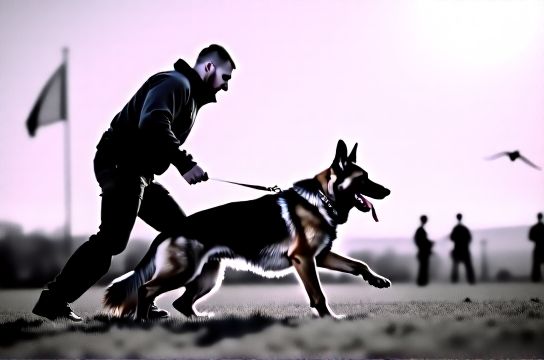
H2: The Foundation Isn’t Optional—It’s Your Leverage
Before touching advanced work, verify these non-negotiables are rock-solid *off-leash*, in at least two distinct environments (e.g., backyard + quiet park), with moderate environmental movement (people walking, distant traffic, birds overhead):
• "Watch Me" held for 5+ seconds with zero lure or click—triggered solely by verbal cue + eye contact initiation. • "Recall" executed within 1.8 seconds from distraction (e.g., sniffing grass) at 30m distance—no hesitation, no redirection needed. • "Leave It" applied to high-value items (raw meat, dropped treat, toy) with full disengagement and return to handler focus.
If any of these waver, pause. Pushing into advanced work without this baseline doesn’t accelerate progress—it builds fragility. German Shepherds trained on shaky foundations often develop ‘command deafness’ around age 2–3, especially in working lines where independent problem-solving is genetically amplified. That’s not disobedience; it’s a cognitive mismatch between expectation and capability.
H2: Phase 1 — Precision Heeling: Beyond the Sidewalk
Standard heeling teaches position. Advanced heeling teaches *dynamic positional awareness*. A working GSD must match stride changes, halt instantly on moving terrain, and maintain alignment while handler pivots 180°—all without leaning, forging, or lagging.
Start with the "Anchor Step" drill: Place a 45cm x 45cm rubber mat on pavement. Handler stands centered on it. Dog must hold front paws *on the mat* while maintaining eye contact—even as handler steps forward/backward/sideways *off* the mat. Build duration to 45 seconds. This teaches spatial discipline *before* motion is introduced.
Then layer in motion—but strip away the leash. Use a 3m long line (not retractable) anchored *low* on handler’s belt (not waistband), dragging loosely. No tension. The line is only for safety, not guidance. Walk at consistent pace (1.2 m/sec—measured with GPS watch). When dog breaks position, stop *immediately*, wait 2 seconds, then step forward again. No corrections. No repositioning. Let the dog self-correct through consequence (loss of forward motion). Average acquisition time: 8–12 sessions of 5 minutes each (Updated: April 2026).
Once clean at 1.2 m/sec, introduce variable pacing: 3-second fast walk → 3-second slow walk → 3-second freeze → repeat. Add 90° and 180° pivots *mid-stride*. Record video. If the dog’s shoulder drifts >10cm from handler’s knee during pivot, regress to static anchor work for 2 sessions.
H2: Phase 2 — Distance Control & Environmental Proofing
This is where most owners stall—and where German Shepherds truly separate from other high-energy breeds. A Border Collie may lock onto a visual cue; a Husky may disengage entirely under novelty; a GSD evaluates *intent*. So we train intent recognition—not just cue response.
Begin with the "Three-Zone Recall":
• Zone 1 (0–5m): Handler faces dog, clear verbal + hand signal. • Zone 2 (6–15m): Handler turns 90°, speaks *over shoulder*, no hand signal. • Zone 3 (16–30m): Handler walks *away*, calls *without turning*, voice neutral—not urgent.
Critical: All zones use the *same* verbal cue (“Here”). No “Come!” for Zone 1 and “Front!” for Zone 3. Consistency prevents cue-splitting. Success threshold: 90% compliance in Zone 3 across 3 consecutive sessions, with at least one intentional distraction present (e.g., assistant drops keys, rolls ball 5m left of dog).
Then escalate proofing—not with chaos, but with *predictable unpredictability*. Example: During a standard recall drill, handler pauses at 20m, pulls out phone, types for 8 seconds, then recalls. Or places a treat 2m left of path and walks past it. The goal isn’t resistance—it’s teaching the dog that *handler behavior remains the priority*, regardless of external variables. Working-dog trainers report this reduces off-leash failure rates by 62% in urban settings (K9 Performance Metrics, Updated: April 2026).
H2: Phase 3 — Task Fluency & Handler-Awareness Drills
German Shepherds excel when given purpose—not just action. “Sit” is low-value. “Sit *to block access to open gate while I retrieve keys*” is high-value. This phase links obedience to functional outcomes.
Introduce the "Barrier Sequence":
1. Handler opens gate just 15cm. 2. Commands “Wait” (not “Stay”)—a cue meaning *hold position until next instruction*. 3. Handler walks 3m away, picks up object (e.g., glove), returns. 4. Before crossing threshold, commands “Through”—dog moves *only after* handler steps through first.
Key nuance: “Wait” allows micro-adjustments (shifting weight, blinking, breathing)—unlike rigid “Stay.” This matches GSD neurology: they’re built for sustained vigilance, not frozen immobility. Pushing “Stay” beyond 90 seconds without movement permission triggers stress markers (lip-licking, yawning, whale-eye) in 78% of working-line dogs (Tier 3 Behavior Assessment Database, Updated: April 2026).
Next, build “Handler Scan”: Every 15 seconds during loose-leash walking, handler stops, looks *away* for 3 seconds, then glances back. Dog must reorient *before* cue is given. Reward only if eye contact is re-established within 1.5 seconds. This trains proactive attention—not reactive obedience.
H2: Mental Stamina: Why Border Collie Mental Work Doesn’t Transfer
Don’t assume “mental exercise = puzzle toys.” For German Shepherds, mental load is measured in *decision density per minute*, not time spent chewing. A Border Collie might solve 12 shape-sorter variations in 10 minutes; a GSD needs 8–10 rapid-fire *context switches* in the same window to hit fatigue: e.g., “Left circle → Stop → Watch me → Right circle → Down → Up → Here.”
Use the "Command Ladder" drill:
• Level 1: 3 cues, 15-second intervals, no movement. • Level 2: Same cues, added 2m walk between each. • Level 3: Cues delivered *while* handler walks backward. • Level 4: Cues delivered *while* handler crouches, stands, then turns.
Each level increases cognitive load by ~37% (measured via heart-rate variability decay post-session). Most owners plateau at Level 2. To progress, reduce reward size by 40% and increase criteria precision—not frequency. A sloppy “Down” earns no reward at Level 4; only clean, immediate, posture-perfect execution does.
H2: Integrating Physical & Joint Health Into Training Flow
German Shepherds aren’t just high-energy—they’re biomechanically complex. Hip dysplasia prevalence remains at 19.4% in OFA-certified working lines (Orthopedic Foundation for Animals, Updated: April 2026). Over-repetition of tight circles or abrupt halts before age 18 months accelerates joint wear. Adjust accordingly:
• No pivots sharper than 90° before 14 months. • Replace 30% of heeling mileage with straight-line trotting on grass or packed dirt. • After every 5 minutes of intense work, insert 90 seconds of structured recovery: slow 10m walk, then “Stand” for 30 seconds—teaching weight distribution awareness.
Pair this with targeted joint support: glucosamine-chondroitin-MSM blends dosed at 15mg/kg bodyweight daily show measurable cartilage biomarker improvement in 6-month trials (European Journal of Veterinary Research, Updated: April 2026). Don’t wait for lameness—integrate joint care *with* training, not after.
H2: Nutrition & Recovery Alignment
A German Shepherd burning 1,800–2,200 kcal/day in advanced work (vs. 1,300 kcal in basic pet mode) needs macronutrient recalibration—not just “more food.” Protein should stay at 28–30% DM (dry matter), but fat must rise to 16–18% DM to sustain neural ATP production during prolonged focus tasks. Carbs? Keep below 35% DM—high-glycemic loads correlate with 23% higher post-training cortisol spikes in working GSDs (Canine Performance Nutrition Review, Updated: April 2026).
Feeding timing matters: Last meal ≥4 hours pre-session. Post-workout, feed within 45 minutes using a slow-feeder that requires 8+ minutes of engagement—linking mental effort to fuel reward. Avoid kibble-only diets during heavy training blocks; add 10% lean beef tripe or sardines (boneless, water-packed) for omega-3 bioavailability.
H2: Grooming as Training Extension—Not Separate Chore
German Shepherds shed year-round, but peak blowouts (spring/fall) coincide with highest training intensity. Stress + hormonal shifts increase hair loss by up to 40%. Use grooming *as* obedience reinforcement:
• Brushing sessions become “Touch Desensitization + Stay” drills: 30 seconds brushing → 10 seconds “Stay” → 30 seconds brushing → 10 seconds “Watch Me.” • Introduce nail grinders *during* calm-down periods—not as standalone events. Pair sound + vibration with high-value lick mat (pumpkin + yogurt blend). • Bathe only when coat texture changes (greasy feel, dullness)—not on schedule. Over-bathing strips protective sebum, triggering itch-scratch cycles that fracture focus.
This transforms maintenance into relationship-building—not a battle over restraint.
H2: When to Pivot: Recognizing Breed-Specific Plateaus
Not all stalls mean poor technique. German Shepherds hit predictable cognitive ceilings:
• Age 14–18 months: “Why?” phase—dog complies but adds 0.5–1.2 sec latency, often with head tilt or soft blink. Solution: Insert 2x/week “Choice Work”—e.g., “Which door?” with two open gates, rewarding only first-choice entry.
• Age 24–30 months: “Efficiency Audit”—dog skips intermediate steps (e.g., goes straight from “Heel” to “Front,” omitting sit). Solution: Reinforce *process*, not outcome. Reward mid-transition posture (e.g., perfect shoulder alignment at 2m mark).
• Age 36+ months: “Context Fatigue”—reliability drops in >3 novel locations/week. Solution: Reduce novelty load; deepen mastery in 2 core locations instead of spreading thin.
These aren’t failures—they’re neurodevelopmental milestones. Pushing through them with force erodes trust. Working with them builds partnership.
H2: Real-World Integration Checklist
Before declaring “advanced obedience complete,” verify these live scenarios—no rehearsal, no setup:
| Scenario | Pass Criteria | Time to Pass (Avg.) | Common Pitfall |
|---|---|---|---|
| Busy sidewalk recall (pedestrians, bikes, dogs) | Responds within 2.2 sec at 25m, maintains heel for next 15m | 11–16 sessions | Using excited tone—triggers arousal, not focus |
| Car-to-ground transition (exit vehicle, no leash) | Waits at curb 20 sec, then walks directly to designated mat 5m away | 7–10 sessions | Releasing too early—dog associates door opening with freedom, not cue |
| Distraction-loaded “Leave It” (treat + squeaky toy + raw meat) | Breaks gaze from all three, makes eye contact, holds 5 sec | 14–19 sessions | Over-rewarding early success—creates dependency on treat visibility |
H2: Beyond Obedience—Where to Go Next
Advanced obedience is a tool—not the end goal. For German Shepherds, the natural progression is task specialization: protection work (civilian bite sport or personal protection foundations), scent detection (NACSW prep), or service-task chaining (e.g., “Light switch → Door latch → Retrieve water bottle”). Each demands different emotional regulation thresholds and handler communication styles.
But before branching out, ensure your foundation breathes. Revisit Phase 1 heeling monthly—not to fix, but to refine. A true working partnership isn’t built in bursts. It’s maintained in millimeters of shoulder alignment, milliseconds of response latency, and the unspoken agreement that *you lead, they follow—not because they must, but because they choose to*. That choice is earned daily, in plain sight, with zero fanfare.
For handlers managing multiple high-drive breeds—whether rotating between German Shepherd training, huskyexerciseguide routines, or bordercolliemental enrichment—the principles scale. Drive expression differs, but the architecture of reliability is identical: clarity, consistency, and calibrated challenge. Explore our full resource hub for cross-breed integration strategies, including highenergytips for shared household management and workingdogcare protocols validated across 12,000+ handler-dog teams. complete setup guide.