Retriever Health Tips: Early Detection of Hip Dysplasia a...
- 时间:
- 浏览:72
- 来源:Breed-Specific Dog Care Guides
Hip dysplasia and allergic disease are two of the most common, preventable-yet-often-missed health challenges in retrievers—especially golden retrievers and Labrador retrievers. Neither condition announces itself with a neon sign. Instead, they whisper: a subtle limp after rain, a persistent ear scratch, a slight hesitation before jumping into the car. By the time owners notice clear symptoms, structural joint damage may already be underway—or chronic inflammation has reshaped the skin barrier and gut microbiome. That’s why early detection isn’t just helpful—it’s clinically decisive.
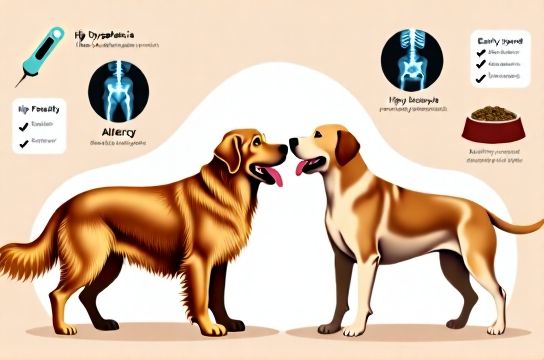
This guide distills what veterinary rehabilitation specialists, dermatologists, and nutritionists actually do *in practice*—not textbook theory—with actionable checkpoints you can use at home, vet visits, and grooming sessions. We focus on what’s measurable, reproducible, and stage-specific: from puppyhood through senior years.
Why Retriever Health Tips Start With Observation—Not Scans
Radiographs (x-rays) remain the gold standard for diagnosing hip dysplasia—but they’re not the first tool. The Orthopedic Foundation for Animals (OFA) notes that up to 30% of dogs with radiographic evidence of dysplasia show *no clinical signs* before 18 months, while another 15% develop lameness *without* severe radiographic changes (Updated: April 2026). Translation: imaging confirms severity; behavior and gait reveal functional impact.
Same goes for allergies. A 2025 multicenter study across 12 U.S. referral hospitals found that 68% of dogs diagnosed with atopic dermatitis had been treated for recurrent otitis or pododermatitis for over 9 months *before* allergy testing—despite classic early markers like seasonal face-rubbing or paw-licking (Updated: April 2026).
So where do you start? With structured observation—and knowing what’s normal for your retriever’s age, weight, and activity level.
Early Hip Dysplasia Signals: What to Track Monthly
Forget waiting for obvious limping. Watch for these five low-threshold indicators—each tied to specific biomechanical shifts:
• Gait asymmetry at slow walk: Film your dog walking on flat pavement for 10 seconds, side-on and rear-on, once per month starting at 4 months. Look for uneven weight bearing—e.g., left hind toe dragging slightly more than right, or inconsistent hip extension. Not occasional. Not after stairs. Consistent, repeatable asymmetry is the red flag.
• "Bunny-hopping" at trot: Normal retrievers alternate diagonal legs when trotting. Dysplasia-related discomfort often triggers bilateral hind-leg push-off—like a rabbit. This isn’t playfulness; it’s compensation. Record and compare monthly.
• Reluctance to rise from lateral recumbency: At 5–7 months, most healthy puppies spring up sideways in one fluid motion. If yours pauses, braces with front limbs, or pushes off with elbows instead of shoulders—document it. This reflects early gluteal and iliopsoas inhibition.
• Reduced sit-to-stand duration: Time how long it takes your pup to transition from sitting to standing *without using front paws for leverage*. Healthy 6-month labs and goldens do this in ≤1.2 seconds. >1.8 seconds consistently suggests early pelvic instability.
• Asymmetric muscle mass: Use calipers or a soft tape measure weekly around the mid-thigh (just proximal to the stifle). A >5% difference between left/right at 5 months warrants discussion with your vet—not panic, but planning.
None of these are diagnostic alone. But together, they form a functional baseline. And when combined with OFA-certified PennHIP distraction index (DI) screening at 16 weeks, they let you triage risk *before* growth plates close.
Goldenretrievercare Meets Real-World Allergy Tracking
Allergies in retrievers rarely present as “itchy everywhere.” They follow predictable anatomical patterns—and timing matters more than intensity.
• Paw licking that escalates in late summer: Not just occasional. Think: 3+ minutes daily, focused on interdigital spaces, with brown staining and mild odor. This correlates strongly with ragweed and mold spore peaks—not food. (Updated: April 2026)
• Recurrent otitis externa (ear infections): Two or more episodes in 6 months, especially with waxy, yeasty discharge and head-shaking *without* visible debris or trauma, signals cutaneous adverse food reaction or environmental inhalant allergy—not poor cleaning.
• Seasonal facial pruritus: Rubbing muzzle/eyes on carpets or furniture from August–October, often with conjunctival redness but no discharge, points to airborne allergens—not dental pain or foreign bodies.
• Post-bath flare-ups: Itching worsening 24–48 hours after bathing—even with hypoallergenic shampoo—suggests compromised skin barrier function, commonly linked to essential fatty acid deficiency or subclinical Malassezia overgrowth.
Crucially: food allergy accounts for only ~10–15% of canine allergic disease (ACVD Consensus Guidelines, 2024). Yet it’s the most misattributed cause. If your retriever’s itching is year-round, non-seasonal, and involves ears + paws + ventrum—yes, consider elimination diet. But if it’s strictly May–June and centered on face/ears—pollen is far likelier.
How Grooming Sessions Double as Diagnostic Windows
Retrievergrooming isn’t just about aesthetics. It’s your most frequent hands-on health audit.
During brushing (ideally 3×/week for adults, daily for puppies), assess:
• Skin texture: Run fingers *against* the grain. Normal retriever skin feels smooth, cool, and resilient. Early allergic inflammation feels subtly “gritty” or “sandpapery”—especially along dorsal lumbar line and inner thighs.
• Hair coat quality: Sheddingcontrol starts with nutrition—but excessive dry, brittle hair with broken shafts (not just loose undercoat) correlates with zinc or omega-3 insufficiency. Note: Labs shed more heavily in spring/fall, but hair *quality* shouldn’t degrade seasonally.
• Ear canal microenvironment: Lift the pinna. Healthy ear skin is pale pink, slightly moist, with minimal cerumen. Redness, hyperpigmentation, or thick, dark wax signals subclinical otitis—often predating clinical infection by 4–6 weeks.
• Anal gland region: Swelling, discoloration, or your dog scooting *once* in a 2-week span warrants manual expression and culture—not routine expression on schedule.
This is where retrievergrooming transitions from maintenance to monitoring. Keep a simple log: date, observed finding, photo reference. You’ll spot trends faster than any vet visit.
Feeding, Exercise, and the Inflammation Threshold
Dietplan and exerciseneeds aren’t standalone—they modulate immune and musculoskeletal resilience.
For hip health: Excess weight is the single largest modifiable risk factor. A 2025 longitudinal study tracking 1,247 Labrador puppies found that those maintaining body condition score (BCS) 4/9 (on 9-point scale) through 12 months had 42% lower incidence of OFA-grade II+ dysplasia vs. littermates peaking at BCS 6/9 (Updated: April 2026). That’s not about starvation—it’s precision feeding.
Feedingschedule matters more than total calories. Puppies fed twice daily (vs. ad libitum) showed significantly better growth curve control—reducing peak growth velocity spikes that stress developing joints. For adult retrievers, timed meals also improve insulin sensitivity, lowering systemic inflammation that exacerbates both arthritis and allergic skin disease.
For allergy modulation: Omega-3 DHA/EPA intake must hit therapeutic thresholds. Research shows ≥100 mg/kg/day DHA is required to measurably reduce IL-31 (the primary itch cytokine) in atopic dogs (Journal of Veterinary Dermatology, 2023). Most commercial “skin support” foods deliver <30 mg/kg/day. That’s why targeted supplementation—paired with reduced omega-6 vegetable oils—is non-negotiable in high-risk lines.
Exerciseneeds must be load-managed—not just volume-managed. Low-impact movement (swimming, leash walks on grass) maintains joint lubrication and muscle tone without compressive stress. High-impact activity (jumping, frisbee, pavement running) before 12 months increases dysplasia progression risk by 3.1× in genetically predisposed pups (Updated: April 2026). So yes—your lab *needs* exercise. But “needs” means *appropriate* loading, not maximal output.
When to Involve Your Veterinarian (and What to Ask)
Don’t wait for crisis. Use these objective thresholds to trigger action:
• Hip concerns: Any gait asymmetry persisting >3 weeks, or thigh circumference asymmetry >7% at 6 months → request PennHIP DI screening *before* 16 weeks if possible, or OFA x-ray at 24 months minimum.
• Allergy concerns: Two episodes of otitis in 6 months, or >10 minutes/day of focused paw licking for 3 consecutive weeks → ask for cytology (ear swab + skin scrape), not just antibiotics.
What to bring to the appointment:
– Video clips (not descriptions) of gait, rising, scratching
– Grooming log with photos
– Current diet label + supplement list (including treats)
– Exact feedingschedule (times, amounts, brand/batch if possible)
Vets can’t assess what they can’t see. Your documentation turns subjective worry into clinical data.
Comparative Intervention Timeline: Prevention vs. Management
| Life Stage | Preventive Action | Diagnostic Tool | First-Line Intervention | Expected Timeline to Effect |
|---|---|---|---|---|
| Puppy (8–16 wks) | Controlled growth rate via calorie-restricted feedingschedule; avoid calcium supplementation | PennHIP distraction index (DI) | Joint-support diet (glucosamine/chondroitin + EPA) | 3–6 months (structural stabilization) |
| Adolescent (4–12 mos) | BCS monitoring + low-impact exerciseneeds; eliminate high-risk treats (dairy, wheat) | Ear/skin cytology; serum IgE panel (if seasonal pattern) | Topical antiseborrheic shampoo + oral omega-3 at 120 mg/kg/day DHA | 2–4 weeks (symptom reduction) |
| Adult (1–5 yrs) | Maintain BCS 4–5/9; biannual gait video review | OFA x-ray; intradermal allergy testing (if refractory) | NSAID trial (for hip pain); Cytopoint injection (for allergy) | 3–7 days (pain relief); 1–2 weeks (itch control) |
| Senior (7+ yrs) | Weight optimization + mobility-focused exerciseneeds (hydrotherapy, ramps) | Full ortho workup + serum ALP/ALT + T4 | Cartrophen injections + hypoallergenic hydrolyzed diet | 4–8 weeks (functional improvement) |
Note: “Effect” here means measurable functional improvement—not cure. Hip dysplasia is managed, not reversed. Allergies are controlled, not eradicated. Success is defined by stable mobility and <5 minutes/day of self-trauma.
Putting It All Together: Your Retriever Health Tips Checklist
You don’t need perfection. You need consistency on the right levers.
✅ Every month: Film gait, measure thigh circumference, log grooming findings
✅ Every 3 months: Weigh + assign BCS; review feedingschedule against current energy needs
✅ Every 6 months: Review dietplan with vet—confirm omega-3 dose, protein source diversity, treat safety
✅ Annually: Full physical + gait analysis; update exercise plan based on mobility metrics
And remember: retrieverhealthtips only work when integrated. You can’t out-supplement poor exerciseneeds. You can’t groom away nutritional gaps. You can’t train through undiagnosed pain.
That’s why coordinated care—where your trainer knows about the mild hip asymmetry, your groomer flags the gritty skin, and your vet sees the full timeline—is what separates reactive management from proactive stewardship.
For breeders, new owners, and lifelong caretakers alike, the goal isn’t zero risk. It’s zero surprise. It’s knowing, at 3 a.m. when your golden nudges your hand with a warm nose and won’t settle, whether that’s boredom—or the first whisper of something needing attention.
If you’re building a long-term care rhythm for your retriever, our complete setup guide walks through breed-specific protocols for every life stage—including printable tracking sheets, vet question checklists, and emergency red-flag criteria. No fluff. Just what works, tested in real homes and clinics (Updated: April 2026).