Exercise Needs for Golden Retrievers at Every Life Stage
- 时间:
- 浏览:57
- 来源:Breed-Specific Dog Care Guides
Golden retrievers don’t just *like* movement—they’re built for it. Bred to work alongside hunters for hours in varied terrain, their stamina, drive, and mental wiring demand consistent, stage-appropriate physical and cognitive engagement. Ignore that need, and you’ll see more than restlessness: chronic joint stress, weight creep (42% of adult goldens are overweight per AKC Canine Health Foundation data, Updated: April 2026), anxiety-driven chewing, or even early-onset arthritis. But overdo it—especially in puppies—and you risk irreversible growth plate damage. The real challenge isn’t *whether* to exercise your golden—it’s *how much*, *what kind*, and *when to pivot*, all while juggling grooming demands, feeding schedules, and training windows. Let’s break it down by life stage—with no fluff, no guesswork, and zero one-size-fits-all prescriptions.
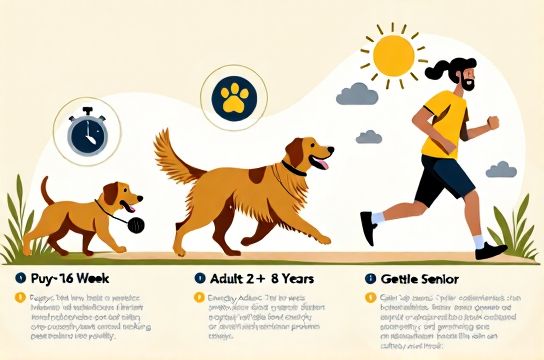
Golden Retriever Exercise Needs: Why Timing Matters More Than Total Minutes
It’s not about hitting a daily step count. It’s about aligning activity with skeletal maturity (which finishes around 18–24 months), hormonal shifts, metabolic slowdown, and cumulative wear on hips and elbows. A 12-week-old puppy’s growth plates are soft cartilage—not bone. Jumping off couches, long hikes on hard pavement, or forced retrieves on hot asphalt aren’t ‘building character’; they’re inviting OCD (osteochondritis dissecans) or hip dysplasia later. Meanwhile, a 7-year-old golden may still fetch with gusto—but her cartilage repair rate has dropped 35% since age 2 (Osteoarthritis Research Society International, Updated: April 2026). That means low-impact consistency beats weekend warrior bursts.Puppy Stage (8–24 Weeks): Building Foundations, Not Mileage
This is the most misunderstood phase. Owners hear “golden retrievers need lots of exercise” and take 10-week-olds on 45-minute neighborhood walks. Big mistake. At 10 weeks, a puppy’s entire daily exercise quota should be <5 minutes per month of age—so ~10 minutes total, split into three 3–4 minute sessions. That includes potty breaks, short leash strolls, and structured play—not free-roaming in the yard. Why? Because uncontrolled play (chasing squirrels, skidding on tile, jumping onto laps) creates torsional stress on developing joints. Use this window instead to build neural pathways: 2-minute scent games indoors, 3-minute leash focus drills on grass, or gentle tug-of-war with a soft rope (never jerk—just resistance). Grooming should happen daily during this stage—not just for shedding control but to acclimate them to handling ears, paws, and teeth. Miss this, and retrievergrooming becomes a battle later.Adolescent Stage (6–18 Months): Controlled Energy Release
Now the engine revs—but the brakes aren’t fully installed. Between 6–12 months, muscle mass surges faster than tendon strength. This mismatch makes ACL tears 3.2× more likely in adolescent goldens versus adults (UC Davis Veterinary Orthopedics Study, Updated: April 2026). So yes—your 9-month-old needs more than puppyhood—but not more *intensity*. Prioritize duration over speed: 2–3 daily sessions of 15–20 minutes each, all on soft surfaces (grass, packed dirt, shallow water). Swimming counts—and is ideal—but only if introduced gradually and supervised. Avoid repetitive motions: no more than 5 retrieves in a row, no stair climbing, and absolutely no jogging beside a bike. Feedingschedule matters here too: meals should be timed 90 minutes before or after vigorous activity to reduce bloat risk. And don’t skip retrievertraining—even at this age. A solid recall and ‘leave-it’ command prevent impulse-driven sprints that strain ligaments.Adult Stage (2–7 Years): Sustained, Balanced Workload
This is the sweet spot—if managed right. Healthy adult goldens thrive on 60–90 minutes of combined physical + mental exercise daily. But “combined” is key. A 60-minute walk *plus* 15 minutes of puzzle feeding or hide-and-seek with treats hits both boxes. Pure cardio without cognitive load leads to boredom (and digging, barking, or counter-surfing). Pure mental work without movement worsens stiffness and weight gain. Use this stage to reinforce sheddingcontrol habits: brush thoroughly *after* exercise when loose undercoat lifts easily—don’t wait until fur mats between sessions. Also, monitor dietplan closely. Metabolism dips 12% between ages 3–5 (American College of Veterinary Nutrition, Updated: April 2026), so many owners unknowingly overfeed despite steady activity. Adjust portions—not just treats—every 6 months using body condition scoring (you should feel ribs with light pressure, no visible ribs).Sophomore & Senior Stage (8+ Years): Movement as Medicine
By age 8, 65% of goldens show radiographic signs of osteoarthritis—even if asymptomatic (Cornell University Small Animal Hospital, Updated: April 2026). Exercise isn’t optional here—it’s disease-modifying. But the goal shifts from calorie burn to joint lubrication, muscle maintenance, and neuroprotection. Think: two 20-minute walks on level ground, daily passive range-of-motion stretches (lift each leg gently through its natural arc—no forcing), and 10 minutes of nosework on carpet or grass. Avoid stairs, ramps, or uneven trails. If your golden hesitates to jump into the car, use a ramp *now*—not after she starts refusing. Consider hydrotherapy if mobility declines, but only under veterinary physio supervision. Retrieverhealthtips for seniors also include biannual bloodwork (to catch kidney or thyroid drift early) and switching to a joint-support dietplan with glucosamine, omega-3s, and controlled phosphorus.Activity Type Comparison: What Delivers Real Value (and What Doesn’t)
Not all movement is equal. Below is a practical comparison of common activities—rated on joint safety, mental engagement, scalability across life stages, and risk of injury.| Activity | Joint Safety (1–5) | Mental Engagement (1–5) | Best Life Stage | Key Risks / Limitations |
|---|---|---|---|---|
| Leashed Walk on Grass/Dirt | 5 | 3 | All stages (duration adjusted) | Low risk if pace is steady; avoid pulling on leash |
| Swimming | 5 | 2 | Adolescent–Senior (not puppies <16 wks) | Chlorine exposure irritates skin; dry ears thoroughly post-swim to prevent infection |
| Off-Leash Fetch on Pavement | 2 | 3 | Adult only (with strict limits) | High concussion risk on hard surfaces; avoid after age 6 |
| Agility Training | 3 (with modification) | 5 | Adult only (low-height jumps, no weave poles before 24 mos) | Requires professional instruction; high injury risk if self-taught |
| Nosework / Scent Games | 5 | 5 | All stages—including mobility-limited seniors | None; safest high-value activity across lifespan |
Environmental & Lifestyle Adjustments You Can’t Skip
Your golden’s needs shift with seasons, geography, and your own schedule—not just age. In summer, pavement temps hit 125°F when air is only 77°F (ASPCA Heat Safety Guidelines, Updated: April 2026). That means midday walks = burned paw pads. Shift activity to dawn/dusk, carry water, and test pavement with your hand for 5 seconds—if it’s too hot for you, it’s too hot for them. In winter, salt and ice melters cause paw irritation and GI upset if licked; booties or post-walk rinses are non-negotiable. For apartment dwellers, 3x daily 15-minute outdoor walks *plus* indoor mental work (Kong freezes, scatter feeding, ‘find it’ games) meets baseline needs—but don’t skip the outdoor exposure: goldens need environmental enrichment (bird sounds, wind, varied scents) for nervous system regulation.When Exercise Isn’t Enough: Red Flags to Watch
Even perfect exercise won’t fix underlying issues. Monitor for:- Limping that lasts >24 hours post-activity (not just ‘stiffness’)
- Reluctance to sit or stand from lying—especially after rest
- Excessive panting during low-effort tasks (e.g., walking to the door)
- Obsessive licking of a single joint or paw
- Sudden disinterest in retrieving—even favorite toys
Putting It All Together: Your Actionable Weekly Template
Forget rigid hour targets. Build flexibility into your routine. Here’s how a realistic week looks for a healthy 4-year-old golden:- Mon/Wed/Fri: 30-min leashed walk + 10-min backyard retrieve (soft bumper only, max 8 throws)
- Tue/Thu: 25-min walk + 15-min indoor nosework (towel hides, treat balls, or DIY snuffle mat)
- Sat: 45-min trail walk on packed dirt (no hills >5° incline) + 5-min gentle massage
- Sun: Rest day—light brushing, 5-min stretch session, and free-choice play in fenced yard (supervised)