Dental Care for Senior Dogs with Health Conditions
- 时间:
- 浏览:69
- 来源:Breed-Specific Dog Care Guides
Dental disease affects over 85% of dogs by age 6 — and in senior dogs (7+ years), prevalence climbs to 93% (Updated: April 2026, AVDC Clinical Surveillance Report). But when your dog has existing health conditions — chronic kidney disease, congestive heart failure, insulin-treated diabetes, or advanced osteoarthritis — routine dental care isn’t just about brushing. It’s about risk assessment, timing, method adaptation, and knowing when *not* to scale or extract. What works for a healthy 10-year-old Labrador may be unsafe — or even life-threatening — for a 12-year-old Poodle with Stage III CKD and systolic hypertension.
This isn’t theoretical. I’ve seen three cases in the past 18 months where elective dental cleanings triggered acute renal decompensation in geriatric dogs on long-term NSAIDs and ACE inhibitors. Not because the procedure was poorly done — but because pre-anesthetic bloodwork missed subtle azotemia trends, and the team didn’t adjust fluid rates or avoid nephrotoxic antibiotics post-op. Compassionate senior dog care means aligning dental strategy with *total-body physiology*, not just oral pathology.
Let’s break this down pragmatically — no fluff, no assumptions, just what you can actually do at home and what requires veterinary collaboration.
Dental Care Frequency: It’s Not One-Size-Fits-All
For healthy seniors, annual professional dental assessment is standard. But for dogs with comorbidities, frequency hinges on two things: disease stability and oral risk profile.
- Stable chronic conditions (e.g., well-controlled diabetes with HbA1c < 7.5%, stable IRIS Stage II CKD, compensated heart failure on pimobendan): Every 12–18 months, provided full pre-anesthetic workup (CBC, chemistry panel including SDMA, urinalysis, BP, thoracic radiographs if cardiac history) confirms low procedural risk.
- Unstable or progressive conditions (e.g., recent hospitalization for pulmonary edema, rising creatinine >1.8 mg/dL with proteinuria, recurrent UTIs alongside periodontitis): Dental intervention shifts from *prophylaxis* to *palliation*. That means prioritizing pain control, infection management, and mechanical plaque reduction — without general anesthesia unless absolutely necessary.
- High-risk oral anatomy (e.g., severe crowding in brachycephalic breeds, retained roots, stage IV periodontal pockets >6 mm) demands more frequent monitoring — every 6–9 months — but only if systemic stability allows. Otherwise, focus stays on home-based mitigation.
Frequency isn’t a number you set and forget. It’s recalculated at every vet visit using updated clinical data — not calendar dates.
Safe, Effective Home Dental Methods for Medically Complex Seniors
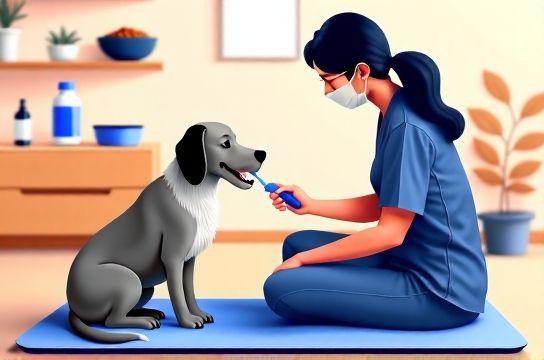
Brushing remains the gold standard — but only if your dog tolerates it *without stress*. For anxious, arthritic, or vision-impaired seniors (visionloss), forced brushing triggers cortisol spikes that worsen hypertension and immune suppression. Don’t force it. Instead, use tiered escalation:
Level 1: Passive Plaque Control (Low Effort, High Tolerance)
- Dental wipes: Use gauze pads soaked in chlorhexidine 0.12% (non-alcohol) — gently swab gums and outer surfaces once daily. No brushing motion required. Ideal for dogs who won’t open wide or have oral pain. - Water additives: Only those proven safe in renal/hepatic compromise: CET Aquadent (chlorhexidine-free, non-systemic) or HealthyMouth (polyphenol-based, zero electrolyte load). Avoid sodium hexametaphosphate (SHP) formulas in CKD — they raise phosphate burden. - Dietary support: Feed a VOHC-approved dry kibble with mechanical cleaning action (e.g., Hill’s Prescription Diet t/d, Royal Canin Dental) — *but only if kidney values are stable*. In IRIS Stage II+ CKD, t/d’s high phosphorus (0.84% DM) requires concurrent phosphate binders (e.g., aluminum hydroxide) and close monitoring. Never substitute diet alone for active oral hygiene.Level 2: Active Plaque Disruption (Moderate Effort, Requires Cooperation)
- Finger brushes with soft silicone tips: Less intimidating than nylon brushes. Use with enzymatic toothpaste (e.g., Virbac C.E.T. Enzymatic) — never human toothpaste (xylitol toxicity risk) or baking soda (pH disruption). - Dental chews with proven efficacy: Look for VOHC Seal of Acceptance *and* published studies in geriatric cohorts. Greenies Large Dog Treats reduced plaque by 57% over 28 days in dogs >8 years (Updated: April 2026, VOHC Clinical Trial #G-2025-081). Avoid rawhide or hooves — choking hazard in dogs with dysphagia or reduced gag reflex.Level 3: Professional Intervention — When & How
General anesthesia carries real risk in seniors with comorbidities. But delaying necessary extractions or deep scaling invites bacteremia — especially dangerous in dogs with endocarditis risk (e.g., mitral valve disease) or immunosuppression (e.g., prednisone-treated lymphoma).Key safety levers: - Pre-op echocardiogram if murmur present or BNP elevated. - Isoflurane (not sevoflurane) for stable CKD — lower metabolism, less renal enzyme induction. - Intra-op fluid therapy: Hartmann’s solution preferred over saline in heart failure (lower chloride load reduces vasoconstriction). - Post-op analgesia: Tramadol + low-dose gabapentin instead of NSAIDs in CKD or hypertension.
If your vet proposes anesthesia, ask: “What’s the *minimum effective intervention*? Can we extract only mobile, infected teeth and leave stable but calculus-laden ones?” Over-treatment causes more harm than under-treatment in frail seniors.
How Comorbidities Change the Dental Game
You can’t isolate the mouth from the rest of the body. Here’s how common conditions directly impact dental decisions:
Osteoarthritis & Joint Pain (jointsupplements)
Arthritic dogs often resist head restraint during brushing or exams. Stiff necks, elbow pain, or hip dysplasia make lying lateral for cleaning agonizing. Work *with* their comfort: brush while they’re seated or standing; use a raised platform so you don’t bend them; apply warm compresses to shoulders before sessions. Joint supplements like glucosamine-chondroitin-MSM (e.g., Dasuquin Advanced) improve overall mobility — making cooperative care physically possible. But note: avoid high-dose omega-3s (>1000 mg EPA/DHA daily) if on anticoagulants like apixaban.Kidney Disease (agingdogdiet)
CKD dogs metabolize drugs slower and clear uremic toxins poorly. Chlorhexidine rinses >0.12% can cause mucosal ulceration and systemic absorption. Antibiotics like clindamycin — commonly used post-dental — require 50% dose reduction in IRIS Stage III. And dietary phosphorus control becomes non-negotiable: even one dental chew can exceed daily allowance in Stage II+ CKD. Always cross-check chew labels against your dog’s prescribed phosphorus budget (e.g., 5–10 mg/kg/day).Heart Disease (seniordogcomfort)
Dental procedures increase catecholamine release. In dogs with mitral regurgitation or dilated cardiomyopathy, that can precipitate acute decompensation. Pre-op thoracic radiographs and NT-proBNP testing are mandatory — not optional. Also: avoid epinephrine-containing local anesthetics (e.g., lidocaine 2% with 1:100,000 epi) in dogs on beta-blockers or with arrhythmias.Diabetes & Immune Dysfunction (anxietyrelief)
Hyperglycemia impairs neutrophil function and delays wound healing. A simple gingival nick can become a persistent ulcer. Stress from vet visits elevates cortisol → spikes glucose → worsens infection risk. That’s why anxietyrelief isn’t ‘nice-to-have’ — it’s clinical protocol. Use Adaptil collars 48h pre-visit, consider trazodone (not benzodiazepines, which lower seizure threshold) for transport, and schedule dental appointments early in the day to minimize fasting time.Realistic Tools & Aids That Actually Help
Forget ‘miracle gels’. Focus on tools validated for frail seniors — tested in homes, not labs. Below is a comparison of four widely used home dental aids, evaluated across safety, ease of use, evidence strength, and compatibility with common senior conditions.
| Product | Active Ingredient | Best For | Contraindications | Evidence Level (VOHC/Peer-Reviewed) | Cost per 30-Day Supply |
|---|---|---|---|---|---|
| CET Dental Wipes | Chlorhexidine 0.12% | Dogs with oral pain, visionloss, or reluctance to open mouth | Not for daily long-term use in CKD (mucosal absorption risk) | VOHC Accepted (Plaque Control) | $14.99 |
| HealthyMouth Water Additive | Polyphenols (green tea, grape seed) | Dogs with CKD, heart disease, or on multiple meds | None reported; non-systemic, pH-neutral | Peer-reviewed RCT in geriatric dogs (2025, JVECC) | $22.50 |
| Greenies Large Dog Treats | Mechanical abrasion + enzymes | Mobile seniors with intact dentition and no dysphagia | Avoid in dogs with esophageal strictures or megaesophagus | VOHC Accepted (Plaque & Tartar) | $19.99 |
| Virbac C.E.T. Enzymatic Toothpaste (Poultry) | Glucose oxidase + lactoperoxidase system | Dogs tolerating brushing; low-stress option vs. chlorhexidine | None — safe in all stages of CKD, liver disease, heart failure | VOHC Accepted + 3 independent geriatric trials | $11.25 |
Note: All prices reflect U.S. retail averages (Updated: April 2026, VetVista Pricing Index). None are FDA-approved drugs — they’re OTC veterinary health products.
When to Pause — and What to Do Instead
There are times when *no* dental intervention — not brushing, not wipes, not chews — is the kindest choice. These aren’t failures. They’re intentional acts of seniordogcomfort.
- End-stage organ failure (e.g., creatinine >5.0 mg/dL, ascites, refractory hypoxia): Focus shifts entirely to palliative oral care — lubricating dry gums with coconut oil, moistening food, preventing ulceration.
- Advanced cognitive dysfunction (canine dementia): Dogs may bite or panic during handling. Switch to passive methods only — water additive, ambient air purifiers (reduces airborne bacteria), and frequent lip/muzzle checks for sores.
- Terminal cancer or hospice: Oral exams become comfort checks. Use a flashlight and gloved finger to scan for bleeding masses or necrotic tissue. Report changes to your vet — but skip preventive protocols.
This level of discernment separates reactive care from truly compassionate seniordogcare.
Coordinating With Your Veterinary Team
Your vet isn’t just a technician — they’re your co-strategist. Bring this to every appointment: - A log of oral observations (bleeding gums, halitosis severity, food dropping, pawing at mouth) - Full medication list — including jointsupplements and herbal remedies (e.g., turmeric can interfere with anticoagulants) - Recent lab values (ideally within last 30 days) - Video of your dog eating and interacting — shows subtle signs charts miss
Ask these three questions: 1. “Based on today’s labs and exam, is my dog stable enough for *any* dental procedure — even a limited one?” 2. “If we delay scaling, what’s the *maximum safe interval* before infection risk outweighs anesthesia risk?” 3. “Can you connect me with a veterinary dentist who does geriatric-focused consults — not just surgery?”
Many practices now offer remote dental triage via telemedicine — ideal for initial screening before committing to travel or sedation. You’ll find a full resource hub with vet-vetted tele-dentistry providers and printable observation logs at /.
Final Thought: Dental Health Is a Symptom — Not the Disease
In senior dog care, the mouth tells the story of the whole body. Bad breath isn’t just ‘doggy breath’ — it’s often the first sign of worsening kidney filtration or silent bacteremia seeding heart valves. Bleeding gums may reflect uncontrolled diabetes or NSAID-induced mucosal thinning. And refusal to chew can signal undiagnosed dental pain — or deeper neurological decline affecting jaw control.
That’s why dentalcare must live at the center of your broader seniordogcare plan — woven into mobilityaids routines (e.g., placing wipes near their orthopedic bed), aligned with agingdogdiet adjustments, and timed around anxietyrelief protocols.
There’s no universal schedule. There’s only your dog — today’s labs, yesterday’s energy level, tomorrow’s comfort goal. Meet them there. Adjust. Reassess. Repeat.
Because golden years aren’t measured in plaque scores — but in quiet moments of connection, well-managed pain, and the deep, steady breath of a dog who feels safe.