Vet Visits for Senior Dogs: How Often You Really Need Che...
- 时间:
- 浏览:81
- 来源:Breed-Specific Dog Care Guides
Most dog owners don’t realize their dog is medically ‘senior’ until they see gray muzzles or slower mornings—but veterinarians classify dogs as senior much earlier. Small breeds (under 20 lbs) typically enter senior status at age 10–12; medium breeds (21–50 lbs) at 8–10; large breeds (51–90 lbs) at 6–8; and giant breeds (90+ lbs) often cross that threshold by age 5–6 (Updated: April 2026). This isn’t arbitrary—it reflects accelerated cellular aging, cumulative wear on joints, declining organ reserve, and rising incidence of chronic disease.
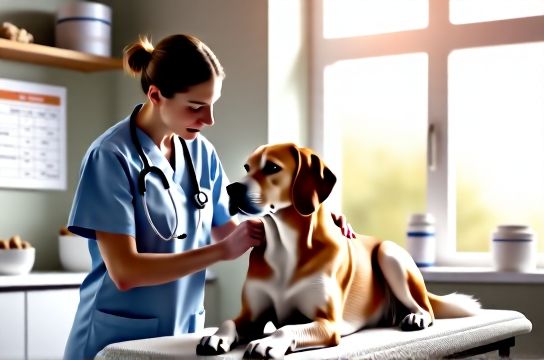
That shift demands a change in veterinary rhythm. Annual checkups—the standard for adult dogs—are no longer sufficient. But jumping to *every* three months isn’t automatically better either. The right schedule balances risk, detectability, intervention windows, and your dog’s daily reality.
Here’s what the evidence shows—and how to tailor it.
How Often Do Senior Dogs Really Need Vet Visits?
The American Animal Hospital Association (AAHA) and American Veterinary Medical Association (AVMA) jointly recommend biannual (every 6-month) wellness exams for all dogs aged 7+—with adjustments based on individual risk. That’s not just tradition; it’s grounded in physiology. A six-month interval equals roughly 3–4 dog years for most seniors. In that time, early-stage kidney disease can progress from subclinical to stage II, mild osteoarthritis can become functionally limiting, and dental tartar can seed systemic inflammation.
But frequency alone doesn’t guarantee value. What matters is *what happens* at each visit.
A meaningful senior wellness exam includes:
• A full physical—with special attention to weight trends, muscle mass (especially along the spine and hindquarters), lymph node symmetry, heart rhythm, lung sounds, abdominal palpation, and orthopedic assessment (gait, stance, joint flexion/extension)
• Behavioral screening: changes in sleep patterns, anxiety relief needs, confusion episodes, or altered interaction with family members
• Vision and hearing evaluation—not just reflexes, but functional observation (e.g., navigating dim rooms, responding to quiet cues)
• Dental care assessment: gingival recession, tooth mobility, oral odor, and presence of calculus—since periodontal disease affects over 80% of dogs by age 8 (Updated: April 2026)
• Baseline diagnostics: bloodwork, urinalysis, and blood pressure measurement—not just “because we always do it,” but to establish personal reference ranges.
Missing any of these turns a visit into ritual rather than reassessment.
When Biannual Isn’t Enough
Certain dogs need more frequent touchpoints—not necessarily full exams, but targeted rechecks. Consider quarterly visits (every 3 months) if your dog:
• Has been diagnosed with chronic kidney disease (IRIS Stage II or higher)
• Is receiving long-term NSAIDs or other joint supplements requiring liver/kidney monitoring
• Shows progressive mobility loss despite mobility aids or environmental modifications
• Has unstable endocrine disease (e.g., poorly regulated Cushing’s or diabetes)
• Exhibits new or worsening anxiety relief challenges—especially if medication has recently changed
Quarterly visits let you catch drift before crisis. For example, a creatinine rise from 1.4 to 1.8 mg/dL may seem minor—but in a dog with known CKD, it signals a 25% decline in glomerular filtration rate. Catching that early allows dietary adjustment (agingdogdiet tweaks like reduced phosphorus and increased omega-3s) and fluid support *before* vomiting or lethargy appear.
When Less May Be More
Conversely, some stable seniors—especially those with low-stress home environments, predictable routines, and no active diagnoses—may maintain safety with carefully spaced visits. If your 12-year-old terrier mix has normal bloodwork for three consecutive years, zero dental disease, consistent weight, and no gait abnormalities, a 6-month interval remains appropriate. Pushing to quarterly without clinical indication adds cost, transport stress, and clinic-time anxiety—counter to core seniordogcare principles.
The goal isn’t frequency for frequency’s sake. It’s calibrated vigilance.
Essential Diagnostic Tests—and When to Repeat Them
Not every test belongs on every visit. Over-testing causes unnecessary stress and expense; under-testing misses treatable conditions. Here’s a realistic, tiered approach:
• Bloodwork (CBC + Chemistry Panel): Minimum every 6 months for all seniors. Key markers: creatinine, BUN, SDMA (more sensitive for early kidney change), ALT/ALP (liver enzyme trends), glucose, calcium, and total protein. SDMA elevation often precedes creatinine rise by 6–12 months—making it invaluable for proactive seniordogcare (Updated: April 2026).
• Urinalysis + Urine Protein:Creatinine Ratio (UPC): Every 6–12 months, especially if SDMA or creatinine is trending upward or if the dog has hypertension or dental disease. UPC detects early glomerular leakage—critical before azotemia develops.
• Thyroid (Total T4 + cTSH): Once at senior onset, then only if clinical signs emerge (lethargy, weight gain, skin changes) or if other labs suggest dysfunction. Routine repeat testing in asymptomatic dogs has low yield.
• Blood Pressure: At every senior wellness visit. Hypertension affects ~20% of dogs over age 10—and often coexists with kidney disease or hyperthyroidism (rare but possible in older dogs post-thyroidectomy). Systolic >160 mmHg warrants recheck and investigation.
• Dental Radiographs: Not annually—but *whenever clinical exam reveals pocketing, mobility, or unexplained oral odor*. Full-mouth radiographs under anesthesia remain the gold standard for detecting root abscesses, bone loss, or resorptive lesions invisible above the gumline.
• Abdominal Ultrasound: Not routine. Reserved for unexplained weight loss, persistent vomiting/diarrhea, abnormal lab values, or palpable masses. Yield is high when indicated—but low-value as a screen.
The Role of Imaging Beyond X-rays
For dogs with progressive mobility loss, advanced imaging clarifies next steps. MRI is rarely needed—but if your dog responds poorly to joint supplements and mobility aids, and shows asymmetric weakness or proprioceptive deficits, MRI helps rule out spinal cord compression or CNS disease. CT is superior for complex dental or nasal issues. These aren’t first-line tools—but knowing when they add real diagnostic clarity prevents months of trial-and-error management.
What Happens Between Visits? Your Daily Seniordogcare Toolkit
Vet visits are snapshots. True seniordogcare happens daily—in how you feed, move, observe, and adapt.
Agingdogdiet isn’t about swapping kibble. It’s strategic nutrition: lower calories (metabolism drops ~20% by age 10), higher-quality protein (to preserve lean mass), added omega-3s (EPA/DHA for joint and cognitive support), and controlled phosphorus if kidney values trend up. Avoid generic “senior” formulas unless vet-confirmed—they’re often just lower-calorie adult food with minimal functional upgrades.
Jointsupplements require evidence-based selection. Look for products with ≥1,000 mg glucosamine HCl + 800 mg chondroitin sulfate *per daily dose*, plus ASU (avocado/soy unsaponifiables) or undenatured type II collagen. Results take 6–8 weeks—not days. Track mobility using simple metrics: stairs climbed without pause, time to stand from lying, willingness to jump onto the couch. If no improvement after 10 weeks, reassess formulation or add mobility aids like ramps or orthopedic beds.
Seniordogcomfort starts with thermal regulation. Older dogs lose subcutaneous fat and have impaired thermoregulation. Provide heated pads (low-wattage, chew-resistant), raised beds with memory foam, and draft-free sleeping zones. Combine with gentle massage focused on shoulder, hip, and lumbar areas—studies show 5 minutes daily improves circulation and reduces stiffness (Updated: April 2026).
Mobilityaids aren’t last-resort devices. They’re force multipliers for independence. Harnesses with rear-lift support (e.g., Help ‘Em Up) let arthritic dogs navigate grass or gravel without collapsing. Toe-grip booties prevent slipping on hardwood. And indoor ramps cut fall risk by 70% in dogs with hind-end weakness (Updated: April 2026). Introduce aids *before* crisis—when confidence is still intact.
Vision Loss, Sleep Patterns, and Anxiety Relief: The Subtle Shifts
These aren’t “just aging.” They’re neurologic, endocrine, or sensory events demanding response.
Visionloss often begins subtly: hesitation on shiny floors, bumping into doorframes at night, reluctance to go down stairs in dim light. Rule out cataracts (treatable surgically in many cases) and glaucoma (an emergency). Then adapt the environment: keep furniture layouts consistent, use tactile cues (rugs at thresholds), and add low-level nightlights along common paths.
Sleeppatterns change predictably—but not uniformly. Some seniors sleep more deeply; others experience fragmented rest, pacing at night, or vocalizing. Disrupted sleep correlates strongly with early cognitive dysfunction (canine dementia). Track timing: does restlessness happen *only* after midnight? Is there daytime drowsiness? A melatonin trial (1–3 mg at bedtime) helps 60% of affected dogs—but only after ruling out pain, hypertension, or urinary urgency.
Anxietyrelief in seniors is frequently misread as “grumpiness.” In reality, it’s often noise sensitivity amplified by hearing loss, spatial disorientation from vision loss, or discomfort masked by stoicism. Before reaching for sedatives, try sound-dampening curtains, pheromone diffusers (Adaptil), and predictable routines. If medication is needed, trazodone or low-dose gabapentin often work better—and safer—than benzodiazepines in older livers.
Putting It All Together: A Realistic Senior Wellness Schedule
Below is a practical comparison of visit types, recommended intervals, key actions, and trade-offs—designed for real homes, not textbooks.
| Visit Type | Recommended Interval | Core Components | Pros | Cons |
|---|---|---|---|---|
| Full Wellness Exam | Every 6 months (standard for stable seniors) | Physical exam, weight/muscle score, bloodwork (CBC + chem), urinalysis, BP, dental assessment, behavioral screen | Catches early organ changes; establishes baselines; builds vet-client trust | Cost ($120–$220); transport stress; time commitment |
| Focused Recheck | Every 3 months (for dogs with active conditions) | Targeted assessment only: e.g., BP + kidney panel for CKD; gait video review + joint supplement adjustment for arthritis | Lower cost ($60–$110); less stressful; highly actionable | Misses unrelated issues; requires clear prior diagnosis |
| Telehealth Triage | As needed between visits (e.g., sudden limping, appetite drop) | Video consult + symptom history; determines if in-person visit is urgent or can wait | Reduces unnecessary trips; fast access for acute concerns | Cannot replace hands-on exam; limited diagnostic scope |
None of these replace owner observation. You know your dog’s baseline better than any chart. If your dog stops greeting you at the door, sleeps through meal prep, or licks one paw obsessively for two days straight—that’s data. Document it. Bring videos. Ask questions—even if they seem small.
Final Thought: Care Is Continuum, Not Calendar
Vetvisits anchor senior dog care—but they’re one thread in a larger fabric. The most impactful interventions happen outside the clinic: adjusting the agingdogdiet before weight creeps up, introducing jointsupplements while cartilage is still repairable, adding mobilityaids before falls occur, and honoring seniordogcomfort with quiet spaces and predictable rhythms.
If you’re building a personalized plan—including environmental adaptations, supplement protocols, and behavior strategies—you’ll find our complete setup guide a practical starting point.
This isn’t about extending life at all costs. It’s about protecting quality—day by day, choice by choice, visit by visit.