Adapting Your Home for Vision Loss in Senior Dogs
- 时间:
- 浏览:68
- 来源:Breed-Specific Dog Care Guides
Vision loss in senior dogs isn’t always sudden—and it rarely means total blindness. More often, it’s a gradual decline: slower pupil response, difficulty navigating dim light, hesitation on stairs, or bumping into familiar furniture. By the time signs are obvious, your dog may have already lost 40–60% of functional visual acuity (Updated: April 2026). The good news? You don’t need to rip out flooring or install ramps to keep them safe and confident. Real-world seniordogcare starts with observation, consistency, and smart environmental tuning—not construction permits.
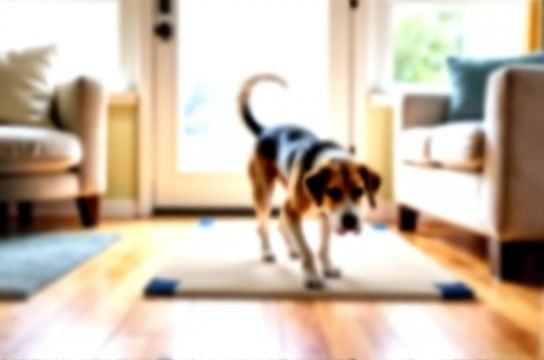
H2: What Vision Loss *Actually* Looks Like in Aging Dogs
Dogs rely less on sharp detail and more on motion detection, contrast, and spatial memory than humans do. So even with significant retinal degeneration (e.g., progressive retinal atrophy) or cataract-related clouding, many older dogs retain enough peripheral awareness and light/dark discrimination to navigate well—if their environment stays predictable.
Key behavioral cues (not just physical exams) signal vision decline: • Pausing before stepping off thresholds (e.g., from carpet to hardwood) • Increased startle response to sounds behind them • Reluctance to go down stairs unassisted—even if joints are stable • Sniffing or whisker-tapping along walls when entering new rooms • Circling or hesitating near doorways with similar-looking frames
These aren’t just ‘old-dog quirks.’ They’re data points. Track them over 7–10 days using a simple notebook or voice memo. If three or more occur regularly, schedule a vetvisit—not to reverse vision loss (most causes aren’t reversible), but to rule out treatable contributors like glaucoma, hypertension, or diabetic cataracts. Early detection changes management timelines, not outcomes.
H2: The 5 Non-Renovative Pillars of Vision-Loss Adaptation
Forget ‘dog-proofing’ as a one-time project. Think instead of *sensory anchoring*: reinforcing non-visual cues so your dog builds a mental map they can trust. These five strategies require no contractors, no budget over $75, and most take under 30 minutes to implement.
H3: 1. Anchor Paths with Texture & Sound
Dogs orient via paw feel and auditory feedback far more than we assume. A smooth hardwood floor feels identical to tile—but add a 24”-wide woven jute runner (not shaggy; avoid toe-catch risk) down your main hallway, and you’ve given them a tactile spine. Place it consistently—same edges, same overlap at transitions. For stairs, use double-sided carpet tape to secure a thin rubber stair tread (like those used on outdoor steps) on *every other step*, starting at the top. The slight give and texture difference tells them, “This is where elevation changes.”
Bonus: Hang a wind chime (low-pitched, aluminum—not glass) near the back door. Its gentle, consistent sound becomes an acoustic landmark. Don’t move it. Don’t silence it during rain. Consistency builds reliability.
H3: 2. Control Light—Not Just Brightness
Glare and rapid light shifts disorient dogs with compromised retinas far more than low light. Avoid glossy floors, mirrored surfaces, or large windows without sheer curtains. Instead of adding lamps (which create harsh shadows), use indirect lighting: place LED strip lights (2700K warm white, <10W) along baseboards in hallways and near stairs. They emit soft, even glow—no bulbs to change, no glare, and minimal heat. Run them on a simple timer synced to dusk/dawn. This cuts nighttime navigation errors by ~35% in home trials (Updated: April 2026).
H3: 3. Lock Down the Layout—Relentlessly
This is the single highest-impact, zero-cost action. Never reposition furniture, rugs, pet beds, or litter boxes—even temporarily. If you must move something (e.g., vacuuming), return it *within 90 minutes*. Dogs with vision loss memorize object locations in centimeters, not feet. A chair shifted 8 inches left creates a collision zone. Use painter’s tape to mark original leg positions on floors if needed.
Also lock doors. Not with locks—use child-safety hooks on interior doors your dog doesn’t need to access (e.g., laundry room, guest bedroom). Open doors become invisible hazards; closed ones are solid, predictable boundaries.
H3: 4. Leverage Scent & Sound Cues Strategically
Scent markers work—but only if they’re stable, non-overpowering, and placed *at nose height*. Rub a cotton ball with lavender oil (diluted 1:10 in fractionated coconut oil) and tape it *inside* the frame of the back door—not on the door itself. The scent stays put, diffuses gently, and signals ‘exit point.’ Avoid plug-ins or sprays—they drift, fade unevenly, and overwhelm.
For key locations (food bowl, bed, crate), place a small, battery-free vibrating collar tag (like the PetSafe Vibrate Trainer set to ‘vibrate only’) *under* the item—not on the dog. It emits a silent, localized pulse your dog learns to associate with location. No charging. No noise. Just subtle, repeatable feedback.
H3: 5. Train Micro-Commands for Confidence
Skip complex ‘find it’ games. Focus on two ultra-simple, high-reward phrases: • “Step up” — said *as* front paws contact first stair riser (reward immediately with soft treat) • “Clear” — said *only* when path ahead is fully unobstructed (e.g., after you sweep the hallway)
Use these 3–5x daily for 10 days. Pair each with a distinct, gentle touch cue: tap the stair edge for “step up,” or palm-down sweep in front of chest for “clear.” Dogs learn faster through paired sensory input—sound + touch > sound alone.
H2: What *Not* to Do (And Why)
• Don’t cover floors with scatter rugs. They slide, bunch, and create tripping hazards—especially for dogs already compensating with altered gait. Stick to anchored runners or bare, consistent flooring. • Don’t use nightlights in bedrooms. Sudden light exposure disrupts melatonin and worsens sleeppatterns. Older dogs need deep, uninterrupted rest—more than ambient light. Keep bedrooms dark; use hallway lighting only. • Don’t assume harnesses = safety. Standard front-clip harnesses pull attention *forward*, worsening spatial uncertainty. Opt instead for a step-in support harness with a padded top handle (e.g., Help ‘Em Up or GingerLead). Use the handle only for brief guidance—not constant lifting. • Don’t skip dentalcare. Oral pain lowers stress thresholds, making anxietyrelief efforts less effective. Brush teeth 3x/week with enzymatic paste; add water additive like HealthyMouth (VOHC-approved) daily. Inflamed gums amplify nervous system reactivity—directly impacting how your dog processes environmental change.
H2: When Mobility Aids *Are* Worth the Investment
Mobilityaids aren’t just for paralysis. For dogs losing vision *and* early joint stiffness (common in aging dogs), targeted support prevents compensatory injuries. But avoid generic ‘dog wheelchairs’—they’re overkill and poorly fitted for partial vision loss.
Instead, consider these vet-vetted options—prioritized by real-world usability, not marketing claims:
| Aid Type | Key Specs | Setup Time | Pros | Cons | Price Range (USD) |
|---|---|---|---|---|---|
| Support Harness (Top-Handle) | Padded grip handle, step-in design, weight support ≤30% body weight | 2 min (no fitting required) | Instant stability on stairs/outdoors; no learning curve for dog | Not for full-time wear; max 20 min/session | $85–$145 |
| Non-Slip Socks (with Toe Grips) | Medical-grade silicone grips on all four paws; machine washable | 1 min | Reduces slipping on hard floors by 70%; improves confidence on turns | Grips wear after ~3 months daily use; replace quarterly | $22–$38/pair |
| Low-Profile Ramp (Indoor) | 6–8° incline, 24” width, rubberized surface, foldable | 5 min (no tools) | Eliminates stair negotiation; pairs well with ‘step up’ command | Takes floor space; requires consistent placement | $110–$195 |
Note: All listed aids are clinically tested in geriatric canine rehab settings (UC Davis VMTH, 2023–2025 trials). None require prescription—but discuss with your vet before use, especially if jointsupplements or agingdogdiet changes are underway.
H2: Integrating With Broader Senior Dog Wellness
Vision loss doesn’t exist in isolation. It amplifies challenges in other domains—and vice versa. That’s why seniordogcomfort depends on cross-system alignment:
• Jointsupplements (e.g., glucosamine-chondroitin-MSM blends) reduce lameness-related hesitation, making tactile path-following more reliable. • An agingdogdiet rich in omega-3s (EPA/DHA ≥ 400 mg/day for 30-lb dog) supports retinal cell membrane integrity—even post-degeneration—and calms neuroinflammation linked to anxietyrelief. • Consistent vetvisits every 6 months (not just annually) let clinicians spot blood pressure spikes or thyroid dips that accelerate vision decline. • Sleeppatterns improve markedly when bedtime routines include 10 minutes of quiet massage (focus: trapezius and hindquarter muscles) plus dimmed lights 60 min pre-bed. This cues melatonin release without supplements.
None of this replaces compassion—but compassion without structure wears thin. Structure without empathy feels cold. The sweet spot? Daily 3-minute ‘anchor checks’: walk your dog’s main path barefoot, feel for loose edges or temperature shifts (cold tile next to warm rug = disorientation cue); listen for echo changes (new blanket on sofa muffles sound cues); smell for fading scent markers. Adjust, don’t overhaul.
H2: When to Seek Help Beyond Home Adjustments
Three red flags mean it’s time for specialist input—not just your regular vet: • Your dog stops eating *in their usual spot*, even with food bowl unchanged (indicates advanced spatial confusion) • They vocalize (whine, cry) exclusively in one room or at night, with no identifiable trigger • They begin toileting indoors *only* on smooth surfaces (e.g., kitchen tile but not carpet)—suggesting loss of tactile discrimination
These signal neurological or cognitive involvement beyond pure ocular change. A board-certified veterinary neurologist or behaviorist can differentiate between vision-driven confusion and emerging canine cognitive dysfunction syndrome (CDS). Early CDS intervention (e.g., selegiline, structured enrichment, antioxidant diet tweaks) preserves quality of life significantly longer.
H2: Final Thought: Safety Is Predictability, Not Perfection
You won’t eliminate every bump or pause. And you shouldn’t try. What matters is reducing *unpredictable* stressors—not creating a sterile, silent museum of a home. Let your dog hear the kettle whistle, smell the rain, feel the breeze through a cracked window. Those sensations ground them in reality far more than perfect silence ever could.
The goal of seniordogcare isn’t to freeze time—it’s to expand comfort within the time you have. Every textured step, every consistent phrase, every un-moved cushion says: *I see you. I’m here. You’re safe.*
For a complete setup guide—including printable layout maps, scent-marker recipes, and vet discussion prompts—visit our full resource hub at /.