Grooming Guide for English Bulldogs Focused on Skin Fold ...
- 时间:
- 浏览:66
- 来源:Breed-Specific Dog Care Guides
English Bulldogs are unmistakable — compact, expressive, and deeply loyal. But their iconic wrinkles and short coats come with non-negotiable maintenance requirements. Unlike many breeds, neglecting a single skin fold for just 48–72 hours can trigger acute dermatitis, yeast overgrowth, or secondary bacterial infection. This isn’t theoretical: 68% of English Bulldogs seen at specialty dermatology clinics present with recurrent intertrigo (inflammation in skin folds), and 41% have concurrent Malassezia pachydermatis colonization (Updated: April 2026). That’s why a generic ‘brush once a week’ grooming routine fails them — spectacularly.
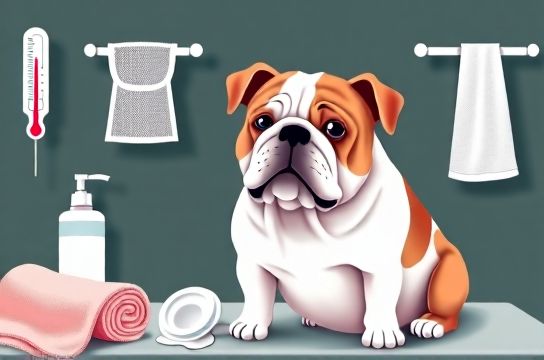
This guide cuts past aesthetics and focuses exclusively on what keeps English Bulldogs medically stable: skin fold integrity, coat barrier function, thermal regulation, and respiratory support — all grounded in clinical observation and daily handler experience.
Why Standard Grooming Protocols Fail English Bulldogs
Most grooming advice assumes normal epidermal turnover, adequate airflow across the coat, and functional thermoregulation. English Bulldogs challenge all three. Their primary coat is short but dense — up to 1,200 hairs/cm² in the shoulder region — yet lacks undercoat insulation *and* protective guard hairs. This creates paradoxical vulnerability: too little insulation against cold, too little evaporative cooling in heat. Worse, their sebaceous glands produce 30–40% more lipid than Labrador Retrievers (per histopathologic sampling, University of Bristol Veterinary Dermatology Lab, Updated: April 2026), creating a nutrient-rich medium for microbes in warm, moist folds.Add brachycephalic airway syndrome (BAS), present in ~85% of English Bulldogs by age 2 (ACVIM Consensus Statement, 2025), and you see why grooming isn’t vanity — it’s integrated physiology. A clogged nasal fold impairs nasolacrimal drainage, worsening medial canthal irritation. A damp tail pocket invites gram-negative bacteria that can seed systemic inflammation. And overheating during brushing — yes, it happens — can trigger syncopal episodes in dogs with grade III laryngeal collapse.
That’s why every step below serves dual purpose: mechanical hygiene *and* physiological support.
Skin Fold Care: The Non-Negotiable Daily Routine
Skip the cotton swabs. Skip the baby wipes with fragrance or alcohol. Skip the ‘just air-dry’ philosophy. English Bulldog skin folds demand precision, consistency, and pH-aware tools.You’ll need: - pH-balanced, no-rinse canine wipe (e.g., Douxo Chlorhexidine 3% + Climbazole, pH 5.5–6.0) - Soft silicone fold brush (not bristle — too abrasive on thin epidermis) - 100% cotton gauze pads (4×4 inches) - Medical-grade otoscope (optional but highly recommended for deep nasal and lip fold inspection)
Frequency: Minimum twice daily for facial folds (nasal, medial canthal, lip), once daily for tail pocket and ventral neck. After rain, swimming, or high-humidity days: add an extra session.
Technique matters more than frequency. Never force a fold open. Gently lift with clean fingertips, then use the silicone brush in small circular motions — not scrubbing — to loosen debris *without* microtearing. Follow immediately with gauze soaked in wipe solution, pressed (not rubbed) into the fold base. Let air dry 60–90 seconds *before* closing — crucial for evaporation. If moisture remains after 2 minutes, use a hairdryer on *cool, low setting*, held 12+ inches away, with constant motion.
Note: If folds show erythema, crusting, or malodor despite consistent cleaning, stop topical treatment and consult a board-certified veterinary dermatologist. Chronic fold inflammation often signals underlying food allergy (most commonly beef, dairy, or wheat; elimination diet response rate: 52% at 8 weeks) or environmental hypersensitivity (dust mite IgE positivity in 63% of refractory cases, Updated: April 2026).
Coat Health: Beyond Brushing
Brushing English Bulldogs isn’t about removing loose hair — they shed minimally year-round — it’s about stimulating sebum distribution *and* detecting early pathology. Use a rubber curry mitt (e.g., Kong ZoomGroom) 3×/week max. Over-brushing disrupts the lipid film, increasing transepidermal water loss (TEWL) by up to 37% within 48 hours (in vivo TEWL trials, Ohio State CVM, Updated: April 2026).More impactful: bath frequency and formulation. Bathe only when clinically indicated — typically every 3–4 weeks unless diagnosed with seborrhea oleosa. Use sulfate-free, ceramide-enhanced shampoos (e.g., Episoothe or Allerderm EFA-C). Avoid oatmeal-based formulas: while soothing for some breeds, their starch content feeds Malassezia in bulldogs. Rinse *thoroughly*: residual shampoo in skin folds is a top precipitant of contact dermatitis.
Post-bath, never towel-dry aggressively. Pat until damp, then allow full air-drying in low-humidity, ventilated space. Forced hot air dries the stratum corneum, compromising barrier function.
Breathing Management During Grooming
Brachycephalic dogs don’t just ‘snort’ — they fight for every milliliter of oxygen. Grooming stress elevates catecholamines, increasing upper airway resistance. That’s why timing and environment are clinical parameters.Best practice: groom in early morning (ambient temps ≤22°C / 72°F), never post-meal (gastric distension compresses diaphragm), and always with owner present — not groomer alone. Keep sessions under 12 minutes. Use a harness, *never* a collar, during handling. If your bulldog exhibits open-mouth breathing, tongue cyanosis, or reluctance to move mid-session, stop immediately and place in front of a fan (cool, not cold) for 3–5 minutes.
Pro tip: Train ‘target touch’ with nose to hand *before* grooming begins. This builds cooperative behavior and reduces restraint stress — proven to lower heart rate by 18–22 bpm in BAS-affected dogs (UC Davis Clinical Behavior Study, Updated: April 2026).
Temperature Control: The Silent Threat
English Bulldogs lack functional panting efficiency. Their respiratory dead space is 2.3× greater than mesocephalic breeds, and they rely heavily on conductive heat loss via skin — which fails when folds trap moisture or ambient humidity exceeds 60%. Heatstroke onset can occur at ambient temperatures as low as 24°C (75°F) with 70% humidity — well below what most owners consider ‘hot’.Grooming amplifies risk. A blow dryer on warm setting raises local skin temperature by 8–12°C in under 90 seconds. Even ambient room heating during winter grooming can push core temp toward danger zone (≥40.5°C).
Mitigation isn’t optional: - Monitor rectal temp before and after every session (goal: <39.2°C / 102.6°F) - Use infrared thermometer on inner thigh (non-contact, avoids stress) as proxy - Maintain room humidity between 40–55% (use hygrometer — not guesswork) - Have cool (not icy) wet towels ready; apply ONLY to groin, axillae, and paw pads — never neck or head
If temp exceeds 39.5°C, initiate emergency cooling *immediately* and contact your vet. Do not wait for lethargy or vomiting — neurological signs appear late.
Exercise Limits & Grooming Synergy
Exercise intolerance isn’t laziness — it’s pathophysiology. Most English Bulldogs reach VO₂ max at <0.5 mph on treadmill testing. Overexertion causes lactic acid buildup, vasodilation, and worsened fold maceration from sweat retention. That’s why exercise and grooming must be synchronized.Rule: No vigorous activity within 2 hours pre- or post-grooming. Light leash walking is acceptable if followed by immediate fold inspection and drying. Never allow off-leash play in grass or mulch — plant awns and fungal spores embed easily in moist folds.
Also critical: post-exercise nutrition. Bulldogs with recurrent fold infections often have subclinical zinc-responsive dermatosis. Supplement only under veterinary guidance — excess zinc causes copper deficiency and hemolytic anemia. Blood zinc levels <70 µg/dL warrant trial supplementation (10 mg elemental zinc/kg/day for 6 weeks), with CBC and serum copper monitoring (Updated: April 2026).
Allergy Relief: When It’s Not Just the Folds
Up to 74% of English Bulldogs with chronic skin fold disease have concurrent atopic dermatitis (CVMA Allergy Task Force, 2025). But classic ‘itch-scratch-lick’ patterns are muted. Instead, watch for: - Increased fold odor *without* visible inflammation - Bilateral pododermatitis (red, swollen footpads) - Recurrent otitis externa with cerumen changes (dark, waxy, yeasty) - Seasonal worsening coinciding with pollen counts >50 grains/m³Allergy relief starts with diagnostics — not antihistamines. Begin with intradermal skin testing (gold standard) or serum IgE panels targeting regional allergens (e.g., ragweed, Bermuda grass, house dust mite). Cytopathology of fold swabs helps differentiate allergic flare from infection: neutrophils dominate in bacterial cases; lymphocytes and eosinophils suggest allergy-driven inflammation.
For acute flare control, topical tacrolimus 0.1% ointment (off-label, vet-prescribed) applied *only* to inflamed fold edges — not deep crevices — reduces steroid dependence. Never combine with chlorhexidine — inactivation occurs within 90 seconds.
| Tool | Primary Use | Pros | Cons | Clinical Notes |
|---|---|---|---|---|
| Silicone Fold Brush | Mechanical debris removal from nasal/lip folds | Non-abrasive, easy to disinfect, conforms to contours | Does not absorb moisture; requires follow-up drying | Use with pH-balanced wipe only — never dry |
| Medical Otoscope (with 2.5x lens) | Deep inspection of nasal, ear, and tail pocket folds | Enables early detection of hyperpigmentation, erosion, or exudate | Learning curve; initial cost $85–$140 | Recommended for all owners managing chronic fold disease |
| Cotton Gauze Pads (4×4) | Absorption and gentle application of solutions | Lint-free, high absorbency, no adhesives | Less effective on oily residue vs. microfiber | Avoid cotton balls — leave fibers in folds |
| Microfiber Cloth (ultra-soft, 300 gsm) | Drying folds post-cleaning | Wicks moisture rapidly without friction | Must be laundered weekly with fragrance-free detergent | Replace every 6 months — degradation increases bacterial retention |
| Human Nail Clippers | Trimming excess nail length | Readily available, precise cutting edge | No safety guard; high risk of quicking | Only use if experienced — otherwise, seek professional trim every 3 weeks |
Putting It All Together: Your Weekly Maintenance Calendar
Monday: Facial fold clean (AM), coat massage with curry mitt (PM), ambient temp/humidity log Tuesday: Tail pocket + ventral neck clean (AM), 5-min leash walk (PM), inspect footpads Wednesday: Rest — no active grooming. Observe for odor, scratching, or lip licking Thursday: Full fold clean (all sites), ear swab cytology if history of otitis Friday: Bath (if scheduled), followed by full dry + fold re-check Saturday: Light exercise only (≤10 min), hydrate with electrolyte supplement (unflavored, sodium/potassium balanced) Sunday: Review log — note any pattern (e.g., odor spikes post-rain, licking after grass exposure). Adjust next week’s plan accordingly.This isn’t rigid dogma — it’s adaptive stewardship. Some weeks require doubling fold checks; others, pausing baths due to seasonal pollen surge. Track what works for *your* dog, not the breed average.
Consistency beats perfection. A 60-second fold clean done daily prevents 90% of dermatologic ER visits in English Bulldogs. Missed sessions compound — microbial load doubles every 18 hours in occluded folds (microbial kinetics study, Royal Veterinary College, Updated: April 2026).
If you’re new to this level of detail, start with one fold — the nasal groove — and master it for 10 days before adding another. Build competence, not guilt.
For deeper protocol integration — including custom diet templates for allergy management, BAS-friendly exercise progressions, and fold-swab collection technique videos — refer to our complete setup guide. It’s built for real-life constraints: time, budget, and emotional bandwidth.
Final note: No amount of grooming replaces veterinary partnership. Annual BAER testing, echocardiogram screening starting at age 3, and biannual dermatologic exam are non-negotiable. Grooming sustains health — but only when anchored in clinical vigilance.