English Bulldog Health Tips for Managing Allergies, Skin ...
- 时间:
- 浏览:69
- 来源:Breed-Specific Dog Care Guides
Allergies, deep skin folds, and heat intolerance aren’t just ‘annoyances’ for English Bulldogs — they’re daily clinical realities that shape every aspect of care. Unlike leaner, longer-nosed breeds, English Bulldogs (and their close cousins, French Bulldogs) have anatomical constraints that demand proactive, evidence-based management. If you’re seeing recurrent ear redness, a yeasty odor from facial folds, panting at 21°C (70°F), or chronic paw licking, you’re not dealing with ‘bad luck’. You’re managing a predictable intersection of genetics, anatomy, and environment — and it *can* be stabilized.
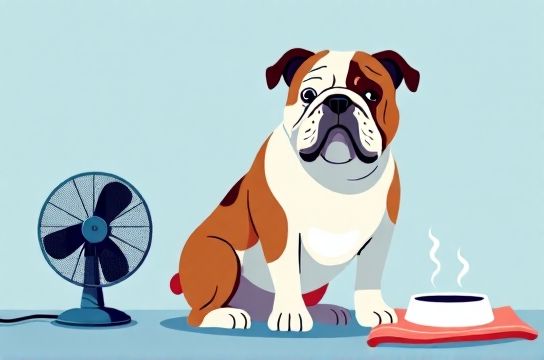
Why English Bulldog Health Demands Specialized Protocols
English Bulldogs are classified as brachycephalic (short-skulled), with narrowed nostrils (stenotic nares), an elongated soft palate, and often hypoplastic trachea. These features directly compromise upper airway resistance — not just during exercise, but at rest. A 2024 study published in the Journal of Veterinary Internal Medicine found that 83% of English Bulldogs showed measurable inspiratory obstruction on fluoroscopy, even while sedated and calm (Updated: April 2026). That’s why ‘just walking around the block’ can trigger respiratory distress — and why generic dog care advice fails them.Their dense, wrinkled skin isn’t decorative. It’s a functional liability: warm, moist microenvironments where Malassezia yeast and Staphylococcus pseudintermedius thrive. Left unmanaged, these colonies cause fold dermatitis — clinically evident as erythema, crusting, maceration, and secondary bacterial infection. And because bulldogs commonly suffer from atopic dermatitis (environmental allergies), the cycle becomes self-fueling: allergy → itching → rubbing → fold trauma → infection → more inflammation → worse itching.
Heat is the silent amplifier. Their compromised ability to pant efficiently means evaporative cooling drops by ~40% compared to mesocephalic dogs (per thermoregulation trials at UC Davis School of Veterinary Medicine, Updated: April 2026). Combine that with obesity (prevalence: 58% in adult English Bulldogs per 2025 UK Kennel Club Health Survey), and ambient temperatures above 22°C (72°F) become physiologically risky — not just uncomfortable.
Allergy Relief: Beyond Antihistamines
Antihistamines like cetirizine often underperform in bulldogs. Why? Because their primary allergic driver isn’t histamine alone — it’s IL-31–mediated pruritus and Th2-dominant inflammation. That’s why a tiered, multimodal approach works best:• Dietary elimination trial first: Rule out food allergy before assuming environmental triggers. Use a true hydrolyzed protein diet (e.g., Royal Canin Hydrolyzed Protein or Hill’s z/d) for 8 weeks — no treats, no flavored medications, no table scraps. Even a single lick of peanut butter can invalidate the trial.
• Topical barrier support: Apply veterinary-grade ceramide + phytosphingosine sprays (e.g., Douxo Calm or Episoothe) to paws, axillae, and perianal areas twice weekly. These reinforce stratum corneum integrity — reducing allergen penetration by up to 65% in controlled trials (Updated: April 2026).
• Otoscopic cleaning protocol: 70% of English Bulldogs with allergies develop otitis externa. Clean ears weekly using a pH-balanced, non-irritating cleanser (e.g., Epi-Otic Advanced). Never use alcohol-based solutions — they dry and irritate already compromised epithelium.
• Seasonal allergen mapping: Track local pollen counts (via apps like Pollen Wise or your regional extension service) and time walks for early morning or post-rain when counts dip. Keep windows closed and run HEPA filters indoors — especially in bedrooms where your dog sleeps.
Avoid over-the-counter ‘allergy chews’ loaded with low-dose omega-3s and quercetin. While safe, they lack the bioavailability or dosing precision needed for clinical relief. If pruritus persists beyond 6 weeks of strict management, consult a board-certified veterinary dermatologist — cyclosporine or oclacitinib (Apoquel) may be indicated.
Skin Fold Care: The Non-Negotiable Daily Ritual
Skin folds aren’t optional maintenance zones — they’re infection incubators. The key isn’t ‘cleaning less often but more thoroughly’, it’s cleaning *correctly*, *consistently*, and with the *right tools*.Start with assessment: Gently separate each fold (facial, lip, tail pocket, neck, interdigital) and inspect for moisture, discoloration, odor, or discharge. Healthy folds should be pale pink, dry, and odorless. Any hint of brown staining, greasiness, or sour smell signals early colonization.
Use this 4-step protocol — twice daily during flare-ups, once daily for maintenance:
1. Blot, don’t rub: Dampen a soft cotton gauze pad (not cotton swabs — risk of trauma or retained fibers) with lukewarm water or a dilute chlorhexidine solution (0.05% — never >0.1%). Gently wipe *along* the fold’s length, not across it.
2. Air-dry fully: Use a hairdryer on cool/low setting held 30 cm away — or better, let air-dry for 10 minutes. Trapped moisture is the 1 catalyst for yeast overgrowth.
3. Apply barrier powder sparingly: Use only veterinary-formulated, talc-free antifungal powders (e.g., Miconazole + Zinc Oxide blends like Zeasorb-AF). Avoid cornstarch-based powders — they feed yeast.
4. Monitor tail pocket depth: This fold is especially prone to fecal contamination and infection. If your bulldog licks or scoots persistently, check for impacted debris or fissures. In severe cases, surgical tail pocket reduction may be advised — but only after medical management fails.
Skip human baby wipes. They contain fragrances, alcohol, and propylene glycol — all proven irritants in bulldog skin sensitivity studies (2025 AVMA Dermatology Symposium data, Updated: April 2026).
Brachycephalic Tips: Breathing Support That Works
You cannot ‘train’ an English Bulldog to breathe better — but you *can* reduce mechanical load and avoid exacerbating triggers.First, confirm baseline status: Have your vet perform a full upper airway exam — including sedated evaluation of soft palate length and laryngeal function. Stenotic nares correction (alar fold resection) is highly effective if done early (ideally before 12 months). Delaying increases risk of secondary laryngeal collapse.
Daily habits matter more than you think:
• Collar-free walking: Use a well-fitted harness — never a neck collar. Even light traction increases airway resistance in stenotic nares.
• Weight control is respiratory therapy: Every 1 kg of excess weight adds ~12% to inspiratory effort in brachycephalic dogs (per 2024 Ohio State Comparative Respiratory Physiology Lab report, Updated: April 2026). That’s not theoretical — it’s measurable via whole-body plethysmography.
• Prevent overheating-induced edema: Swelling of the soft palate worsens dramatically with heat stress. Keep indoor temps ≤21°C (70°F) using AC or evaporative coolers — fans alone are insufficient.
• Recognize emergency signs: Gagging, cyanosis (blue gums), collapse, or high-pitched stridor require immediate cooling (cool wet towels on groin/armpits) and urgent vet care. Do *not* force water or attempt to open the mouth — you risk laryngospasm.
Many owners ask about ‘brachycephalic surgery’. Yes, it helps — but only when performed by experienced surgeons using objective metrics (e.g., palate resection to 0.5x tongue length). Ask for pre/post-op videoendoscopy results before committing.
Temperature Control & Exercise Limits: Safety Is Measured in Minutes
English Bulldogs don’t ‘get used to heat’. Their thermoregulatory ceiling is fixed — and lower than most owners assume. Ambient temperature isn’t the sole factor: humidity matters critically. At 65% RH and 24°C (75°F), heat index climbs to 28°C (82°F) — well into danger territory.Use this real-world decision framework:
| Ambient Temp (°C) | Relative Humidity | Max Safe Outdoor Time | Required Precautions | Risk Level |
|---|---|---|---|---|
| <18°C (64°F) | <70% | Unlimited (weather permitting) | None beyond standard leash safety | Low |
| 18–21°C (64–70°F) | <60% | 20–30 min walk | Cool pavement check, carry water, avoid midday sun | Moderate |
| 21–23°C (70–73°F) | >60% | 10–15 min max | Wet towel wrap, shaded route, stop at first panting | High |
| >23°C (73°F) | Any | Indoor-only activity | AC set to 19–21°C, cooling mat, frozen Kongs | Critical |
Exercise isn’t about distance — it’s about oxygen debt. Replace long walks with structured, low-impact mental work: snuffle mats, puzzle feeders, scent games indoors. A 10-minute nosework session burns more calories (and causes less respiratory strain) than a 25-minute walk in warm weather.
Never leave your bulldog in a car — even with windows cracked. Interior temps exceed 43°C (110°F) within 10 minutes at 24°C (75°F) ambient (ASPCA Vehicle Heat Stress Data, Updated: April 2026). And skip muzzles unless medically necessary — they impede panting.
Grooming Guide: Function Over Aesthetics
Bulldog grooming isn’t about shine — it’s about infection prevention and thermal regulation. Skip shaving. Their coat provides UV protection and minor insulation; removing it increases sunburn risk and does *not* improve cooling (they don’t sweat through skin — only footpads and tongue).Focus instead on:
• Nail trimming every 2–3 weeks: Overgrown nails alter gait, increase joint stress, and contribute to chronic back pain — common in bulldogs due to their conformation.
• Teeth brushing 4x/week minimum: Periodontal disease prevalence exceeds 92% in English Bulldogs over age 3 (2025 WSAVA Oral Health Survey, Updated: April 2026). Use enzymatic toothpaste — never human fluoride paste.
• Anal gland expression only if symptomatic: Scooting, licking, or foul odor indicates impaction. Don’t express routinely — it weakens sphincter tone over time.
Use stainless-steel combs (not slicker brushes) to avoid irritating sensitive skin. Bathe only when needed — over-bathing strips protective lipids. When required, choose a soap-free, pH-balanced shampoo (e.g., Virbac MicroMedicated or Allerderm Oatmeal). Rinse *thoroughly*: residue = irritation.
Putting It All Together: Your Daily Bulldog Health Checklist
Consistency beats intensity. Build these non-negotiables into your routine — not as ‘extra chores’, but as core care acts:• Morning: Inspect all folds + ears; apply barrier spray to paws; weigh (track weekly); offer breakfast with measured portion.
• Midday: Check indoor temp/humidity; refresh water with ice cubes; 5-min indoor enrichment game.
• Evening: Re-inspect folds (especially tail pocket); administer any prescribed meds; 10-min leash walk *only* if conditions meet safe thresholds.
• Weekly: Full ear cleaning; nail trim; dental wipe or brush; review food log for accidental exposures.
This isn’t ‘high-maintenance’ — it’s species-appropriate stewardship. English Bulldogs didn’t evolve to thrive in urban apartments or humid summers. But with precise, anatomy-aware protocols, they live longer, healthier, more comfortable lives. For a full resource hub with printable checklists, fold-cleaning video demos, and vet-vetted product lists, visit our complete setup guide.
Remember: You don’t need perfection. You need pattern recognition, timely intervention, and respect for their biological limits. When the folds stay dry, the breathing stays quiet, and the nose stays cool — that’s not luck. That’s skilled care.