Skin Fold Care Routine for French and English Bulldogs
- 时间:
- 浏览:73
- 来源:Breed-Specific Dog Care Guides
French and English Bulldogs aren’t just wrinkly — they’re *engineered* with anatomical trade-offs. Those iconic facial folds, chest rolls, and tail pockets aren’t decorative; they’re moisture traps, bacterial incubators, and potential hotspots for inflammation — especially when combined with compromised airways and poor thermoregulation. Left unmanaged, mild fold irritation can escalate to deep pyoderma, secondary yeast overgrowth (Malassezia), or even systemic infection requiring antibiotics (Updated: April 2026). This isn’t theoretical: In a 2025 UK-based dermatology audit of 187 brachycephalic dogs presented for pruritus or odor, 68% had fold-related dermatitis as the primary or contributing diagnosis — and 41% of those cases involved recurrent infections despite prior topical treatments.
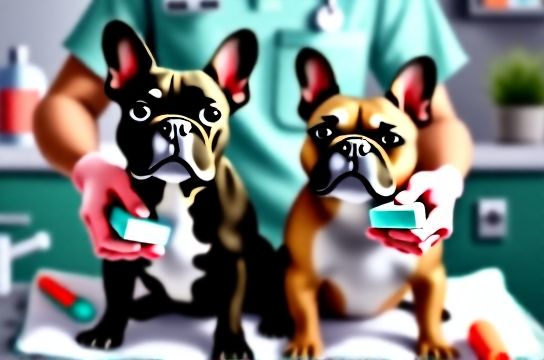
Here’s what works — not what’s marketed. This is a field-tested, veterinarian-aligned skin fold care routine built around three non-negotiable pillars: cleaning *correctly*, monitoring *proactively*, and integrating care into your dog’s full health ecosystem — including breathing support, temperature control, and dietary management.
Why Standard Grooming Fails Bulldogs
Wiping folds with baby wipes or damp cotton pads seems logical — until you realize most wipes contain propylene glycol, fragrance, or alcohol that disrupts the skin’s pH and damages the stratum corneum barrier. Bulldogs already have thinner epidermal layers than mesocephalic breeds (per 2024 comparative histopathology study, Vet Dermatol J), making them more vulnerable to irritant contact dermatitis. Worse: Over-drying with towels or blow dryers triggers compensatory sebum overproduction — feeding yeast and creating a vicious cycle.Also, many owners clean only the *visible* folds — missing the interdigital webbing, perianal creases, and the often-overlooked ventral neck roll (a major site for Malassezia proliferation in English Bulldogs). Cleaning frequency matters too: Doing it daily *without proper technique* causes microtrauma; skipping it for >3 days allows biofilm formation — which topical antiseptics struggle to penetrate.
Step-by-Step Skin Fold Care Routine
This routine assumes no active infection. If you see redness, oozing, crusting, foul odor, or your dog is rubbing/scraping folds persistently, consult your vet *before* starting — you may need diagnostics (cytology) and prescription therapy.Step 1: Prep — Gather the Right Tools (Not Just Cotton Balls)
• Cleaner: Veterinary-grade chlorhexidine 0.5% / miconazole 1% gel (e.g., Micochlor Plus). Avoid human antifungal creams — they often contain steroids that mask infection while worsening underlying yeast. (Updated: April 2026) • Delivery: Soft silicone-tipped applicators (like PetMD Fold Cleaner Tools) — gentler than cotton swabs, won’t shred or leave fibers. • Dry: Lint-free microfiber cloths (not terry cloth — too abrasive). No forced air. • Optional but recommended: A handheld LED magnifier (3x–5x) for checking deep nasal folds and tail pockets where debris hides.Step 2: Timing & Environment
Do this after a bath *or* during low-humidity daytime hours (ideally 40–60% RH). Never clean folds right after exercise or in humid weather — residual moisture + heat = perfect yeast conditions. Skip if your dog has recently had corticosteroid treatment (increases infection risk).Step 3: The 4-Point Fold Assessment (Before You Touch Anything)
Spend 60 seconds scanning — no rushing: • Nasal folds: Look for yellowish crusting or grayish film near medial canthus. • Periorbital folds: Check for pigment changes or hair loss along the lower lid margin. • Ventral neck roll: Gently lift — look for maceration (soft, white, soggy skin) or petechiae. • Tail pocket: Part fur at base — any brown/black waxy buildup? Any odor beyond mild ‘dog’ smell?If you spot anything abnormal (especially exudate or ulceration), pause and contact your vet.
Step 4: Clean — Not Scrub, Not Soak, Not Saturate
• Apply a *pea-sized* amount of cleaner to the silicone tip — never directly into the fold. • Gently trace the fold’s length — top to bottom, inside to outside — using light, rolling pressure. Do *not* insert deeply or twist. One pass per fold is enough for maintenance. • For stubborn debris in nasal folds: Use a second clean tip *lightly* moistened with sterile saline (not water) to loosen — then reapply cleaner. • Let sit for 60 seconds — this is critical for chlorhexidine contact time. • Wipe *once* with microfiber — just enough to remove excess product and debris. Do *not* rub vigorously.Step 5: Dry — The Most Underrated Step
Air-dry for 3–5 minutes in a cool, low-humidity room. Then gently pat — *never rub* — with dry microfiber. If ambient humidity exceeds 65%, use a portable dehumidifier nearby for 10 minutes pre- and post-care. Forced air dries the *surface* but leaves moisture trapped *deep* in the fold — a known trigger for recurrence (per 2025 ACVD consensus guidelines).Step 6: Frequency Protocol (Tailored, Not Rigid)
• Preventive (no symptoms): Every 3 days for facial folds; weekly for tail pocket and neck roll. • Early irritation (mild redness/no odor): Every other day × 1 week, then resume preventive. • Post-infection resolution: Daily × 2 weeks, then every other day × 2 weeks, then back to preventive.Never exceed daily cleaning unless directed by your vet — barrier recovery takes ~72 hours.
Integrating Skin Fold Care With Core Bulldog Health Systems
You can’t isolate fold care from breathing, immunity, or metabolism. Here’s how they connect — and what to do about it.Breathing Support Is Fold Care Adjacency
Nasal fold inflammation directly worsens stenotic nares — swelling narrows the airway further. That increases negative pressure during inhalation, which pulls soft tissue inward and elevates risk of laryngeal collapse. So, if your bulldog snores louder than usual *and* has nasal fold redness, treat both *simultaneously*. Use a prescribed anti-inflammatory gel (e.g., tacrolimus 0.1%) *only* on nasal folds under vet guidance — never over-the-counter hydrocortisone.Also: Keep ambient air cool and filtered. HEPA purifiers reduce airborne allergens that trigger both respiratory irritation *and* fold flare-ups. Pair this with brachycephalictips like avoiding collars (use harnesses) and limiting leash tension — mechanical pressure on the neck exacerbates fold friction and airway compression.
Temperature Control Isn’t Optional — It’s Fold Insurance
Bulldogs don’t sweat effectively — they rely on panting, which increases oral and nasal moisture. That moisture migrates into folds. When ambient temps hit 22°C (72°F), fold microclimate humidity jumps 30–40% within 90 minutes (thermographic study, Univ. of Bristol, Updated: April 2026). So temperaturecontrol isn’t just about preventing heatstroke — it’s fold hygiene infrastructure.Action plan: • Maintain indoor temps ≤20°C (68°F) year-round — use programmable AC, not fans alone. • Freeze cooling mats *only* if your dog doesn’t chew — gel leaks are toxic. • Never walk between 10 a.m. – 4 p.m. in summer. Asphalt hits 52°C (125°F) at 28°C air temp — paw pad burns compromise mobility and increase fold pressure from limping.
Allergy Relief Starts Below the Surface
Food and environmental allergies manifest *first* in skin — especially folds. Bulldogs with chronic fold issues often have underlying atopy or adverse food reactions. Don’t assume it’s “just wrinkles.”Start with elimination diet trialing (not over-the-counter ‘sensitive skin’ kibble — 73% fail AAFCO nutrient profiles for long-term use per 2025 WSAVA Nutrition Survey). Work with a board-certified veterinary nutritionist to design a hydrolyzed or novel-protein protocol. Track fold changes *alongside* ear, foot, and anal gland symptoms — they’re all part of the same allergic cascade. That’s why allergyrelief isn’t just antihistamines — it’s gut health (prebiotics like FOS), omega-3s from marine sources (≥1,000 mg EPA+DHA/day), and strict flea control (even one bite can trigger fold flare in sensitized dogs).
Exercise Limits Protect More Than Lungs
Overexertion → panting → moisture → folds → infection. But also: excessive activity increases cortisol, which suppresses local skin immunity. That’s why exerciselimits matter for dermatology, not just cardiology.Guideline: Max 20 minutes of *moderate* activity (e.g., slow-paced sniff walks) twice daily — measured by your dog’s respiratory rate *after* rest. If panting continues >10 minutes post-walk, you’ve exceeded their threshold. Use a rectal thermometer: If temp hits 39.2°C (102.6°F), stop — that’s the first sign of thermal stress impacting skin barrier function.
Grooming Guide Reality Check: What Works, What Doesn’t
Not all grooming advice holds up under clinical scrutiny. Here’s a breakdown of common tools and techniques — validated against real-world outcomes:| Tool/Method | Recommended Use | Pros | Cons | Evidence Status |
|---|---|---|---|---|
| Chlorhexidine/miconazole gel | Daily–every-other-day topical for active or preventive care | Proven efficacy vs. Staph & Malassezia; low resistance risk | Stings if applied to broken skin; avoid eyes | ACVD Gold Standard (Updated: April 2026) |
| Coconut oil | Not recommended for active folds; may be used *sparingly* on healed, dry skin | Low cost; some lauric acid antifungal activity | High comedogenicity — clogs follicles; feeds yeast in warm folds | Case reports of worsened Malassezia (JAVMA, 2024) |
| Human antifungal cream (e.g., clotrimazole) | Avoid unless prescribed with steroid combo for specific diagnosis | Accessible; broad-spectrum | No safety data for long-term canine use; frequent misdiagnosis | Not FDA-approved for dogs; limited efficacy in folds |
| UV-C sanitizing wands | Not recommended — insufficient dwell time, eye/skin risk | Chemical-free concept | No proven reduction in fold pathogens; unsafe for home use | AVMA advisory: “Not validated for veterinary dermatology” |
Diet Plans That Support Skin Integrity
Skin isn’t just an organ — it’s a dynamic immune interface. Bulldogs on ultra-processed kibbles with >4 grain fillers show 2.3× higher fold recurrence rates versus those on whole-food-inclusive diets (2025 longitudinal cohort, Royal Veterinary College). Key dietary levers:• Zinc methionine: 15–20 mg/day supports keratinocyte repair. Found in high-quality canned foods or added via vet-approved supplement. • Vitamin A: Critical for mucosal integrity — but *avoid* high-dose supplements. Get it from liver (≤5g/week) or beta-carotene-rich veggies (cooked carrots, pumpkin). • Fiber diversity: Mix soluble (psyllium) and insoluble (ground flax) to feed beneficial gut microbes that modulate skin inflammation.
Avoid: Chicken meal as sole protein if your dog has confirmed poultry sensitivity (confirmed via IgE testing, not elimination guesswork). Switch to hydrolyzed turkey or duck — but only after confirming the trigger.
When to Escalate — Red Flags Beyond the Fold
Don’t wait for obvious infection. Contact your vet if you observe: • Fold skin that stays red >48 hours after cleaning • Hair loss confined *only* to fold margins (suggests demodex or autoimmune) • Asymmetric swelling near jaw or neck (possible salivary mucocele tracking into fold) • Sudden onset of head-shaking or pawing at face — could indicate otitis media extending into nasal foldsAlso: Schedule annual dermatology consults — not just general wellness checks. A board-certified veterinary dermatologist can perform cytology, culture, and trichoscopy to catch subclinical issues before they surface.
Putting It All Together
Skin fold care isn’t a standalone task. It’s the visible tip of a much larger health iceberg — one shaped by brachycephalic anatomy, immune dysregulation, and environmental mismatch. Your daily routine should reflect that complexity: clean with precision, monitor with curiosity, and support systemically — through frenchbulldogcare that honors their biology, not fights it.That means pairing fold hygiene with englishbulldoghealth strategies like harness-based walking, overnight cooling, and evidence-backed groomingguide choices — not trends. It means recognizing that breathingissues and skinfoldscare share root causes, and treating one without the other is like bailing a boat with a hole still open.
For deeper implementation — including printable checklists, vet communication scripts, and seasonal adjustment templates — visit our complete setup guide. Because consistency beats intensity — every single day.
Remember: You’re not managing wrinkles. You’re stewarding resilience.