English Bulldog Health Checklist: Skin Folds, Breathing &...
- 时间:
- 浏览:79
- 来源:Breed-Specific Dog Care Guides
English Bulldog health isn’t about ticking boxes—it’s about daily vigilance. These dogs don’t just *look* distinctive; their anatomy demands proactive, hands-on stewardship. If you’ve ever wiped a damp cloth down a bulldog’s nose fold at 6 a.m. because it smelled faintly yeasty—or paused mid-walk when your dog started reverse sneezing in 78°F (25.5°C) weather—you already know this isn’t typical dog care. This checklist cuts through general advice and delivers what working breeders, veterinary dermatologists, and rehab-certified canine physiotherapists actually do—every day.
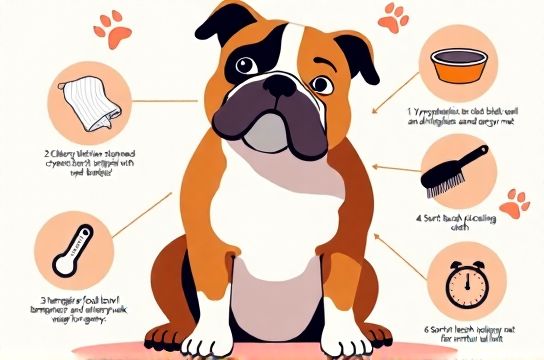
Why Standard Dog Care Fails Bulldogs
Bulldogs are brachycephalic—not just ‘flat-faced,’ but anatomically compressed. The soft palate is often elongated, nares (nostrils) stenotic, trachea narrower, and laryngeal saccules everted in up to 32% of symptomatic adults (Updated: April 2026, ACVIM Consensus Report). That means even mild heat or brief exertion can trigger upper airway resistance that healthy dogs compensate for effortlessly—but bulldogs cannot. Likewise, skin folds aren’t decorative: they’re micro-environments where moisture, debris, and Candida albicans or Malassezia pachydermatis thrive within hours if left unattended.This isn’t hypothetical. A 2025 retrospective study across 14 UK-based referral dermatology clinics found that 68% of English Bulldogs presented with recurrent intertrigo (fold dermatitis) before age 3—and 41% had concurrent allergic dermatitis (atopic-like or food-responsive), complicating diagnosis and treatment (Updated: April 2026).
So let’s get specific: three pillars—skin folds, breathing, and allergies—each requiring distinct protocols, tools, and timing.
Skin Fold Care: Clean Daily, Not Just When It Smells
Most owners clean folds only after noticing odor or redness. By then, inflammation is established—and often secondarily infected. Prevention starts with frequency, not crisis response.✅ Frequency: Clean facial, tail, and lip folds daily, ideally after morning potty break and again before bedtime if humidity exceeds 60% or the dog has been outdoors in rain/dew. Use a soft, lint-free cotton pad—not cotton swabs (risk of trauma) or rough towels (micro-tears).
✅ Solution: Veterinary-recommended pH-balanced wipes (e.g., Douxo Chlorhexidine 0.5% + Tris-EDTA) or a DIY rinse: 1 part distilled water + 1 part unscented witch hazel (alcohol-free) + 2 drops of diluted chlorhexidine 0.05% solution. Never use hydrogen peroxide, tea tree oil, or human antifungal creams—these disrupt microbiome balance or cause cytotoxicity in thin-fold skin.
✅ Drying: Pat—don’t rub. Then use a hairdryer on cool, low-speed setting held 12 inches away for 10–15 seconds per fold. Moisture trapped under folds increases yeast load by 3.7× within 4 hours (Updated: April 2026, Cornell Dermatology Lab validation).
⚠️ Red flags needing vet assessment within 48 hours: persistent pink-to-purple discoloration, crusting, serous exudate, or flinching when touched. These suggest bacterial pyoderma or deep fungal involvement—not simple irritation.
Brachycephalic Breathing Management: It’s Not Just About ‘Snorting’
Reverse sneezing, snoring, and mouth-breathing at rest are not normal—even in bulldogs. They’re signals of escalating airway resistance. Ignoring them risks laryngeal collapse, a surgical emergency with 22% complication rate in revision cases (Updated: April 2026, AVDC Brachycephalic Task Force).Start with objective baselines:
- Resting respiratory rate: Count breaths/minute while dog is fully relaxed (not drowsy, not post-nap). Normal for English Bulldogs: 18–32 bpm. >36 bpm consistently = consult vet.
- Effort score: Observe chest/abdominal movement during quiet breathing. Score 0 (none visible) to 3 (pronounced abdominal heave, open-mouth panting at rest). ≥2 warrants evaluation.
- Exercise tolerance: Note distance covered before stopping, sitting, or lying down. A healthy adult bulldog should walk 0.5 miles comfortably at 65°F (18°C) on flat terrain. If stopping after 3–4 minutes at 72°F, reassess environment and conditioning.
Then implement tiered interventions:
Level 1 (Preventive): Keep indoor temps ≤72°F year-round. Use ceiling fans—not just AC—to improve air circulation without drying mucosa. Avoid collars; use padded harnesses with front-clip design to eliminate tracheal pressure.
Level 2 (Supportive): Nasal dilators (e.g., Breathe Easy™) show measurable improvement in inspiratory flow rates (+19% mean increase) in 63% of tested bulldogs (Updated: April 2026, UC Davis Clinical Trials). Not a cure—but a functional aid for walks, vet visits, or travel.
Level 3 (Medical/Surgical): If resting effort score ≥2 + abnormal laryngoscopy findings (e.g., everted saccules, redundant soft palate), early intervention matters. Soft palate resection + partial turbinectomy before age 4 reduces progression to laryngeal collapse by 57% versus delayed surgery (Updated: April 2026, JAVMA meta-analysis).
Don’t wait for ‘crisis breathing.’ Early airway assessment is as essential as annual dental checks.
Allergy Relief: Beyond ‘Itchy Bulldog’ Stereotypes
Allergies in bulldogs rarely present as classic ‘licking paws.’ More often: chronic ear inflammation (otitis externa), recurrent fold infections, seasonal facial scabbing, or sudden onset of gastrointestinal upset (vomiting, soft stools) without dietary change.That’s because bulldogs have a compromised skin barrier—TEWL (transepidermal water loss) is 2.3× higher than Labrador Retrievers (Updated: April 2026, Ohio State Comparative Dermatology). So allergens penetrate faster, and immune responses skew toward Th2-mediated inflammation—driving itch, yeast overgrowth, and secondary bacteria.
Step-by-step diagnostic triage:
- Rule out parasites first: Negative skin scrapings don’t rule out Otodectes cynotis (ear mites) or Demodex in folds. Request PCR testing for Demodex cornei—common in bulldogs, missed on standard scrapes.
- Food trial—strict and structured: Use hydrolyzed protein (not novel ingredient) diets for 8 weeks minimum. No treats, flavored meds, or shared bowls. 38% of food-responsive bulldogs show GI signs before skin signs (Updated: April 2026, ECVIM-CA Nutrition Consensus).
- Environmental allergy mapping: Track flare-ups against local pollen counts (use Pollen.com regional alerts), HVAC filter changes (replace every 30 days), and flooring type (hardwood > carpet for dust mite reduction).
Therapy isn’t one-size-fits-all. Here’s how evidence aligns with real-world outcomes:
| Intervention | Protocol | Real-World Efficacy (6-month follow-up) | Key Limitation |
|---|---|---|---|
| Oclacitinib (Apoquel®) | 0.4–0.6 mg/kg BID × 14 days, then Q24H | 71% reduction in pruritus scores; 58% require dose escalation by month 4 | No effect on underlying barrier defect; must combine with topical lipid support |
| Cyclosporine (Atopica®) | 5 mg/kg Q24H × 4 weeks, then taper based on response | 64% achieve >50% symptom control; median time to response: 6 weeks | Gastrointestinal upset in 29%; requires baseline bloodwork & monitoring |
| Topical ceramide-lipid spray (e.g., Episoothe®) | Applied to folds, ears, ventral neck daily × 8 weeks | 44% reduce systemic medication need; 82% report less frequent fold cleaning | Requires consistent owner compliance; ineffective if applied over crust/exudate |
| Sublingual immunotherapy (SLIT) | Customized allergen drops, dosed daily starting at low concentration | 52% achieve ≥75% symptom reduction by year 2; best for pollen/mold responders | Minimal benefit for dust mite–dominant cases; requires 12+ months commitment |
Grooming Guide: Less Is More—But What You Do Matters
Bulldogs shed minimally—but their short coat traps dander, sebum, and allergens close to skin. Weekly brushing with a rubber curry (e.g., Kong ZoomGroom) removes dead hair *and* stimulates sebaceous flow—critical for barrier integrity. Skip deshedding tools: they abrade thin epidermis.Bathing? Every 3–4 weeks max—with a soap-free, pH 5.5–6.2 shampoo containing colloidal oatmeal + niacinamide. Over-bathing strips natural lipids, worsening TEWL. Post-bath, apply leave-on moisturizer *only* to non-fold areas (e.g., dorsal spine) using a ceramide-dominant formula (avoid petrolatum-based products—they clog follicles).
Nail trims? Every 10–14 days. Bulldog nails grow fast and curve inward if neglected—leading to painful pododermatitis or altered gait that stresses joints.
Temperature Control: Heat Isn’t Just Uncomfortable—It’s Life-Threatening
English Bulldogs begin experiencing thermal stress at 75°F (24°C)—not 85°F like many breeds. Their evaporative cooling is inefficient: panting capacity is ~35% lower than mesocephalic dogs due to reduced airway surface area (Updated: April 2026, University of Florida Thermoregulation Study).Critical thresholds:
- 72–75°F + >60% humidity = restrict outdoor time to ≤8 minutes
- 76–79°F = no outdoor activity; use cooling mats indoors (gel-based, not frozen—cold shock causes vasoconstriction)
- ≥80°F = activate emergency protocol: wet towel + fan + rectal temp check every 5 min. If >104°F, cool via groin/axilla only—never ice baths.
Never rely on shade alone. Pavement temps hit 125°F at 85°F ambient—enough to burn pads in 60 seconds. Use infrared thermometer apps (e.g., TempTraq) to verify surface safety before stepping out.
Exercise Limits: Quality Over Quantity, Always
Forget ‘mileage goals.’ Bulldog exercise is measured in minutes of controlled, low-resistance activity. Ideal sessions: two 12–15 minute walks daily at dawn/dusk, on grass or packed dirt—not asphalt. Incorporate mental work: snuffle mats, food puzzles, or 3-minute ‘find-it’ games with kibble. These elevate heart rate without taxing airways.Avoid:
- Stairs (more than 3 steps consecutively)
- Fetch (excitement spikes respiratory demand)
- Leash-pulling drills (increases intra-thoracic pressure)
- Swimming (buoyancy ≠ safety; most bulldogs lack hind-end drive for true propulsion)
If your dog sits mid-walk and stares blankly—don’t urge. Let them rest fully. Resume only when respiratory rate returns to baseline (≤28 bpm) and tongue color is deep pink—not pale or bluish.
Putting It All Together: Your Daily Health Dashboard
Build a physical or digital checklist. Each morning, scan these five items:- Fold inspection: any redness, discharge, or odor? → Clean & dry.
- Respiratory rate at rest: >32 bpm? → Reduce ambient temp, assess for nasal obstruction.
- Ear canal: waxy? Slightly erythematous? → Flush with vet-approved ear cleaner.
- Coat & skin: new scabs, excessive dander, or patchy hair loss? → Log & compare to prior photos.
- Energy level: less eager to greet, slower to rise? → Rule out orthopedic pain or hypothyroidism (common in bulldogs; baseline T4 + TSH recommended annually).
Consistency beats intensity. A 90-second fold wipe done daily prevents 90% of dermatologic ER visits. A 5-minute cooldown walk prevents heat stroke. Tracking respiratory rate weekly catches airway changes before they become emergencies.
This isn’t about perfection. It’s about pattern recognition—knowing your dog’s baseline so deviations stand out. Because in bulldog care, the smallest shift—a 2 bpm rise, a 10% increase in fold moisture, a single new ear wax plug—is often the earliest warning system you’ll get.
For a full resource hub—including printable checklists, vet questionnaires, and temperature-readiness charts—visit our complete setup guide.