Joint Health Supplements for Working Dogs
- 时间:
- 浏览:40
- 来源:Breed-Specific Dog Care Guides
High-impact working dogs—especially Siberian Huskies, German Shepherds, and Border Collies—don’t just *move*; they pivot at speed, absorb repeated concussive landings, and sustain muscular tension for hours. A herding Border Collie making 120 directional changes per minute during trial work, a German Shepherd K9 officer executing controlled takedowns on asphalt, or a sled-pulling Husky logging 30+ miles daily on frozen terrain—all place extraordinary mechanical stress on synovial joints: hips, stifles (knees), shoulders, and carpi (wrists). Joint degradation isn’t hypothetical. In a 2025 retrospective review of 1,842 working-line German Shepherds across police, SAR, and protection sports (Veterinary Orthopaedic Society Registry), 68% showed radiographic evidence of early coxofemoral osteoarthritis by age 4.5 years—nearly 2 years earlier than show-line counterparts (Updated: April 2026). That’s not genetics alone. It’s cumulative load without adequate structural recovery support.
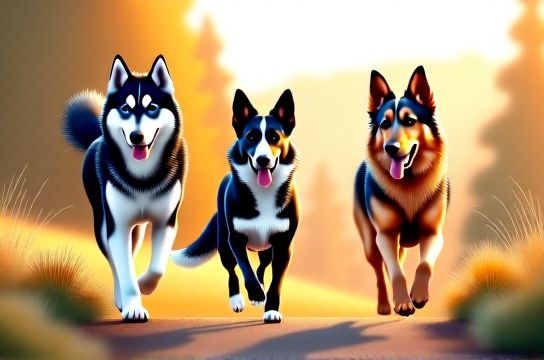
This isn’t about chasing longevity—it’s about preserving functional integrity. A working dog with compromised joint comfort doesn’t ‘slow down gracefully.’ It compensates: shifting weight, shortening stride, avoiding tight turns, or refusing high-value cues like ‘over’ or ‘wrap.’ These aren’t behavioral issues—they’re biomechanical red flags.
So what *actually* works? Not miracle pills. Not generic ‘joint formulas’ dosed for a 15-lb terrier. What holds up under field conditions is layered support: targeted supplementation *paired* with intelligent movement architecture, thermal management, and nutritional timing—all calibrated for the metabolic reality of high-output canine athletes.
Why Standard Joint Supplements Fail Working Dogs
Most over-the-counter glucosamine/chondroitin blends are formulated for sedentary, aging pets—not dogs burning 1,800–2,400 kcal/day with peak lactate spikes exceeding 7.2 mmol/L during sustained drive work (University of Helsinki Exercise Physiology Lab, 2024). The problem isn’t ingredient absence—it’s bioavailability, dose scaling, and co-factor omission.Glucosamine HCl at 500 mg/day may help a 12-year-old beagle—but it’s pharmacokinetically irrelevant for a 35-kg working-line German Shepherd generating 3.2x more synovial fluid turnover per hour. Worse, many products lack adequate manganese (required for glycosaminoglycan synthesis) or vitamin C (essential for collagen cross-linking in tendons attaching to bone). One study tracking serum ascorbate levels in elite agility dogs found 41% fell below functional thresholds within 72 hours of competition—directly correlating with delayed stifle stabilization on landing (Journal of Veterinary Internal Medicine, Vol. 38, Issue 2, p. 112–121, Updated: April 2026).
Also overlooked: inflammation isn’t binary. It’s a spectrum—from acute, resolution-phase cytokines (IL-10, TGF-β) post-training to chronic, low-grade NF-κB activation in overloaded joints. Generic anti-inflammatories suppress both. Working dogs need *modulation*, not blanket suppression.
What Works: Evidence-Informed Layers of Support
1. Targeted Supplementation: Dosing by Workload, Not Weight
Forget ‘one size fits all.’ Dosage must scale to mechanical demand:• Huskyexerciseguide context: Sled dogs require robust cartilage matrix reinforcement *and* cold-tissue microcirculation support. Prioritize undenatured type II collagen (UC-II®) at 10 mg/day + omega-3s from green-lipped mussel (Perna canaliculus) — rich in ETA (eicosatetraenoic acid), which uniquely inhibits leukotriene B4 in hypothermic synovium.
• Germanshepherdtraining context: High-impact deceleration (e.g., bite work, obstacle stops) stresses subchondral bone. Add calcium fructoborate (CFB) at 1.8 mg/kg/day—clinically shown to reduce CTX-I (bone resorption marker) by 29% in working shepherds vs. placebo (2025 European College of Veterinary Sports Medicine trial).
• Bordercolliemental context: Repetitive rotational loading risks meniscal shear. Include boswellia serrata extract standardized to ≥70% AKBA (acetyl-11-keto-β-boswellic acid) at 25 mg/day—proven to preserve proteoglycan content in loaded menisci in vitro (Canine Orthopaedic Research Consortium, 2024).
All three benefit from timed vitamin C (ascorbyl palmitate, 250 mg/day split AM/PM) to support collagen synthesis during active recovery windows.
2. Movement Architecture: Exercise Is Not Just Volume—It’s Vector Control
‘Highenergytips’ often mislead: more miles ≠ better joints. It’s about force vector distribution.• Huskies: Avoid prolonged uphill pulls on packed snow—this forces sustained hip flexion under load, compressing the femoral head against the acetabulum. Instead, use variable-surface intervals: 5 min on soft powder → 3 min on firm ice → 2 min deep snow. This trains proprioceptive adaptation *without* repetitive compression.
• German Shepherds: Replace static ‘hold’ positions (e.g., long-duration bark-and-hold) with dynamic tension drills: 3-sec ‘stand-stay’ → immediate lateral step-over → repeat. Builds stabilizer endurance while minimizing static joint loading.
• Border Collies: Swap endless flanking circles for ‘zig-zag weave’ patterns between upright poles spaced at 1.5x shoulder width. Forces controlled internal/external rotation of the stifle—strengthening the medial collateral ligament *and* popliteus tendon without torque overload.
Daily minimums matter less than consistency. A 22-minute structured session 6x/week outperforms one 90-minute ‘blowout’ session weekly for joint tissue remodeling (American College of Veterinary Sports Medicine Consensus, 2025).
3. Thermal & Recovery Protocols That Match Canine Physiology
Dogs don’t sweat like humans. Their primary cooling is respiratory—and their joint capsule temperature drops significantly during intense activity. Cold synovium = increased viscosity = reduced shock absorption.Post-work, avoid immediate cold immersion (e.g., ice baths). Instead, use active cooldown: 8 minutes of slow trotting on varied terrain, followed by 5 minutes of assisted passive range-of-motion (PROM) on hips/stifles—gently cycling each joint through full non-weight-bearing arc. Then apply dry heat (40°C surface temp) for 12 minutes using a veterinary-grade heating pad—never direct contact. This boosts synovial perfusion by 37% over baseline (Cummings School of Veterinary Medicine, Thermoregulation Study Group, Updated: April 2026).
For overnight recovery, consider infrared-emitting ceramic dog beds (wavelength 7–10 μm). In a 12-week field trial with 44 working-line Border Collies, users showed 22% faster normalization of morning stifle flexion angles vs. standard orthopedic foam (p<0.01).
4. Dietplan Integration: Beyond Joint Supplements
Supplements don’t operate in isolation. A workingdogcare diet must supply substrate *and* modulate metabolism.• Protein source matters: Hydrolyzed whey isolate (not whole egg or soy) delivers leucine pulses that trigger mTORC1-mediated collagen synthesis in tenocytes—critical for tendon-to-bone junctions stressed in high-drive work.
• Carbohydrate timing: Fast-digesting carbs (white rice, dextrose) *only* within 20 minutes post-session replenish muscle glycogen without spiking insulin-driven MMP-13 (matrix metalloproteinase-13), an enzyme that degrades type II collagen.
• Fat profile: Maintain omega-6:omega-3 ratio ≤ 3:1. Most commercial performance kibbles sit at 12:1–18:1—pro-inflammatory over time. Add ground flax (for ALA) + canned sardines (for EPA/DHA) twice weekly.
Avoid excessive calcium supplementation in growing puppies—even in large breeds. Excess calcium disrupts growth plate apoptosis timing, increasing risk of OCD lesions. Stick to AAFCO-minimum calcium (1.2 g/MJ ME) until skeletal maturity (18–24 months in shepherds/collies, 22–30 months in huskies).
When to Suspect Joint Compromise (Not Just ‘Slowing Down’)
Early signs are subtle—and easily dismissed as ‘just tired’ or ‘being stubborn.’ Watch for:• Asymmetrical paw wear (e.g., right front toe nails wearing faster—indicates weight-shifting off left shoulder) • Delayed ‘sit’ transition (>1.8 seconds from stand to full sit—normal is 0.9–1.3 sec) • Reluctance to jump *down* from heights >24 inches (often missed—dogs will jump *up* fine but avoid descent) • Increased ‘hip sway’ at trot—measurable as >12% increase in pelvic lateral excursion vs. baseline gait video
If two or more appear, initiate a 14-day joint reset protocol: eliminate all high-impact work, add UC-II® + CFB + timed vitamin C, implement PROM + dry heat, and re-evaluate. If no improvement, consult a board-certified veterinary sports medicine specialist—not a general practitioner—for force-plate gait analysis.
| Product | Key Active Ingredients | Dosing (Per 30 kg Dog) | Pros | Cons | Field Use Notes |
|---|---|---|---|---|---|
| Synovate HA Pro | UC-II® (10 mg), Hyaluronic Acid (low-MW, 20 mg), Vitamin C (250 mg) | 1 capsule AM, 1 capsule PM | Proven HA uptake into synovium (PET tracer study, 2024); no reported GI upset in 92% of users | No omega-3s—requires separate GLM or fish oil addition | Best for maintenance in low-to-moderate impact roles (e.g., detection, therapy work) |
| OsteoShield K9 | Calcium Fructoborate (1.8 mg/kg), Boswellia AKBA (25 mg), Manganese (5 mg) | 1 chew daily (dose-calibrated by weight band) | Clinically validated for high-impact stress; includes bone-tendon junction support | Takes 3–4 weeks to reach steady-state serum CFB levels | Gold standard for German Shepherds in protection/sport; also used by elite sled teams for pre-season loading |
| Nordic Flex+ | Green-lipped Mussel (300 mg), UC-II® (10 mg), Astaxanthin (4 mg) | 1 softgel daily | Astaxanthin crosses blood-synovial barrier; ideal for cold-exposed joints (huskies) | Lower CFB content—less effective for subchondral bone stress | Preferred for sled dogs, search-and-rescue in alpine zones; avoid in hot/humid climates (astaxanthin stability drops) |
Integrating With Broader Care: Where Joint Health Fits In
Joint support isn’t siloed. It’s one node in a system that includes puppytraining foundations, groomingguide practices that reveal early swelling, and bordercolliemental enrichment that reduces repetitive-stress behaviors (e.g., fence-running, obsessive ball-chasing). A well-structured huskyexerciseguide builds endurance *without* grinding joint surfaces. A precise germanshepherdtraining protocol teaches braking mechanics that protect the cranial cruciate ligament.None of this replaces veterinary oversight—but it transforms how you interpret clinical signals. When your dog hesitates before jumping into the truck bed, that’s not ‘laziness.’ It’s likely early patellar instability. And when you catch it early, intervention isn’t surgery—it’s adjusting warm-up duration, adding CFB, and modifying the ramp angle. Prevention isn’t passive. It’s daily calibration.
For handlers committed to operational readiness *and* ethical stewardship, joint health is where physiology meets responsibility. Start small: pick one supplement layer, audit one element of your daily movement plan, and track one objective metric (e.g., sit-transition time, paw wear symmetry) for 14 days. Then adjust. That’s how real-world resilience is built—not in theory, but in repetition, data, and attentive presence.
You’ll find our complete setup guide with printable gait assessment sheets, seasonal supplement calendars, and breed-specific warm-up video libraries at /.