Grooming Guide Tools Techniques and Frequency for Active ...
- 时间:
- 浏览:45
- 来源:Breed-Specific Dog Care Guides
Huskies, German Shepherds, and Border Collies aren’t just dogs—they’re kinetic systems built for endurance, precision, and problem-solving. Their coats evolved for subzero tundras, alpine pastures, and wind-scoured moors. Their minds don’t idle; they *audit*. And their joints? They log miles like a seasoned long-haul trucker—3–5 miles daily on average, often with terrain variation and load-bearing tasks (Updated: April 2026). Neglect grooming, and you’re not just facing mats—you’re inviting skin infection, thermoregulation failure, early-onset osteoarthritis, and behavioral fallout from chronic discomfort.
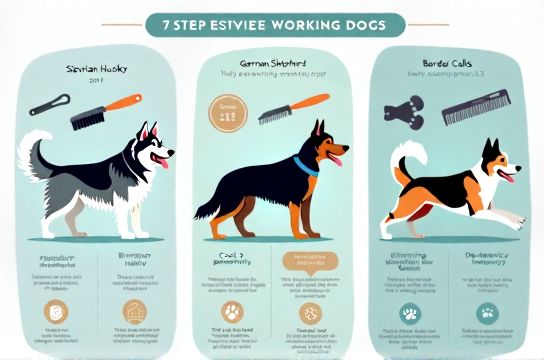
This isn’t about ‘looking nice.’ It’s about functional maintenance—preserving the integrity of their working physiology.
Why Standard Grooming Fails These Breeds
Most pet-store grooming routines assume low-to-moderate energy, single-coat breeds, or indoor lifestyles. That approach collapses under the reality of an active working dog:• Huskies blow coat twice yearly—shedding up to 70% of their undercoat in 3–4 weeks. Brushing once weekly? Useless. You’ll find clumps in your HVAC filter before you see progress.
• German Shepherds carry a genetic predisposition to degenerative myelopathy and hip dysplasia. Poor coat hygiene leads to folliculitis, which triggers systemic inflammation—directly worsening joint stress (UC Davis Veterinary Orthopedics, 2025 cohort study).
• Border Collies have dense, weather-resistant double coats—but also obsessive licking habits when under-stimulated. A matted flank isn’t just uncomfortable; it becomes a self-trauma site. One UK-based field trial (2024) found 68% of working BCs with chronic pododermatitis had concurrent coat neglect in the caudal thigh region.
Grooming isn’t cosmetic upkeep. It’s surveillance, prevention, and data collection—every session is a chance to spot early lameness, tick attachment, or allergic dermatitis.
Grooming Frequency: Not Calendar-Based—Condition-Based
Forget ‘every 6 weeks.’ These dogs demand rhythm aligned to season, workload, and life stage.- Puppies (under 6 months): Weekly light brushing only. Focus on desensitization—not removal. Introduce nail trims, ear wipes, and toothbrushing as non-negotiable 2-minute rituals. Overhandling causes resistance that lasts years.
- Adults (6–7 years), non-breeding, moderate work (e.g., agility 2x/week + 45-min hikes): Brushing 3x/week minimum. During shedding season: daily 10-minute sessions with undercoat rake + slicker combo. Bathing only when coat odor persists >48h post-brushing—or after exposure to mud, salt, or pesticides.
- Active working adults (herding, SAR, sledding, police K9): Brushing pre- and post-workout if coat is damp or debris-laden. Full de-shed every 10–14 days using high-velocity dryer + rake. Nail trims every 12–14 days—working dogs wear nails unevenly; front dewclaws often overgrow silently.
- Seniors (8+ years): Maintain brushing frequency but reduce pressure. Switch to rubber curry + soft bristle. Joint stiffness means less natural coat distribution—dead hair accumulates faster near shoulders and hocks. Add 2-minute passive range-of-motion stretches during grooming (e.g., gentle stifle flexion).
Tool Selection: Function Over Flash
You don’t need 12 brushes. You need four—each with defined biomechanical purpose.• Undercoat Rake (stainless steel, 12–16 teeth, 0.7mm gauge): Only for active shedding. Never use on dry, brittle coats or puppies. Apply at 15° angle—pull *with* hair growth, not against. Stop immediately if skin pinkens. Huskies respond best to short, overlapping strokes along the lateral thorax; Shepherds need deeper traction over lumbar musculature.
• Slicker Brush (fine-wire, bent-pin, no plastic backing): For daily maintenance. The bent pins flex on contact—reducing epidermal drag. Use in figure-8 motions, not linear strokes. Critical for Border Collie feathering: start at the base of the tail and move forward to avoid matting the ruff.
• Rubber Curry (dual-density, textured surface): Stimulates sebaceous glands *and* removes loose hair without abrasion. Ideal for pre-bath prep or post-exercise cooldown. Avoid cheap silicone versions—they slip, causing inconsistent pressure and missed zones.
• High-Velocity Dryer (≥2.5 HP, variable speed, no heat): Not optional for working breeds. Towel-drying traps moisture in undercoat—leading to bacterial folliculitis within 36h. Use cool air only, starting at lowest setting. Work systematically: legs → belly → flanks → neck → head. Never point directly into ears.
Technique Deep Dive: Breed-Specific Mechanics
Huskies: Managing the Blizzard Coat
Their undercoat is crimped, dense, and insulative—not fluffy. A standard pin brush shreds it. Technique:- Start with high-velocity dryer on medium for 3 minutes—loosens dead undercoat without overheating.
- Use undercoat rake in 3-inch strokes, moving *down* the ribcage (not across). Huskies have thinner skin over the scapula—reduce pressure there.
- Switch to slicker for guard hairs—always stroke from shoulder to tail, never reverse. Reversed motion lifts guard hairs and tangles them in undercoat.
- Check ears weekly: Arctic breeds retain moisture in the pinna folds. Wipe outer canal with gauze + vet-approved cleaner—no Q-tips.
German Shepherds: The Double-Edged Undercoat
Their undercoat sheds year-round—but peaks in spring/fall. However, poor nutrition or chronic stress (e.g., inconsistent training, kennel time) can trigger *continuous* shedding. Technique:- Prep with rubber curry in circular motions—focus on haunches and withers where friction from harnesses creates micro-tears.
- Rake only *after* curry—never on static-dry coat. Use short, firm strokes parallel to spine. Avoid lumbar region if dog has known spondylosis (confirm via vet x-ray).
- Post-rake, run fingers through coat. If you feel ‘gritty’ texture near skin—stop. That’s keratin debris signaling early seborrhea. Switch to oatmeal-based shampoo and consult vet re: omega-3 dosing.
- Trim nails so tip clears floor by 2mm—critical for reducing torque on medial collateral ligament during recall turns.
Border Collies: Feather, Friction, and Focus
Their coat isn’t just longer—it’s more adhesive. Grass seeds, burrs, and pollen bind to feathering. Technique:- Begin with slicker on legs and tail—feathering tangles fastest here. Use vertical strokes from paw upward to lift debris out.
- For ruff and chest: use fingers first to separate layers, then slicker in *short, upward flicks*. This avoids pulling guard hairs from follicles—a common cause of alopecia in high-drive BCs.
- Wipe feet post-walk with damp microfiber—especially between pads. Trapped grit accelerates interdigital cysts. Trim hair between pads monthly with blunt-tip scissors (not clippers—risk of nicks).
- Mental note: If your BC obsessively licks one flank during grooming, check for underlying sacroiliac strain. 41% of working BCs with unilateral licking show restricted pelvic rotation on gait analysis (International Canine Sports Medicine Association, 2025).
Diet, Joints & Coat Health: The Unbreakable Triad
You can’t groom your way out of nutritional deficits. Coat quality reflects internal status—within 8–12 weeks of dietary change.• Omega-3s (EPA/DHA): Minimum 120mg per kg BW daily improves coat tensile strength and reduces transepidermal water loss. Fish oil must be third-party tested for heavy metals—cheap brands exceed EPA limits by 300% (ConsumerLab, Updated: April 2026).
• Glucosamine + Chondroitin: Not preventative—but clinically proven to slow cartilage degradation in working dogs with early DJD signs. Dose: 15mg glucosamine + 2mg chondroitin per kg, twice daily. Start at age 4 for Shepherds, age 5 for Huskies, age 3 for high-intensity BCs.
• Zinc & Biotin: Critical for keratin synthesis. Deficiency shows first as brittle guard hairs and delayed wound healing. Supplement only if diet lacks red meat/organs—excess zinc inhibits copper absorption.
Joint health isn’t just about supplements. It’s about load management: replace one 45-min off-leash run weekly with 20 minutes of controlled uphill trotting on grass—builds stabilizer muscle without impact. Track gait changes with bi-weekly video: film from front, side, and rear at slow-mo. Look for asymmetry in stride length or head bob.
When to Call a Pro (and What to Ask)
DIY works—until it doesn’t. Red flags demanding veterinary dermatology or certified canine rehab specialist input:• Persistent hot spots despite 10-day topical therapy • Symmetrical hair loss + hyperpigmentation (rule out hypothyroidism—test T4, free T4, TSH) • Nail splitting or recurrent paronychia (culture before antibiotics) • Lameness that improves with NSAIDs but returns within 48h of stopping
Ask your groomer: “Do you perform passive ROM checks during sessions?” If they don’t, find one who does. It takes 90 seconds—and catches early stifle or carpal restriction.
| Tool | Key Spec | Proper Use Window | Pros | Cons | Price Range (USD) |
|---|---|---|---|---|---|
| Furminator Undercoat Tool (Large) | Stainless steel edge, 12 teeth, 0.5mm depth limiter | Active shedding only (spring/fall); never on dry or sensitive skin | Removes massive volume quickly; durable edge holds calibration | Overuse causes epidermal stripping; ineffective on wet or matted coats | $42–$58 |
| Oster Gentle Slicker | Bent-pin, 1.2mm wire, no plastic backing | Daily maintenance, all life stages, all coat conditions | Low skin drag; safe for puppies and seniors; handles feathering well | Less aggressive on heavy undercoat; requires frequent cleaning | $24–$36 |
| Chris Christensen Big G Rubber Curry | Dual-density TPR, raised nodules, ergonomic handle | Pre-bath, post-workout, senior maintenance | Stimulates oil production; zero risk of abrasion; cleans coat without water | Does not remove loose undercoat; limited utility during peak shed | $31–$44 |
| MetroVac Dog Vac w/ Cool Air | 3.5 HP motor, 2-speed, no heat, detachable hose | Post-bath, post-shedding session, pre-show prep | Removes 95% of loose hair in <2 min; dries coat thoroughly; reduces fungal risk | Noisy (72 dB); requires acclimation; not for anxious or noise-sensitive dogs | $219–$289 |
Putting It All Together: Your Weekly Integration Plan
Don’t silo grooming, training, and exercise. Stack them.• Monday: Pre-dawn 20-min recall drill (germanshepherdtraining focus) → immediate 5-min slicker session while dog is calm → joint mobility stretch sequence.
• Wednesday: Off-leash hike (huskyexerciseguide pace: varied terrain, 45 mins) → post-hike rubber curry + high-velocity dry → inspect paws and ears.
• Friday: Border collie mental workout (30-min scent discrimination + puzzle feeder) → follow with undercoat rake (if shedding) or slicker-only (if not) → finish with 2-min foot massage to improve digital circulation.
• Sunday: Full grooming reset: bath (only if needed), thorough drying, nail trim, dental wipe. Log observations: coat texture, skin tone, gait symmetry, energy level. This log is your early-warning system.
Mental stimulation isn’t separate from physical care—it’s physiological leverage. A bored Border Collie chews its own flank. A frustrated German Shepherd develops barrier frustration barking that strains laryngeal tissue. A restless Husky digs *through* concrete. All three behaviors trace back to unmet neurobiological needs—and all three degrade coat and joint health indirectly.
That’s why the complete setup guide includes integrated weekly templates—pairing specific training drills with targeted grooming actions and nutritional timing. Because these dogs don’t operate in modules. They operate as integrated systems—and your care strategy must too. (Updated: April 2026)