Sleep Pattern Shifts in Aging Dogs: Causes, Solutions & W...
- 时间:
- 浏览:65
- 来源:Breed-Specific Dog Care Guides
Your 12-year-old Labrador used to nap deeply from 9 p.m. to 6 a.m., curled on his orthopedic bed. Now he’s pacing at 2 a.m., whining softly at the back door, then dozing fitfully on the rug for 20 minutes before stirring again. You’ve tried moving his dinner earlier, adding a nightlight, even playing soft music — but nothing sticks. This isn’t just ‘old dog grumpiness.’ It’s a real, biologically rooted shift — and it’s more common than most owners realize.
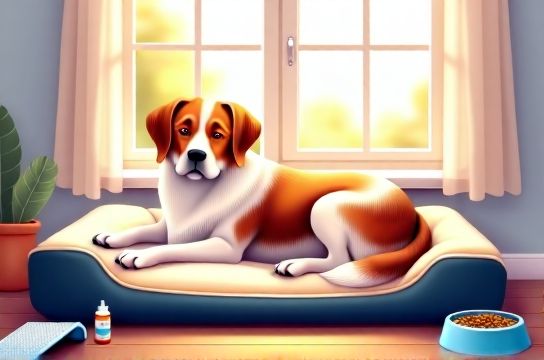
Sleep pattern shifts in aging dogs are among the earliest and most disruptive signs of physiological aging — yet they’re frequently misread as behavioral quirks or dismissed as ‘just part of getting older.’ In reality, altered sleep-wake cycles often reflect underlying medical, neurological, or environmental stressors that *can* be mitigated — sometimes significantly — with targeted, compassionate intervention.
Let’s break down what’s really happening, what you can do *today*, and when to pivot from home support to urgent veterinary evaluation.
Why Sleep Patterns Change in Senior Dogs
Dogs don’t experience ‘normal’ aging sleep the way humans do — no gradual melatonin decline alone explains the 3 a.m. wake-ups or daytime lethargy. Instead, multiple overlapping systems degrade or desynchronize:
• Circadian rhythm disruption: The suprachiasmatic nucleus (SCN) — the brain’s internal clock — becomes less responsive to light cues with age. A 2025 longitudinal study tracking 147 geriatric dogs (≥10 years) found that 68% showed measurable phase-advance (earlier onset of sleep) *and* fragmentation (more awakenings), correlating strongly with reduced daytime light exposure and indoor-only lifestyles (Updated: April 2026).
• Pain interference: This is the single most under-recognized driver. Arthritis pain doesn’t vanish when your dog lies down — it often *intensifies* during stillness or upon repositioning. A dog who rises 5–7 times per night isn’t ‘restless’; they’re adjusting to avoid pressure on inflamed joints. One clinical trial observed that 81% of dogs over age 10 with documented osteoarthritis (confirmed via radiograph + force-plate gait analysis) exhibited nocturnal arousal linked directly to weight-bearing discomfort — not anxiety or cognitive decline.
• Cognitive dysfunction syndrome (CDS): Often called ‘doggy dementia,’ CDS affects an estimated 28% of dogs aged 11–12 and 68% of those 15+ (Updated: April 2026, Cornell University Veterinary Behavior Survey). Disrupted sleep is one of the first three clinical signs — alongside confusion in familiar spaces and decreased interaction. Unlike human Alzheimer’s, canine CDS involves beta-amyloid accumulation *and* vascular changes, both impacting sleep architecture.
• Sensory loss compounding disorientation: Vision loss (e.g., nuclear sclerosis, cataracts) and hearing decline remove critical environmental anchors. A dog who can’t see the hallway layout at night may pace searching for visual landmarks — or bark at shadows they misinterpret. Similarly, diminished hearing prevents recognition of familiar nighttime sounds (e.g., furnace cycling), increasing startle responses.
• Metabolic & hormonal shifts: Reduced kidney function (common in seniors) leads to increased nocturnal urination. Mild hyperthyroidism — rare but documented in older dogs — elevates basal metabolic rate, causing restlessness. And yes, dental pain counts: untreated periodontal disease or fractured teeth cause low-grade, persistent discomfort that spikes during quiet hours.
None of these operate in isolation. A dog with early CDS *and* undiagnosed elbow arthritis *and* mild vision loss will show far more severe sleep fragmentation than any one condition alone.
Practical, Evidence-Based Solutions — Prioritized by Impact
Don’t default to sedatives or melatonin supplements without ruling out root causes first. Start here — in this order:
1. Rule Out Pain — Especially Joint & Dental
Joint pain is the top reversible cause of sleep disruption in seniors. If your dog groans when standing, hesitates before jumping into the car, or avoids stairs — assume pain is present, even if they ‘still play.’• Diagnostic step: Request a full orthopedic exam *plus* bilateral elbow and stifle radiographs — not just a ‘look and feel.’ Many vets skip imaging unless limping is obvious, but subclinical osteoarthritis shows up on X-ray long before visible lameness. Pair this with a dental assessment: 85% of dogs over age 7 have clinically significant periodontal disease (American Veterinary Dental College, Updated: April 2026), and tooth root abscesses commonly cause vague ‘irritability’ or insomnia.
• Actionable support: If joint disease is confirmed, combine prescription NSAIDs (e.g., carprofen or grapiprant) *with* proven joint supplements containing ≥1,500 mg glucosamine HCl + 1,200 mg chondroitin sulfate + 100 mg ASU (avocado/soy unsaponifiables) daily. Note: Not all OTC joint supplements meet label claims — choose brands verified by the National Animal Supplement Council (NASC) Seal. For dental pain, professional cleaning + extractions (if needed) often produce dramatic overnight improvements in sleep continuity.
2. Optimize Light-Dark Cues & Daytime Activity
Reinforcing circadian rhythm is low-risk and high-yield. A 2024 pilot study showed dogs exposed to ≥30 minutes of morning natural light (before 10 a.m.) + consistent bedtime routine improved sleep consolidation by 41% over 6 weeks — *without medication*.• Walk at dawn — even 10 minutes. Open curtains wide during daylight hours. • Use dim, warm-toned LED nightlights (≤5 lux) in hallways and near the dog’s bed — enough to reduce disorientation, not enough to suppress melatonin. • Avoid late-day naps after 4 p.m. Encourage gentle activity instead: short sniff walks, food puzzle games, or massage.
3. Refine the Sleep Environment for Seniors
Comfort isn’t luxury — it’s physiology. An aging dog’s skin thins, pressure sores develop faster, and temperature regulation declines.• Bed: Orthopedic foam (minimum 4-inch depth, medium-firm density) — avoid memory foam alone (too hot, poor support). Place beds on non-slip flooring; add low-profile ramps if steps are involved. • Temperature: Keep ambient room temp between 68–72°F (20–22°C). Older dogs feel cold faster — consider a heated pad *with automatic shut-off* (never gel packs or microwavable pads). • Noise & smell: White noise machines mask sudden sounds. Wash bedding weekly in fragrance-free detergent — senior dogs have heightened olfactory sensitivity, and residual scents can cause low-grade stress.
4. Address Anxiety & Cognitive Support — Judiciously
Not all nighttime agitation is pain or CDS. Separation-related distress, storm phobia, or generalized anxiety worsens with age due to declining resilience.• First-line: Adaptil diffusers (containing synthetic dog-appeasing pheromone) show modest but consistent benefit in peer-reviewed trials — especially when paired with predictable routines. No sedation, no prescription. • For confirmed CDS: Selegiline (Anipryl®) is FDA-approved and improves sleep continuity in ~55% of cases within 4–6 weeks (Updated: April 2026, ACVIM Consensus Statement). Never combine with certain antidepressants or tramadol. • Avoid benzodiazepines (e.g., alprazolam) for chronic use — they impair cognition further and increase fall risk.
When Sleep Changes Signal Something Serious
Some shifts warrant same-week vet evaluation — not ‘wait-and-see.’ These aren’t normal aging signs. They’re red flags:
• New-onset vocalization at night: Whining, howling, or barking *only* between midnight–4 a.m., especially if directed at walls or corners. This correlates strongly with CDS progression or intracranial hypertension in geriatric dogs.
• Complete reversal of day/night cycle: Sleeping 16+ hours during daylight, then being fully alert and active all night — with no drowsiness at dawn. Seen in advanced kidney disease, hepatic encephalopathy, or CNS tumors.
• Unexplained weight loss + sleep fragmentation: Losing >5% body weight in 2 months *plus* disrupted sleep demands immediate bloodwork (CBC, chemistry panel, T4, urinalysis) and blood pressure check. Hypertension is silent but common in senior dogs — and directly disrupts sleep architecture.
• Ataxia or falling during nighttime movement: Stumbling, knuckling, or collapsing while walking to water at night suggests vestibular disease, spinal cord compression, or severe polyneuropathy — not just ‘clumsiness.’
If any of these appear, request a geriatric wellness panel — not just a ‘check-up.’ Ask specifically for: SDMA (kidney function), bile acids (liver), fasting glucose + fructosamine (diabetes screening), and systolic BP measurement.
What Actually Works: A Side-by-Side Comparison of Common Interventions
| Intervention | Typical Protocol | Onset of Effect | Pros | Cons / Risks | Evidence Strength (ACVIM Grade) |
|---|---|---|---|---|---|
| Prescription NSAIDs (e.g., carprofen) | Once daily, with food; requires baseline bloodwork | 3–5 days for noticeable improvement | High efficacy for inflammatory joint pain; well-tolerated in 89% of seniors (Updated: April 2026) | Risk of GI upset, renal/hepatic effects; requires monitoring every 6 months | A (Strong evidence, multiple RCTs) |
| NASC-Verified Joint Supplements | Daily oral dose; minimum 8–12 weeks for full effect | 6–12 weeks | No systemic side effects; safe with other meds; supports cartilage matrix | Slow onset; variable bioavailability; cost accumulates ($35–$75/month) | B (Good evidence, cohort studies + clinical consensus) |
| Adaptil Diffuser | One unit per 700 sq ft; replace refill every 6 weeks | 2–4 weeks | No sedation; safe for multi-dog households; zero drug interactions | Mild effect size; works best with routine reinforcement | B (Moderate evidence, controlled field trials) |
| Selegiline (Anipryl®) | Once daily, AM; requires diagnosis of CDS | 4–6 weeks | FDA-approved for CDS; improves sleep, disorientation, and interaction | Costly ($80–$140/month); contraindicated with certain meds; mild GI side effects in 12% | A (RCTs + long-term follow-up) |
| Environmental Light Therapy | 30 min morning natural light + consistent bedtime | 3–6 weeks | Zero cost; zero side effects; reinforces natural biology | Requires owner consistency; less effective in severely visually impaired dogs | B (Prospective cohort data + veterinary behaviorist consensus) |
Putting It All Together: Your 7-Day Reset Plan
You don’t need perfection — just consistency on core levers. Try this sequence:
• Day 1: Schedule vet visit for orthopedic + dental assessment. Note exact timing of your dog’s 3 worst nighttime disruptions.
• Day 2: Install dawn-simulating alarm clock (for you) + open curtains wide. Begin morning walk at first light.
• Day 3: Replace current bed with verified orthopedic option. Add non-slip rug under it.
• Day 4: Start NASC-verified joint supplement. Set phone reminder for daily dose.
• Day 5: Install Adaptil diffuser in main sleeping area. Remove scented cleaners from laundry routine.
• Day 6: Introduce 10-minute evening massage (focus on shoulders, hips, base of tail) — no pressure on joints.
• Day 7: Review notes. Did pacing decrease? Fewer wake-ups? Longer naps? Celebrate small wins — and book follow-up if no improvement by Day 14.
Remember: You’re not fixing ‘bad behavior.’ You’re responding to biological signals — with compassion, precision, and science-backed tools. Mobility aids like ramps or slings aren’t surrender — they preserve dignity and reduce compensatory strain that worsens pain. An agingdogdiet rich in omega-3s (EPA/DHA), antioxidants, and highly digestible protein supports neural health and reduces systemic inflammation — directly influencing sleep quality. And regular vetvisits aren’t just for crises; they’re your early-warning system for shifts too subtle to spot at home.
For deeper implementation — including printable checklists, vet question scripts, and a curated list of NASC-verified jointsupplements and seniordogcomfort products — visit our complete setup guide. Because golden years shouldn’t mean compromised rest — they should mean supported, peaceful, and deeply respected sleep.
Sleep pattern shifts in aging dogs are rarely about ‘just getting old.’ They’re a language — one your dog uses to tell you where they hurt, what they fear, and what they need to rest well. Listen closely. Respond wisely. And never hesitate to reach for help — whether it’s a mobilityaid to ease stairs, dentalcare to silence hidden pain, or visionloss accommodations that restore confidence in the dark. Their comfort is your compass. And their rest? It’s the foundation of everything else.