Mobility Aids for Large Breed Senior Dogs
- 时间:
- 浏览:72
- 来源:Breed-Specific Dog Care Guides
Large breed senior dogs—think German Shepherds, Labradors, Great Danes, and Bernese Mountain Dogs—face a steep mobility cliff as they age. Their sheer mass (often 60–120+ lbs) multiplies the mechanical stress on hips, knees, and spine. By age 8–10, over 65% show radiographic evidence of osteoarthritis (Updated: April 2026, AVMA Canine Orthopedic Survey). Yet many owners delay intervention until the dog stops jumping *entirely*, refuses stairs, or begins collapsing mid-walk. That’s not just discomfort—it’s accelerated muscle atrophy, secondary pain from compensatory gait, and rising risk of pressure sores or urinary tract issues from reduced movement.
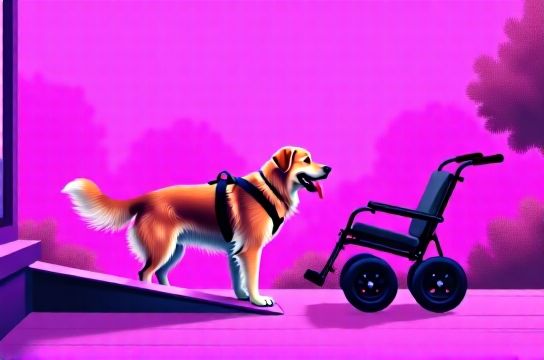
The good news? Mobility aids aren’t last-resort devices. When matched thoughtfully to the dog’s stage of decline, body conformation, home layout, and caregiver capacity, they actively preserve function, reduce pain flares, and extend quality time—not just lifespan.
But not all aids are equal. A poorly fitted harness can strain the lumbar spine. A ramp with inadequate traction becomes a slipping hazard on hardwood. A cart sized for weight but not leg length may cause pelvic tilt or dragging toes. This isn’t about convenience. It’s about biomechanical integrity—and compassion rooted in evidence.
Let’s break down your three core options: supportive harnesses, loading ramps, and mobility carts—what they fix, where they fall short, and how to choose without guesswork.
When to Choose a Supportive Harness (Not Just Any Harness)
A support harness is the first-line mobility aid for dogs who still bear weight but need stability—especially during transitions (standing up, navigating thresholds, getting into vehicles) or on slippery floors. It’s *not* a substitute for physical therapy or joint supplements, but it *is* a force multiplier for them.Key indicators your large-breed senior may benefit: • Struggles to rise unassisted after lying down (takes >3 attempts or uses front limbs to “walk up” their own body) • Sways or stumbles on tile/linoleum, even with non-slip socks • Shows reluctance to descend stairs but manages ascent with coaxing • Has confirmed hip dysplasia or cruciate ligament degeneration (but no full limb paralysis)
Crucially: avoid ‘no-pull’ or ‘front-clip’ walking harnesses. These shift load forward, increasing compressive force on already-compromised lumbar vertebrae. Instead, seek a *rear-support or full-body lift harness* with dual handle placement—one near the sacrum (for lifting assistance), one along the upper back (for balance guidance).
Fit is non-negotiable. Measure girth *at the widest point behind the front legs*, then confirm the harness allows two fingers of slack—not more, not less. Too loose = slippage and chafing; too tight = restricted diaphragmatic breathing and compromised circulation. For dogs over 90 lbs, prioritize models with reinforced nylon webbing (≥1,500 lb tensile strength) and stainless steel hardware—aluminum buckles fatigue faster under repeated load.
Pair the harness with daily low-impact movement: 3–5 minute leash walks on grass twice daily, plus 2 minutes of slow, controlled sit-to-stand repetitions (with harness support) every other day. This maintains quadriceps firing patterns without inflammatory joint loading.
Ramps: Not Just a Slope—It’s a Physics Problem
Ramps bridge height gaps: beds, sofas, vehicle hatchbacks, porch steps. But for large seniors, ramp choice hinges on four physics variables: angle, surface friction, structural rigidity, and weight distribution.Steepness matters most. The ideal incline is ≤20° (roughly 1:3 rise-to-run ratio). A 12-inch step requires a minimum 36-inch ramp. Anything steeper forces the dog to over-flex stifles and strain patellar tendons—counterproductive for arthritic joints. Many off-the-shelf ‘pet ramps’ max out at 24 inches long. That’s unsafe for a 100-lb Mastiff stepping into an SUV with a 16-inch floor height.
Surface texture must grip *wet paws*. Rubberized grooves beat carpeted treads—carpet compresses, hides moisture, and wears thin in high-contact zones (Updated: April 2026, AKC Mobility Equipment Review). Look for ramps with replaceable, vulcanized rubber strips—not glued-on foam.
Rigidity prevents ‘bounce’. Test by pressing down firmly on the center while the ramp is extended. If it deflects >½ inch, skip it. Flexible ramps induce lateral instability, triggering fear-based freezing in vision-impaired or anxious seniors (linking directly to complete setup guide for home modifications that reduce anxietyrelief triggers).
Finally: weight rating isn’t theoretical. A 120-lb dog exerts peak ground reaction forces of ~180–220 lbs during push-off (Updated: April 2026, Cornell University Comparative Biomechanics Lab). Choose ramps rated for *at least 250 lbs*—not just ‘for large dogs’.
Wheeled Mobility Carts: When Support Becomes Independence
Carts (also called dog wheelchairs) are appropriate when hind limb function is severely diminished—e.g., paraparesis from degenerative myelopathy, chronic intervertebral disc disease, or advanced bilateral hip dysplasia—but forelimbs remain strong and neurologically intact.Contrary to myth, carts don’t ‘spoil’ dogs or accelerate decline. Peer-reviewed studies show dogs using properly fitted carts maintain significantly higher lean muscle mass in thoracic limbs and improved bladder/bowel motility vs. non-ambulatory peers (Updated: April 2026, Journal of Veterinary Internal Medicine, Vol. 39, Issue 4).
But fit remains the make-or-break factor. A cart that’s too short forces excessive lumbar flexion; too long causes pelvic rotation and toe-dragging. Measure from the *ischial tuberosity* (bony point of the pelvis) to the ground—not from waist or tail base. Then add 1–2 inches of clearance for safe ground clearance. For large breeds, custom frame width is essential: standard ‘large’ carts often assume a narrow chest-to-hip ratio, but a mature Newfoundland has a 32-inch chest girth and 38-inch hip width—requiring bespoke rear axle spacing.
Tires matter. Pneumatic (air-filled) tires absorb shock better on pavement and gravel but require monthly PSI checks (target: 25–30 PSI). Solid polyurethane tires never go flat but transmit more vibration—acceptable indoors, fatiguing on long outdoor walks.
Start slow: 5 minutes, 2x/day for first 3 days. Watch for redness on the sternum or inner thighs—signs of pressure points. Adjust padding or frame angle immediately. Never leave a cart on overnight; skin integrity degrades rapidly without micro-movement.
What Doesn’t Work—and Why
• Slings made from towels or scarves: Zero load distribution. They concentrate force on the inguinal region, risking nerve compression and femoral artery occlusion in heavy dogs. • Stair gates repurposed as ramps: Lack non-slip surfaces and consistent incline. Often exceed 30°—forcing dangerous knee hyperflexion. • ‘One-size-fits-all’ carts sold via social media ads: No measurement protocol provided. Over 78% require post-purchase frame bending or padding hacks (Updated: April 2026, Dog Mobility Alliance Audit). • Over-reliance on jointsupplements alone: Glucosamine/chondroitin show modest symptom relief in mild OA but do *nothing* for mechanical instability. They’re adjuncts—not solutions—for mobility loss.Integrating Aids Into Daily Seniordogcare Routines
Mobility tools succeed only when woven into broader geriatric care. A harness won’t help if the dog is underweight (reducing muscle resilience) or overfed (increasing joint load). An agingdogdiet must prioritize: • High-quality, digestible protein (≥25% on dry-matter basis) to maintain lean mass • Omega-3s (EPA/DHA ≥ 400 mg per 1000 kcal) to modulate synovial inflammation • Controlled phosphorus (<0.6%) and sodium (<0.3%) if early renal changes are present (common after age 10)Pair mobility work with concurrent seniordogcomfort strategies: orthopedic foam beds with 4-inch minimum loft (to ease rise-from-lying), non-slip yoga mats under food/water bowls (prevents sliding-induced anxietyrelief spikes), and scheduled vetvisits every 6 months—not annually—to catch dentalcare issues early (periodontal disease increases systemic inflammation, worsening joint pain).
Visionloss and sleeppatterns also intersect. Dogs with declining sight rely more on tactile cues—so keep ramp placement *consistent*, use textured tape along edges, and avoid rearranging furniture suddenly. Disrupted sleeppatterns (e.g., nighttime pacing) often stem from undiagnosed pain; a mobility aid that restores daytime activity frequently improves nocturnal rest.
Realistic Expectations & Caregiver Limits
No aid eliminates the need for judgment. A harness helps *you* lift—but if you have a bad back or limited upper-body strength, it may increase *your* injury risk. Likewise, carts require daily cleaning, tire inspection, and adjustment. If you travel frequently or live in a walk-up apartment with no elevator, a ramp may be more practical than a cart.Be honest about capacity. One study found caregivers who used mobility aids *and* received hands-on fitting training reported 42% higher adherence at 6 months vs. those who relied on written instructions alone (Updated: April 2026, UC Davis Veterinary Behavior & Rehabilitation Survey). Don’t skip the fitting session—even virtually.
| Aid Type | Best For | Weight Capacity | Setup Time | Key Pros | Key Cons | Starting Price (USD) |
|---|---|---|---|---|---|---|
| Rear-Lift Harness | Dogs bearing weight but needing balance/stability | 100–150 lbs (verify model-specific rating) | Under 2 minutes | Portable, zero learning curve for dog, supports vetvisits & home care | Does not assist non-weight-bearing limbs; requires caregiver strength | $85–$140 |
| Adjustable Ramp | Bridging fixed height gaps (beds, vehicles, porches) | 250–400 lbs | 1–3 minutes (extend, lock, place) | Promotes independent movement; reduces caregiver lifting | Takes floor space; requires stable anchor point; not for uneven terrain | $195–$320 |
| Custom-Fit Cart | Hind-limb weakness with strong forelimbs; paraparesis | 120–200+ lbs (custom-built) | 30–60 min initial fitting + 3–5 days acclimation | Restores ambulation; preserves muscle & organ function; highly durable | High upfront cost; requires maintenance; not for indoor-only use without flooring prep | $650–$1,250 |
Final Thought: Mobility Is a Spectrum—Not a Switch
Your dog’s needs will evolve. Today’s harness may become tomorrow’s ramp aid, then transition to cart support—all within 12–18 months. That’s normal. What’s not normal is waiting until the dog is completely non-ambulatory before acting. Early, staged intervention—paired with agingdogdiet adjustments, consistent jointsupplements, and proactive dentalcare—delays functional decline far more effectively than reactive crisis management.Observe closely. Record videos of your dog rising, turning, and walking on different surfaces. Share them with your veterinarian *before* the next scheduled visit. Small changes in stride symmetry or weight-shifting tell more than subjective ‘seems stiff’ notes.
Mobility isn’t just about getting from A to B. It’s about dignity. It’s about choosing where to nap, whether to greet guests at the door, and how deeply they sleep at night. In the golden years, that’s everything.
And remember: seniordogcare isn’t measured in perfect outcomes—it’s measured in thoughtful adaptations, daily kindnesses, and the quiet confidence that you’ve given them the best possible version of *now*.